


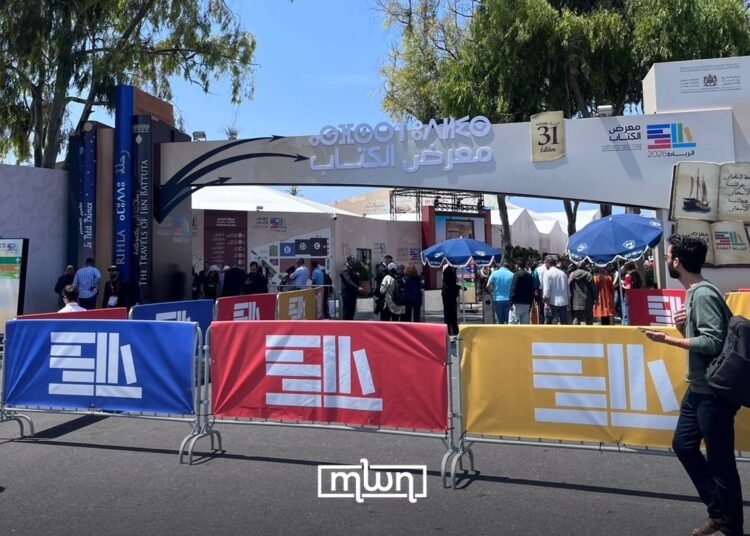
Rabat – A familiar cultural debate returned to Morocco’s parliament this week, as lawmakers questioned the continued hosting of the International Publishing and Book Fair (SIEL) in Rabat rather than Casablanca, where the event first took shape.
During Monday’s oral questions session, MPs moved beyond logistics to raise broader concerns about identity, access, and the meanings attached to cultural spaces. For some, the issue goes beyond geography and touches on memory and continuity.
Hassan Berkani, from the Istiqlal group, described the fair as part of Casablanca’s cultural fabric. He recalled the city’s long association with the event and the crowds it once drew, both local and international. For him, the fair’s relocation left a gap in a city that had come to see the event as its own. He expressed hope that the current edition in Rabat could mark a turning point, with a possible return to Casablanca in the near future.
Others adopted a different tone. Khadija Hajoubi of the Authenticity and Modernity Party (PAM) pointed to the fair’s evolution over the years, noting improvements in organization and visitor conditions. She proposed a wider reflection on how such events could reach other parts of the country, mentioning Fez as a strong candidate given its scholarly heritage and the presence of the University of al-Qarawiyyin.
The discussion also turned to the people behind the books. Abdelouahed Chafiki of the National Rally of Independents (RNI) called for sustained backing for writers, warning that any ambition to expand knowledge production must rest on real support for authors.
In response, Minister of Youth, Culture, and Communication Mohamed Mehdi Bensaid rejected the idea that the fair belongs to a single city. He drew a simple comparison: a person may be born in one place and grow up in another without conflict. Morocco, he said, follows the same logic, where movement between cities reflects a shared national space rather than competition.
The minister also pointed to a shift in cultural policy. Morocco now hosts two separate book events, the main fair in Rabat and another dedicated to youth and children in Casablanca. The latter choice, he explained, responds to the city’s demographic weight and the strong presence of families.
Behind the exchange lies a deeper question about how Morocco distributes its cultural life. The debate not only concerns where books are displayed, but also who has access to them and which cities bear the symbolic weight of culture in a country where both history and policy continue to shape the answer.
