


Morocco summer travel requires a more considered approach, mainly because of the temperatures. From June onwards, the heat builds quickly, and by July and August it regularly reaches 40–45°C, sometimes higher. After more than 10 years living in Morocco, I’ve seen how this changes the way people experience the country.
What looks like a good itinerary on paper often doesn’t work the same in reality once you’re moving between places in that kind of heat. From my experience as a Morocco travel planner, summer trips are less about trying to see everything and more about structuring the route properly — choosing the right regions, limiting long travel days, and adjusting the pace so the trip stays manageable rather than exhausting.
Summer in Morocco is considered off-season for a reason. From June to early September, and especially in July and August, the country shifts its rhythm. In cities like Marrakech and across inland regions, including the Sahara, the heat becomes the main factor shaping daily life. Locals adapt around it, and many leave during August — heading to the coast, the mountains, or abroad to escape the temperatures.
This doesn’t mean you shouldn’t travel to Morocco in summer. It means the way you plan your trip needs to change. The most common mistake I see as a Morocco travel planner is trying to follow the same routes that work in spring or autumn — combining Marrakech, Fes, and the Sahara — without adjusting for heat, distances, and daily energy levels. That’s when trips start to feel tiring instead of enjoyable.
In summer, Morocco is no longer about how much you can see. It becomes about where you go, how you pace your days, and how realistic your route actually is.


Morocco temperatures in summer
From June onwards, temperatures rise quickly across most of the country. In cities like Marrakech and around, June already reaches around 35–40°C during the day. By July and especially August, it becomes more intense, with regular daytime temperatures between 40 and 45°C, and during heatwaves even approaching 50°C. This level of heat often continues until the end of August and can extend into early September, particularly in the south and inland regions.
The heat is dry, but it is still limiting. It directly affects how long you can stay outside, how much you can walk, and how you structure your day.
What summer actually feels like in Morocco
The biggest difference in summer is not just the temperature — it’s how your day changes because of it.
Mornings are still active and manageable. By early afternoon, especially between 13:00 and 18:00, cities slow down significantly. Walking through the medina during these hours is physically demanding, even for travellers used to warm climates.
Evenings become the most comfortable part of the day. Streets fill up again, restaurants open later, and the overall atmosphere shifts. Your schedule naturally adjusts: early start, long break in the middle of the day, then activity again in the evening. This rhythm is normal in Morocco in summer, but many travellers don’t plan for it.
Why route planning matters more in summer
In other seasons, Morocco allows you to move relatively fast between regions. In summer, the same distances feel longer. A five-hour drive across southern Morocco in July is not just about time — it’s about sustained heat, dry air, and limited stops where you actually want to spend time outside. Even short stops become uncomfortable in peak afternoon heat.
This is where many itineraries start to break down. Combining multiple inland destinations means stacking heat on top of long travel days. Instead of experiencing the places, you move between them trying to manage the temperature. This is why classic routes like Marrakech – Fes – Sahara are often too intense in July and August without significant adjustments.
Morocco weather in summer by region
Morocco is not uniformly hot. The experience changes completely depending on where you go.
In Marrakech and southern regions, the Sahara desert, summer is intense. Daytime temperatures regularly reach 36–42°C, and the medinas become difficult to explore during the middle of the day.
The Sahara Desert is even more extreme. Temperatures regularly exceed 45°C, and conditions are harsh enough that many desert camps close during July and August. Even when open, the experience is limited due to heat.
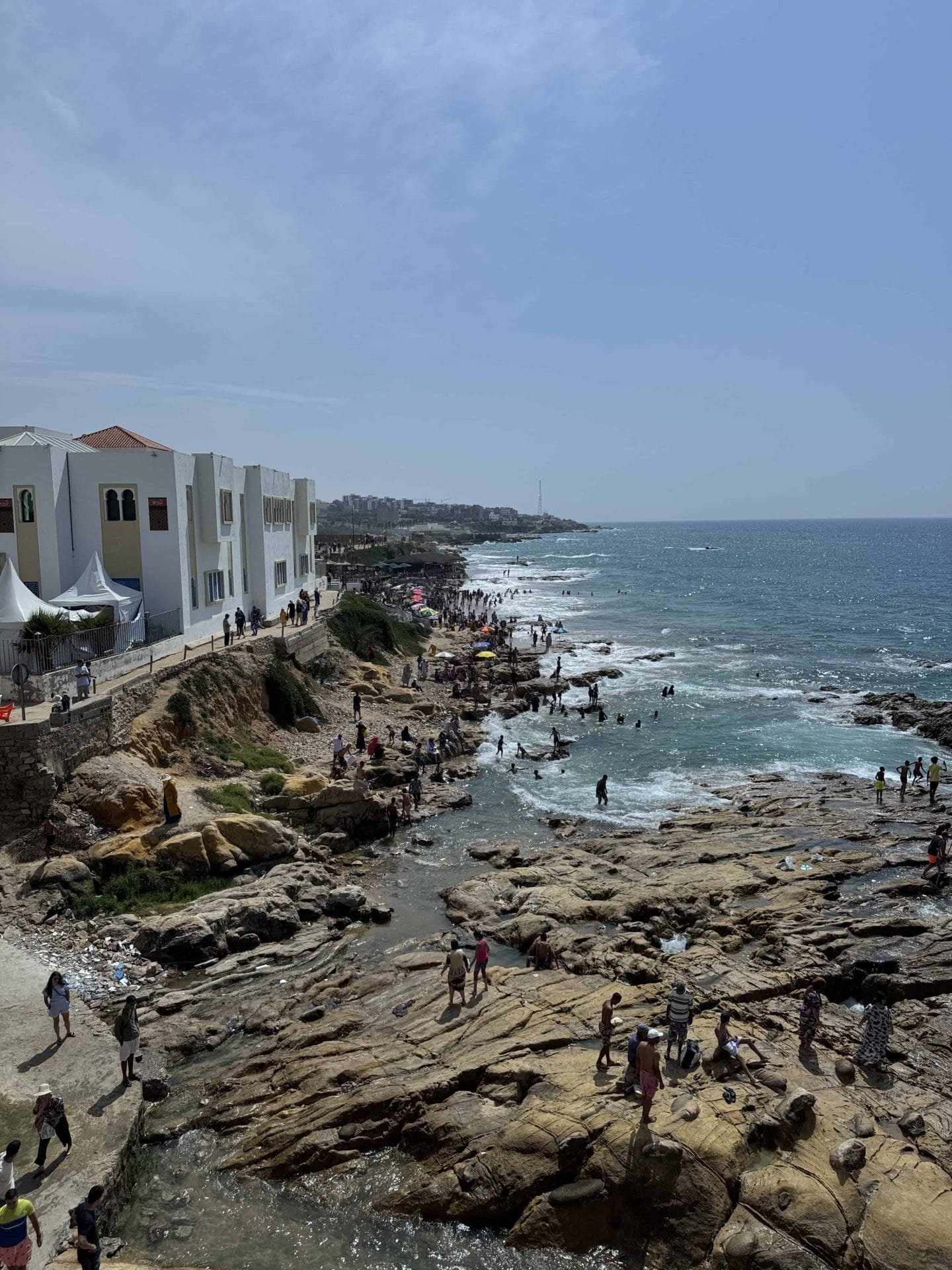
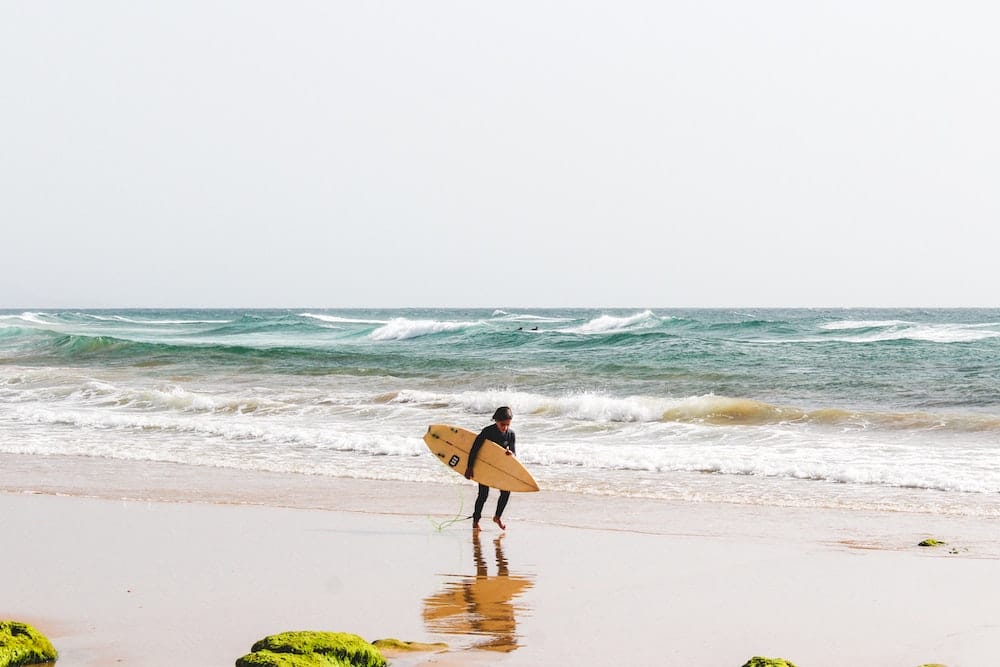
The Atlantic coast offers a completely different environment. Cities like Essaouira, Agadir, and Taghazout stay between roughly 29 and 35°C. Ocean winds keep temperatures stable, and the air feels significantly cooler than inland. Essaouira, in particular, is known for strong winds, which make summer conditions much more manageable. The Nord of Morocco is bit cooler, but in Tangier, even if it’s not as hot, the humidity makes you sweat non stop.
Can you visit the Sahara Desert in summer?
Technically, yes. Practically, it’s not the best time. Daytime temperatures in the Sahara are extremely high, often exceeding 45°C, and comfort levels drop significantly. Many desert camps close in July and August due to the heat, and even those that remain open offer a much more limited experience than travellers expect.
From my experience as a Morocco travel planner, if you still want to include the desert in summer, it’s better to adjust the approach. Instead of staying in traditional camps, consider desert-edge hotels in places like Merzouga. These usually have air conditioning and swimming pools, which makes a noticeable difference in these temperatures. It’s a more realistic way to experience the desert without exposing yourself to extreme conditions for extended periods.
Where to go in Morocco in summer
Summer works well in Morocco if you choose your locations carefully.
The most comfortable areas during this period are along the Atlantic coast and in the mountains. Essaouira, Taghazout, and Agadir offer stable temperatures and a more relaxed pace. Northern cities like Tangier also work well, although humidity is higher.
Inland cities like Marrakech can still be included, but usually for a shorter stay, and with adjusted expectations around how much you can do during the day. The key is not trying to combine everything into one trip.
What to wear in Morocco in summer
Clothing in summer is mainly about managing heat. Light, loose fabrics like cotton and linen work best. Breathable clothing helps regulate temperature and makes long days more manageable. Sun protection is essential — hats, sunglasses, and covering shoulders during peak sun hours make a noticeable difference. Practical comfort matters more than style in these conditions.
Is Morocco worth visiting in summer?
Yes, but only if you approach it differently. Morocco in summer is not about covering the whole country. It works best when you focus on specific regions, adjust your daily schedule, and accept that you will do less during the hottest hours.
From experience, the trips that work best are not the ones that try to fit everything in, but the ones that adapt to how Morocco actually functions during this season.
The difference between a good trip and a difficult one usually comes down to route structure, pacing, and realistic expectations about the heat.
