


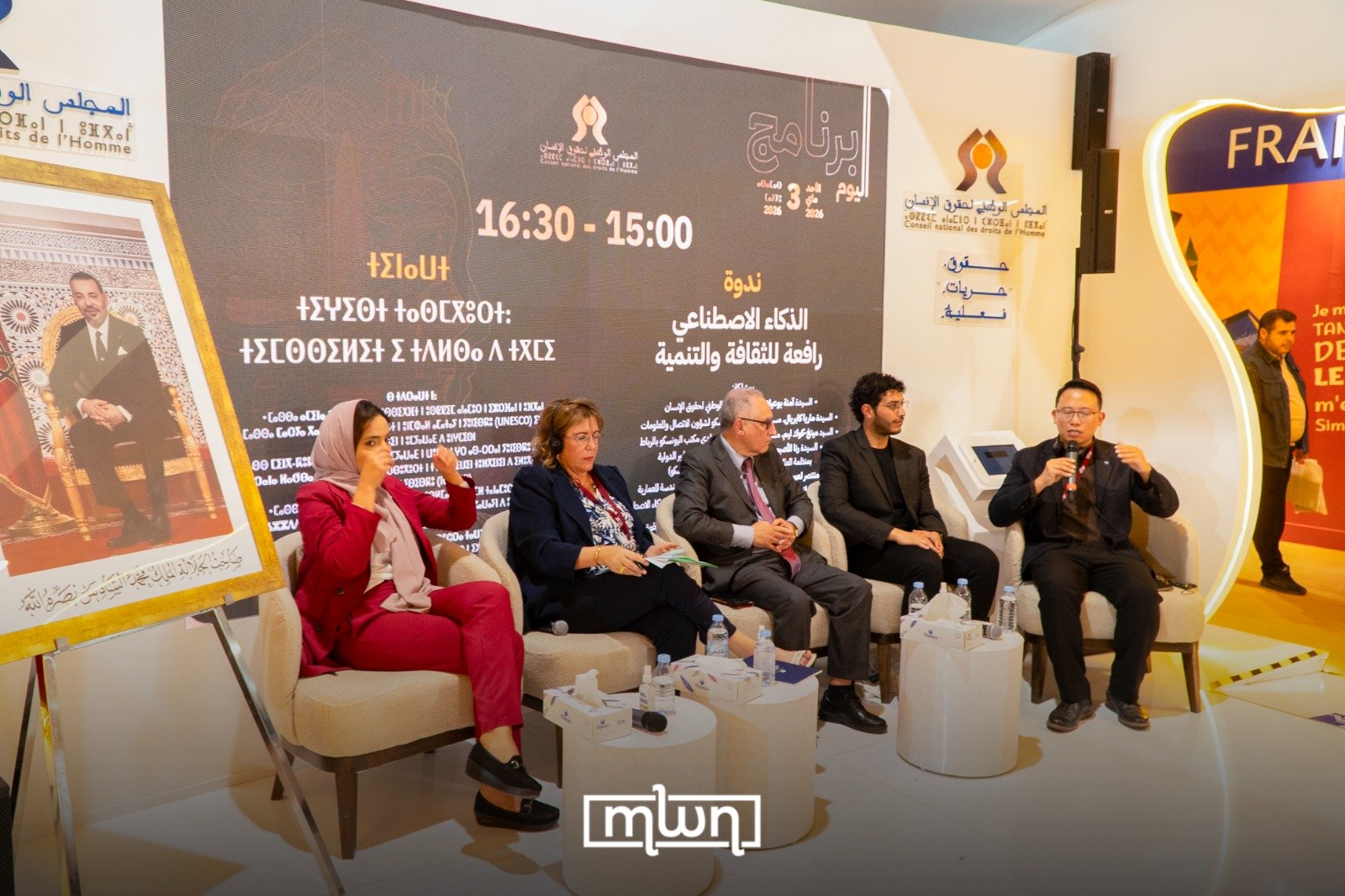
Rabat – The National Human Rights Council (CNDH) brought together experts and practitioners to examine the growing role of artificial intelligence in shaping culture and development, while also raising concerns about the global state of freedom of expression.
Held under the theme “Artificial Intelligence as a Driver of Culture and Development,” at the ongoing International Publishing and Book Fair (SIEL), the discussion reflected both optimism about technological innovation and caution about its broader societal implications.
Participants discussed how AI tools are increasingly influencing cultural production, access to information, and economic opportunities, but argued that these transformations must be grounded in respect for fundamental rights.
Morocco World News (MWN) spoke to one of the panelists, Ming-Kuok Lim, Advisor for Communication and Information at UNESCO in Rabat, who pointed to a troubling global trend. Citing a recent international report, he noted that freedom of expression declined by 10% worldwide in 2025, the sharpest drop since 2012.
“This is a very high level of decline, and it is worrying,” Lim said, saying that the erosion of free expression does not affect journalists only, but societies as a whole. The findings align with broader assessments by organizations such as Reporters Without Borders and Freedom House, which have consistently documented increasing restrictions on media, the spread of disinformation, and shrinking civic space across multiple regions.

Within the panel itself, speakers approached artificial intelligence from multiple angles. Some focused on its transformative potential, particularly in expanding access to culture and knowledge. AI-powered tools, they noted, can support the digitization of heritage, facilitate multilingual communication, and enable wider participation in cultural life, especially for communities that have historically been underrepresented.
Others, however, raised concerns about the risks associated with rapid technological adoption. Issues such as algorithmic bias, data privacy, and the growing influence of large technology companies were mentioned as key challenges. Without adequate oversight, panelists warned, AI could reinforce inequalities or be used to control information flows, ultimately undermining the very freedoms it has the potential to enhance.
In this context, Lim told MWN about the importance of what he described as a “multi-stakeholder approach.” As an intergovernmental organization, UNESCO works with governments, civil society, media institutions, and national human rights bodies to promote and protect freedom of expression. In Morocco, this includes close collaboration with the CNDH to strengthen dialogue, support journalists, and encourage policies that uphold press freedom.

The discussion also echoed UNESCO’s broader framework on the ethics of artificial intelligence, which calls for human rights-based governance of digital technologies. Ensuring transparency, accountability, and inclusivity in AI systems, participants agreed, is essential to preventing further deterioration of fundamental freedoms.
Beyond this panel, the CNDH pavilion at SIEL includes diverse and dynamic programming. Throughout the fair, it has hosted a wide range of activities, including debates, workshops, book presentations, and artistic performances. Poetry readings, theatrical pieces, and storytelling sessions, led by students and local communities, have made the space a vibrant platform for cultural expression and civic engagement.
SIEL 2026 runs from May 1 to 10, and has already drawn participants from across the country and beyond. The fair includes spaces for dialogue on literature, identity, and global challenges.
