


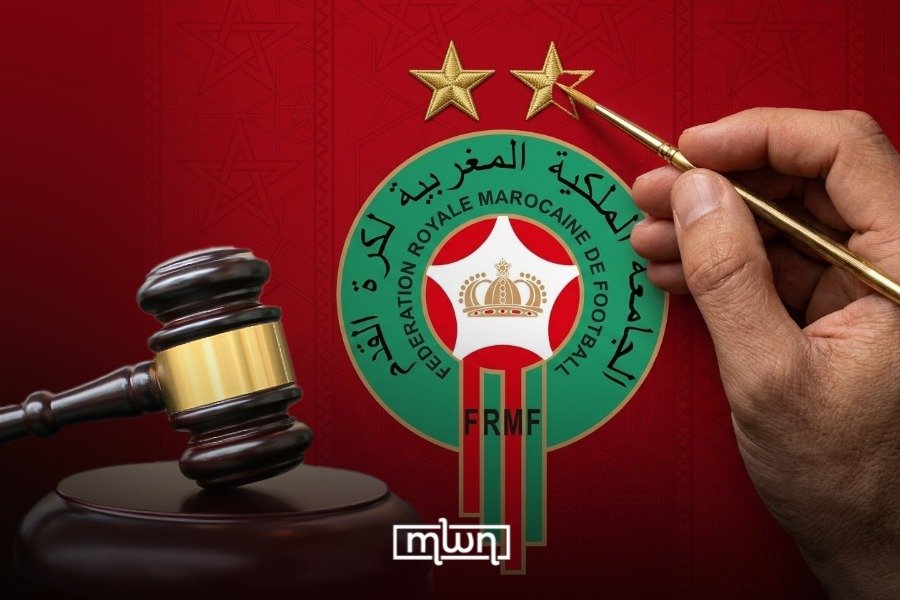
In sport as in the international order, certain decisions derive their significance not merely from their immediacy, but from the normative force they ultimately come to impose. They transcend the event from which they originated to become part of a longer trajectory. As such, they reshape or redefine the consolidation of rules, the predictability of the law, and the credibility of institutions.
The verdict decision of CAF’s Appeals Jury, fifty-eight days after the much-decried AFCON 2025 final, unquestionably belongs to this category. Far more than settling a dispute, it has redraws – with commanding clarity and purpose – the boundary public-facing identity of AFCON as Africa’s flagship tournament and what constitutes an unacceptable breach of its integrity.
An overdue correction
At its core, the strange case of the 2025 AFCON final raised a question that extended far beyond a single match, or even the outcome of a continental tournament. It called into question the capacity of African sporting institutions to uphold the uncomfortable spirit of the law over the abiding power of raw emotion, the prosaic rules over the irrepressible poetry of public pressure, and the integrity of the go-to African tournament over the contingencies of the moment that sent in crashing in the court of public opinion.
The facts are well known. During the final, the indefensible walk-off of the Senegalese players, initiated by their coach and members of their technical staff, constituted a clear break from the normal course of the match. This intolerable conduct, which cannot be trivialized, inevitably disrupted the sporting balance of the game. Rather than a mere on-field incident, it was a deliberate decision with direct consequences for the integrity of the competition and the fairness of the match.
This is precisely what Articles 82 and 84 of CAF regulations enshrine. Article 82, which tackles a team’s abandonment of or refusal to continue a match, clearly stipulates that any team that chooses to leave the pitch without prior authorization exposes itself to severe sanctions, potentially including forfeiture of the match.
Article 84, for its part, governs unsporting conduct and breaches of order and the proper conduct of competitions. Their strict application, free from opportunistic interpretation or political calculation, left CAF’s Appeals Jury no room for ambiguity and logically led to a strong sanction. Any alternative reading would have introduced a dangerous grey area for African competitions as a whole.
It is essential to emphasize that, rather than creating or making up the law as critics have misleadingly suggested, the CAF Appeals Jury’s decision instead reaffirms and upholds the law it should have long preserved in the first place.
And in taking this long overdue corrective decision, the CAF body underscores a fundamental principle of sporting fairness. The unmistakable message it has sent to all the African footballing federations is that no team, regardless of its stature, history, or the nature of the match it is playing, can exempt itself from the rules without bearing the appropriate consequences.
Why this moment is significant
Morocco, in choosing to see the procedure through to its conclusion, did not pursue a logic of confrontation. Instead, it remained committed to a principled requirement: that of sporting fairness, respect for the rules, and, equally, the credibility of African competitions, upon which their attractiveness and international recognition largely depend.
It would be reductive to assess this decision solely in light of its timing, for what prevails today is its legal soundness. Because, at the end of the day, this is a decision grounded in both the letter and the spirit of the regulations, consistent with the facts and difficult to challenge on substantive grounds. It is therefore appropriate to acknowledge the value of a just decision, even when delivered belatedly. It is above all a decision rooted in law, which makes it fully legitimate even if it came a bit too late.
Recent incidents observed in Egypt, and then in Turkey, during league matches marked by similar situations of withdrawal or refusal to play, further reinforce the relevance of this jurisprudence.
Modern football, particularly in Africa, may be confronted with excesses it can no longer tolerate. A strong precedent was needed, and this CAF ruling has provided just that.
In this sense, CAF has established a case law for Africa and beyond: The withdrawal of a team, outside the regulatory framework, should be met with the harshest of consequences. This is a minimum requirement to preserve the credibility of sporting competitions.
Of course, the Senegalese Football Federation has challenged the verdict and announced that it will appeal CAF’s decision before the Court of Arbitration for Sport (CAS). But make no mistake: this is a procedural step rather than a substantive challenge to a legitimate implementation of CAF’s regulations.
Senegal’s grounds for a successful appeal are extremely thin, virtually nonexistent. Because the CAF Appeals Jury’s decision is robustly reasoned, perfectly aligned with CAF’s regulations, and rigorously tailored to the relevant facts.
The ongoing anti-Morocco campaign is dangerous and wrongheaded
The Senegalese authorities’ characterization of the verdict as either a “grossly illegal” decision or the apparent result of corrupt back-door schemes or suspicious internal politicking does not stand the test of legal scrutiny. At best, it appears to be an emotional protest far disconnected from the reality of the case. At worst, it is a desperate surrender to a dangerous, conspiratorial narrative – already at work on the eve of the final – aimed at calling into question AFCON’s integrity.
As for the argument of the “primacy of the sporting result,” it cannot be invoked in the abstract, independently of compliance with the rules that precisely govern that result. A match cannot be reduced to its score when it is tainted by an abandonment of the field, a disruption of play contrary to the regulations, or a manifest interruption that fundamentally undermines sporting fairness.
Beyond the specific case of this AFCON, CAF’s verdict highlights the importance of respecting the rules and applying them consistently. By asserting its rights through the procedures available to all CAF member federations, Morocco has acted in a principled manner, while remaining faithfully attached to its African identity and to the historical, political, and centuries-old ties that bind it to Senegal.
Fifty-eight days after the controversial final in Rabat, CAF’s decision provides the much-anticipated clarification. It comes robustly in line with the existing laws, while not undermining the need to preserve the spirit of the game and the relations between African nations.
Some are obviously already attempting, once again, to distort the meaning and significance of this moment in order to instrumentalize it against Morocco and fuel an unjustified hostility toward the kingdom, which nevertheless stands firmly within its rights.
But Morocco has over the past decades consistently showcased the genuineness of its commitment to Africa, regularly proven its embrace of African brotherhood by availing its sporting infrastructure to fellow African countries who have requested them, and demonstrated the depth of its pan-African vision by championing Africa’s most pressing causes on the world stage. And the ongoing anti-Morocco demonization campaign being orchestrated on social media and in some media outlets by the usual suspects will never change these essential facts.
