


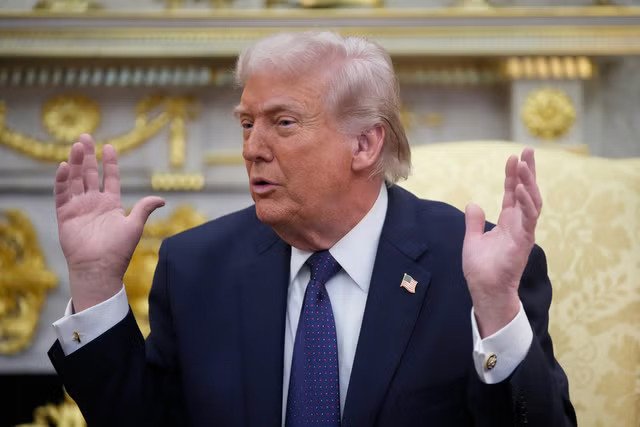
Rabat – US President Donald Trump harshly criticized today NATO allies for what he described as failing to support the US-Israel military campaign against Iran, calling them “cowards” in a pointed social media post.
Trump accused longtime partners of relying on US military strength while refusing to act themselves.
He singled out the Strait of Hormuz, a critical waterway controlled by Iran, and urged NATO countries to help secure shipping routes, which he said was key to stabilizing oil prices.
“The fight is won militarily with minimal risk for them, yet they complain about the high oil prices and refuse to take action to open the Strait,” Trump wrote. “COWARDS, and we will remember!”
The war, which began on February 28 with US-Israel strikes, has already left thousands dead and forced millions from their homes.
The situation has sent shockwaves through global markets, with oil prices rising sharply as shipping through the Strait remains threatened.
Some allies, including Germany, Britain, France, Italy, the Netherlands, Japan, and Canada, issued a joint statement pledging to support “appropriate efforts to ensure safe passage through the Strait.”
European leaders, however, made clear their involvement depends on a halt to fighting.
German Chancellor Friedrich Merz stressed that any action requires peace, while French President Emmanuel Macron emphasized that defending international law and reducing tensions is the most realistic role for Europe.
“I have not heard anyone here express a willingness to enter this conflict — quite the opposite,” Macron said after an EU summit in Brussels.
This war triggered widespread instability across the region and beyond and has already claimed thousands of lives and displaced millions, while forcing communities to flee their homes amid escalating violence.
Global markets have reacted sharply, with oil and gas prices surging as shipping through the Iran-controlled Strait of Hormuz remains under threat.
The unrest has sent ripples through economies worldwide, increasing the cost of energy and goods, while humanitarian agencies warn of mounting shortages and growing insecurity for civilians caught in the crossfire.
