


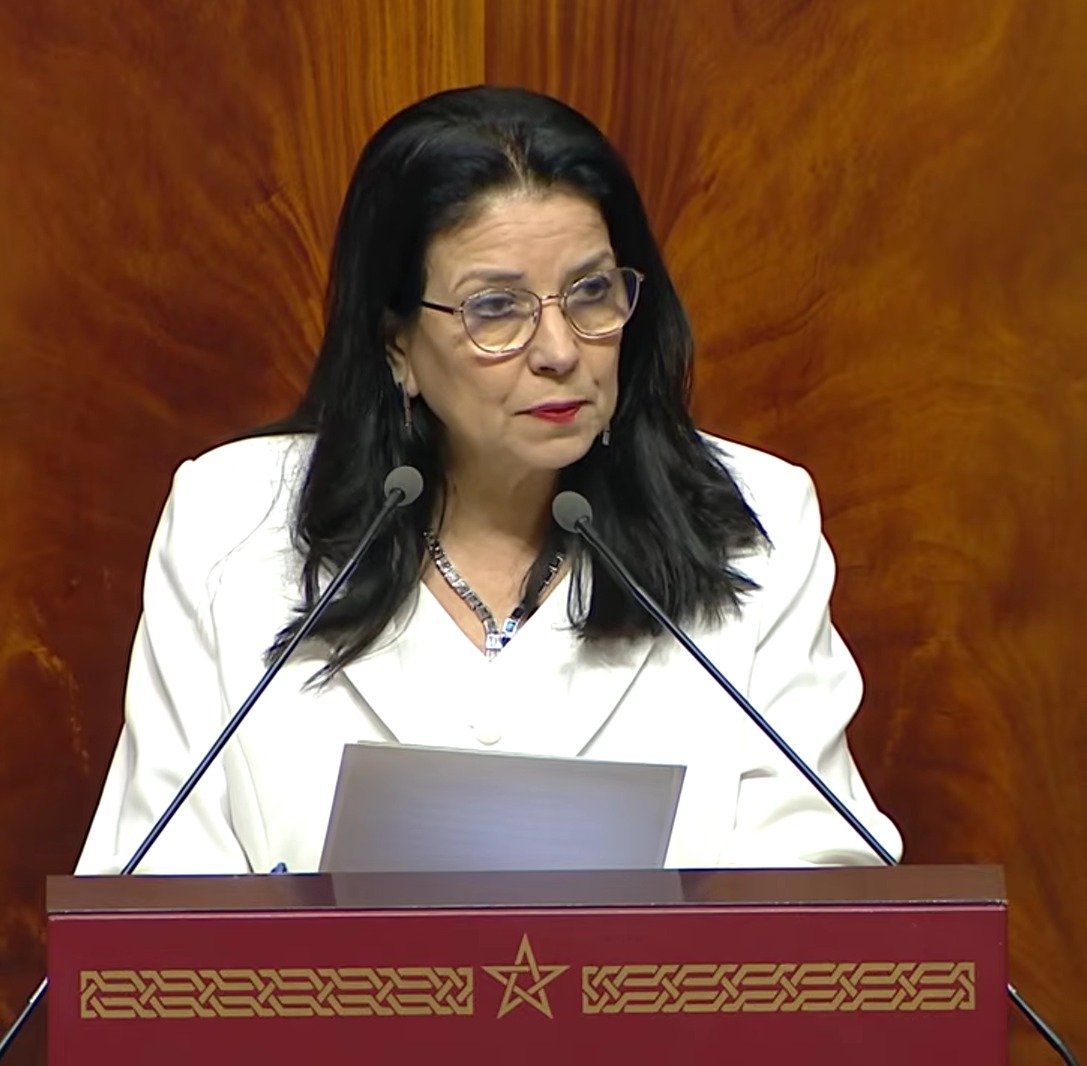
Agadir – The time system in Morocco is governed by established legal and regulatory texts and is not a sectoral decision-making, Delegate Minister for Digital Transition and Administrative Reform Amal El Fallah Seghrouchni stated today before the House of Representatives.
“Legal time is governed by clear legal and regulatory provisions, foremost among them Royal Decree No. 2.18.855 issued on October 26, 2018, which stipulates the addition of 60 minutes to the legal time, with the possibility of adjusting working hours accordingly when necessary,” Seghrouchni argued.
Responding to the current protests against the GMT+1 time change, Seghrouchni explained that any assessment of its impact must take into account multiple dimensions, including economic integration requirements and citizens’ daily expectations.
She acknowledged that the time system directly affects households, public services, and schools, stressing that the government is addressing the issue through a joint institutional framework.
“The government is aware that this issue affects the daily lives of families, public administration, schools, and various aspects of social and economic activity,” Seghrouchni noted. “Therefore, the handling of this matter and the continued management of this file are carried out in a participatory manner.”
The minister further argued that this decision is supported by the government through a set of measures and actions, “adjustment of working hours in public administrations through a flexible approach, adapting school schedules according to regional specificities.”
Handling such issues required the support of all government sectors, she elaborated, adding: “It should therefore be noted that determining the legal time is governed by legal and regulatory provisions, and is not merely a sectoral decision or an isolated measure.”
The debate over GMT+1 time change has intensified more recently after Energy Transition Minister Laila Benali suggested that this change has limited effect on the energy savings for winter and almost none on the overall electricity demands.
