


Rabat – As the United Nations’ 70th Session of the Commission on the Status of Women (CSW) in New York (March 9–19) has concluded, global leaders continue to underscore a persistent gap between commitments and action on women’s rights.
Women today hold only 64% of the legal rights men enjoy worldwide, with 44% of countries still not mandating equal pay. Globally, 54% of countries lack consent-based rape laws, and 72% allow child marriage. Conflict-related sexual violence has surged by 87% in just two years.
“We no longer need to debate why women’s rights matter. The facts are clear,” said Annalena Baerbock, President of the UN General Assembly. “The real question is: why are we still not delivering?”
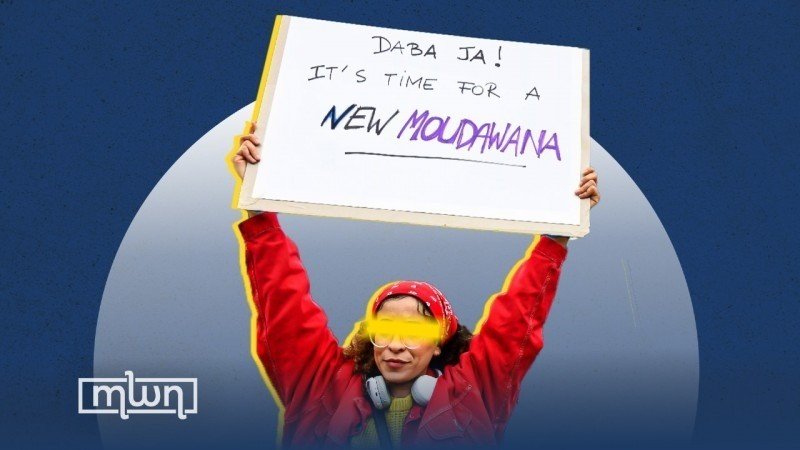
Against this backdrop, Morocco finds itself at a critical moment as reforms to its family code, the Moudawana, are stalled in parliament amid a climate of misinformation, limited public debate, and uneven implementation of past reforms.
Waves of reform with implementation gaps
In September 2023, two decades after its last major overhaul, King Mohammed VI called for a revision of Morocco’s family code.
Since independence, Morocco’s Moudawana has undergone three key reform phases in 1957, 1993, and most significantly in 2004. The latter introduced sweeping changes, raising the legal age of marriage to 18, expanding women’s rights in divorce, and improving child custody laws.
Yet the impact of these reforms has been uneven.
For example, while child marriage is legally restricted to “exceptional” cases under the 2004 code, judges approved approximately 64% of the 16,790 requests submitted in 2024 – down from 85% in 2018.
Repealing articles allowing exceptions for child marriage was one of the reforms Moroccan women’s rights group Mobilizing for Rights Association (MRA) suggested in 2023.
At a recent workshop for young women in Rabat, Stephanie Willman Bordat and Saida Kouzzi, founding partners of MRA, explained misconceptions around the proposed Moudawana reforms, which prompted uproar when publicized in 2024.
In a conversation with Morocco World News (MWN), Willman Bordat highlighted implementation barriers faced during the three previous reforms.
“Not even judges and lawyers were fully informed,” she said, stressing the slow roll-outs of the 1993 and 2004 reforms.
“There wasn’t a real dialogue or widespread understanding of what had changed.”
She added that ambiguities in the 2004 law itself contributed to confusion: “You could read it one way or another,” and “that was also feeding into the misinformation.”
Illiteracy was a major barrier, particularly in rural areas, with roughly half of Moroccan women illiterate at the time of the last reforms. Even for literate populations, legal texts are often complex and difficult to interpret.
Language also played a role, as much of the public debate around the 2004 reforms took place in classical Arabic, which is not widely understood by large segments of the population.
In response, Moroccan NGOs launched extensive grassroots campaigns, using theater, community workshops, and legal education programs to explain the 2004 Moudawana.
MRA developed a 400-page facilitator manual with support from the U.S. Agency for International Development (USAID) and trained local groups to provide clear and accessible information about legal changes to the Moroccan public.
“We didn’t want another decade to go by and nobody knew about it,” Willman Bordat said.
Religion, law, and misconceptions
Debates around the Moudawana are often framed as a clash between religion and modernity — a simplification that experts say obscures the real issue.
“We sometimes find dominant patriarchal interpretations of religious texts that see male superiority, authority, and guardianship over women as a sacrosanct religious edict that must be followed by law,” Marwa Sharafeldin Senior Adviser to Musawah, the Global Movement for Equality and Justice in the Muslim Family, said at the 2026 CSW session.
In Morocco, such interpretations have historically fueled resistance to reform. During the 2004 changes and the proposed 2024 reforms, misinformation spread widely, with claims that men would lose religiously sanctioned rights such as polygamy or financial authority.
“I don’t want to overestimate and over exaggerate the opposition. But the part of the opposition that did exist was spreading fake news,” Willman Bordat told MWN.
The opposition at the time pushed narratives along the lines of “‘no one’s gonna want to get married because my wife is gonna take you know all my property’ and I mean none of that is true,” she said, emphasizing “that is nowhere in the code.”
Speaking on public backlash that arose after reforms were announced in 2023, she said “people tend to get super defensive and upset and vulnerable to fake news if they think that something that is a right is under attack.”
“A lot of what people thought they were losing weren’t rights — they were privileges,” Willman Bordat underscored.
Spreading misinformation
The same patterns remain but in an increasingly volatile era where news and misinformation spread rapidly on social media.
Public reactions to the proposed reforms have been intense, with some celebrating imagined progress and others fearing sweeping social change.
“People are presenting opinions as facts,” Willman Bordat warned. “And many are reacting to reforms that don’t even exist yet.”
Crucially, no official draft of the new Moudawana has been publicly released, though the Higher Council of Ulemas approved in late 2024 several key proposed reforms while rejecting others deemed incompatible with established religious texts. Yet speculation has already triggered confusion, backlash, and even false claims that reforms have already been enacted.
No funding means no public discourse
Unlike in 2004, when NGOs played a central role in informing the public, today’s reform process is unfolding amid shrinking support for local movements.
International funding for women’s rights initiatives has declined significantly in recent years, limiting the ability of organizations to conduct outreach and education campaigns.
A major blow came when the Trump administration’s cut to the USAID funding a year ago deprived the aid sector of $60 billion. Following the cuts, a global survey of 411 women’s rights and civil society groups found that nearly half expected to shut down within six months.
“All the funding for women’s rights got cut after the US administration cut USAID last year. So no more USAID funding, no more State Department funding. Then a lot of the other European governments followed suit and cut their funding too,” Willman Bordat explained.
“The reason there’s no public debate now is simple,” she stressed, “there’s no funding.”
This decline has serious consequences: fewer grassroots initiatives, reduced access to reliable information, and a growing social media vacuum increasingly filled by misinformation.
“This is the worst period in 26 years I’ve seen, whether in terms of funding or whether in terms of prioritizing women’s rights.”
Beyond legal reform
As global leaders question why progress on women’s rights continues to stall, Morocco’s experience offers a clear lesson: legal reform alone is not enough.
“Everyone talks about awareness,” Willman Bordat emphasized. “But this is about access to information. The government has the responsibility to inform people of their rights.”
As Morocco prepares for another potential transformation of its family code, the challenge of ensuring that the laws are understood and universally applied remains.
“The potential this time could be much worse for more misinformation, which could have terrible consequences in terms of backlash and in terms of nonapplication of the law,” Willman Bordat warns.
“If there’s misinformation about what people’s rights are, women aren’t going to go claim them in front of the courts.”
Without access to accurate information, misinformation thrives, and without sustained support for local movements, public discourse stalls. Most significantly, women cannot defend their rights if they don’t know what they are.
