


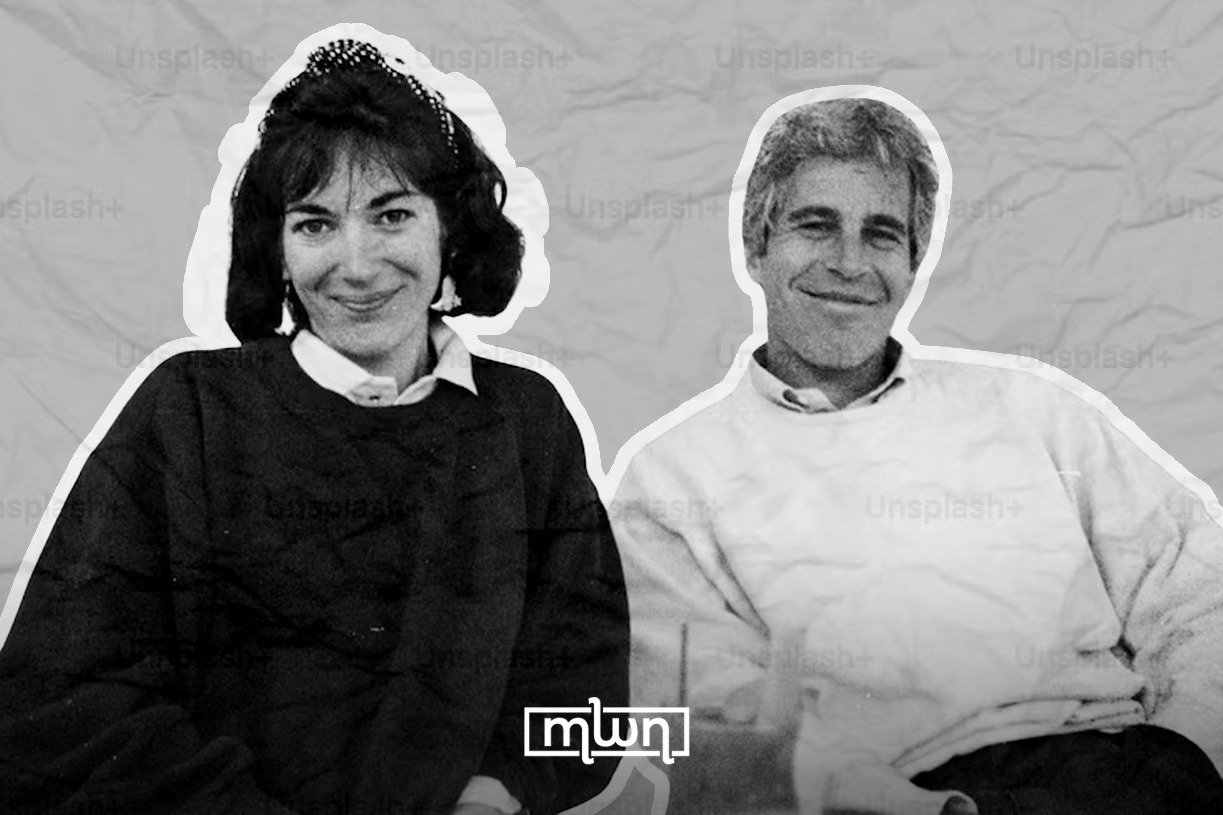
Marrakech – The US Justice Department on Friday released what it described as its largest Epstein disclosure to date: more than three million additional pages, alongside about 180,000 images and more than 2,000 videos, tied to the investigations of Jeffrey Epstein and his network.
The department said the publication brought the overall production to nearly 3.5 million pages when combined with earlier releases. Deputy Attorney General Todd Blanche said the release was intended to satisfy the Justice Department’s obligations under the Epstein Files Transparency Act, which the department says was signed into law on November 19, 2025.
The statute required the government to make Epstein-related records public by December 19, 2025. But the rollout missed that deadline, prompting fresh criticism and scrutiny of what was delayed, what was redacted, and whether the administration’s handling of the files was driven by process, politics, or both.
The extraordinary trove and the scale of the eventual release immediately reignited a digital frenzy that has long surrounded the case.
Social media platforms quickly filled with screenshots of documents, amateur “forensics,” half-read excerpts, and speculative threads that blurred fact, inference, and conspiracy. Some material was recycled into partisan warfare; some was weaponized against political opponents or even foreign governments. Names trended, narratives hardened, and outrage surged.
Yet amid the document dumps and online hysteria, one figure – the woman most central to Epstein’s crimes – was again reduced to a footnote, a cipher, or a convenient symbol.
Rarely did the noise pause to fully reckon with who Ghislaine Maxwell actually is, how she arrived at the center of one of the most notorious criminal sagas of the modern era, and what her story reveals about power, complicity, and moral collapse.
Maxwell was born on Christmas Day in 1961 into immense wealth and profound dysfunction. She was the youngest of nine children of Robert Maxwell, the Czech-born publishing tycoon who rose from wartime poverty to become a media baron, Labour MP, and global power broker in the UK. Her infancy was marked by tragedy: days after her birth, one of her older brothers was gravely injured in a car crash and spent years in a coma before dying.
Her mother later recounted that the trauma consumed the household, leaving the infant Ghislaine emotionally neglected. As she grew older, that neglect flipped into indulgence. She became her father’s favorite – spoiled, protected, yet never spared his volatility.
Maxwell was raised amid grandeur at Headington Hill Hall in Oxford, where lavish parties brought politicians, celebrities, and media elites through the doors. Behind the spectacle, accounts describe a home ruled by intimidation and cruelty. Robert Maxwell interrogated his children at the dinner table, belittled them, and beat them.
Though favored, Ghislaine learned early that survival meant appeasement. She excelled academically, attending Marlborough College and later Oxford University, where she studied history and languages. But even then, friends and acquaintances recall her singular fixation on power, proximity, and status. She was obsessed with – and excelled at – scanning rooms for the most important person present.
The point of no return
Her world imploded in the early 1990s. In November 1991, Robert Maxwell fell from his yacht, the Lady Ghislaine, off the Canary Islands and was found dead. Soon after, it emerged that he had looted hundreds of millions of pounds from employee pension funds.
As criminal investigations engulfed the family, Ghislaine defended her father fiercely, insisting he was no thief and suggesting he had been murdered. Britain became inhospitable. She left for New York, carrying a modest trust income that could not sustain the lifestyle she was determined to lead.
It was in that moment of rupture that she formed a relationship with Jeffrey Epstein, a wealthy financier with opaque sources of money and an appetite for elite access. The relationship – romantic, professional, and ultimately criminal – proved mutually beneficial.
Maxwell introduced Epstein to her transatlantic social network; Epstein financed her lifestyle. Prosecutors later alleged that he paid her tens of millions of dollars and funded her Manhattan townhouse.
Epstein’s gatekeeper
According to court evidence, Maxwell had become indispensable to Epstein’s operation by the mid-1990s. Even after the romance cooled and faded, Maxwell’s role in Epstein’s world did not. Epstein called her “my best friend,” according to a 2003 profile, while journalists observed she seemed to “organize much of his life.” The description would later read less like society gossip than an operational summary of their relationship.
She remained deeply involved in his network and operations for decades afterward. According to investigative releases and victim accounts, she stayed connected to Epstein and was often referred to by staff as his “main girlfriend” or life organizer, and supervised staff and arrangements at his homes well into the 2000s.
To those inside Epstein’s world, Maxwell was the constant: Not only his eyes and ears, but also the final filter through which everything passed.
In court-era records, staff described a household shaped by rules and secrecy: a “Household Manual” instructed employees to “see nothing, hear nothing, say nothing,” and to “respect their privacy,” capturing the culture of control around Epstein and Maxwell.
From roughly 1994 to 2004, she recruited, groomed, and controlled underage girls for his sexual abuse. Prosecutors said she targeted vulnerable teenagers, showered them with attention and gifts, discussed sex openly to desensitize them, and presented herself as a reassuring adult presence during their first encounters with Epstein.
She allegedly coordinated travel between his properties, normalized sexual conduct, and in some cases participated in the abuse herself. Afterward, victims were paid cash; some were encouraged to recruit others.
Victims portrayed Maxwell as the adult who made the abuse feel “normal” before it became nightmarish. In announcing charges, federal prosecutors said Maxwell “put victims at ease” by offering “the assurance and comfort of an adult woman who seemingly approved of Epstein’s behavior.”
In 2008, Epstein avoided federal prosecution through a controversial Florida plea deal, registering as a sex offender while serving minimal jail time. The agreement promised immunity not only for Epstein but also for unnamed co-conspirators.
Maxwell continued to move freely in elite circles. Epstein was photographed with politicians, royalty, and billionaires, including Bill Clinton, Donald Trump, and Prince Andrew, the latter of whom has denied allegations of abuse but later settled a civil lawsuit.
Much of what she knows remains sealed
When Epstein was arrested again in 2019 on federal sex-trafficking charges, he died in jail weeks later. Public attention turned swiftly to Maxwell. She disappeared, resurfaced briefly in tabloid photographs, and was arrested in 2020 at a secluded New Hampshire property. After a month-long trial in 2021, a jury found her guilty on multiple federal charges, including sex trafficking of a minor. She was sentenced in 2022 to 20 years in prison.
Among the most prominent accusers was Virginia Giuffre, who alleged that Maxwell recruited her while she was working as a teenager at Mar-a-Lago. Giuffre sued Maxwell for defamation after Maxwell dismissed her claims as lies; the case was settled in Giuffre’s favor. Giuffre also accused Prince Andrew, who denied the allegations but reached a financial settlement.
Since her conviction, Maxwell has pursued appeals, arguing that Epstein’s 2008 plea deal should have shielded her from prosecution. The Justice Department has urged the Supreme Court to reject that claim.
At the same time, renewed political pressure over the Epstein files has drawn Maxwell back into public view. Members of Congress have subpoenaed her. The Justice Department has interviewed her. Her attorney insists no pardon discussions took place, though legal experts note that executive clemency remains her only realistic path to release.
What Maxwell knows – and whether she will ever fully speak – remains an open question. She is widely believed to possess detailed knowledge of Epstein’s network and of who knew what, and when.
Yet even as attention swirls around documents and names, the deeper lesson of her story risks being lost. Ghislaine Maxwell was not a passive accessory or a tragic bystander. Shaped by privilege, trained in submission to power, and ultimately devoted to preserving proximity to men who controlled her fate, she became the chief orchestrator of Epstein’s matrix of sexual obscenity.
In the end, the Epstein files may expose systems, relationships, and failures of accountability. But Maxwell’s life exposes something more unsettling: how moral vacancy, when paired with wealth and access, can produce devastation on an industrial scale. Maxwell did not merely orbit evil. She organized it.
