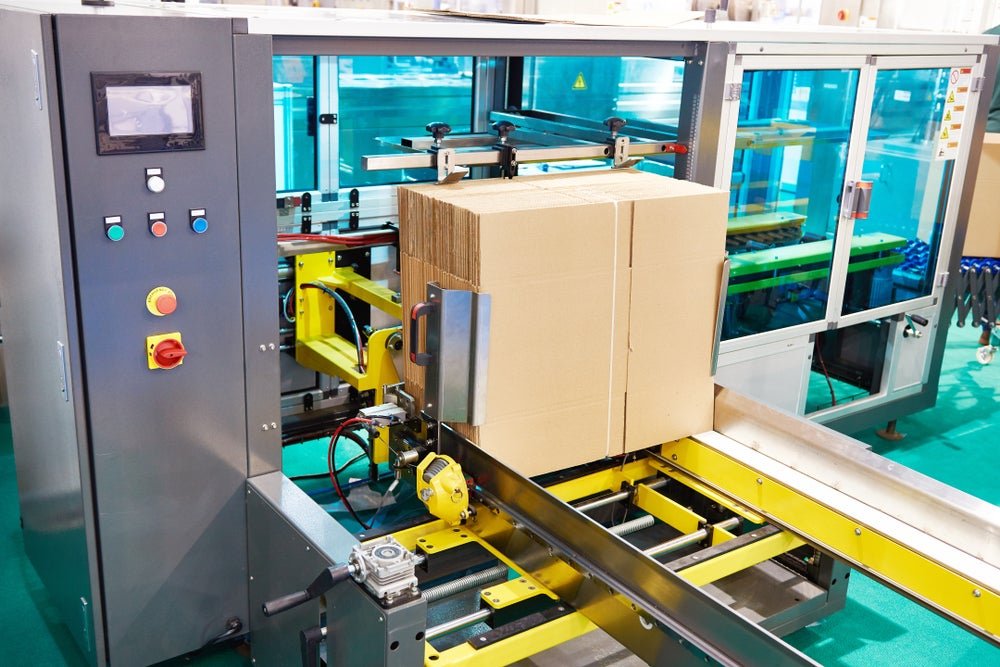
In the packaging industry, compressed air has become indispensable for modern production lines. It’s often colloquially referred to as the “fourth utility” alongside electricity, gas and water, and with good reason, as it powers conveyor belts, robotic assemblies, and numerous other moving parts in packaging facilities.
As facilities continue to harness automation to overcome pressing labour shortages and skills gaps, while meeting rising productivity demands, the quality and consistency of compressed air must also be heavily scrutinised and corrected if not up to standards.
Compressed air systems are invaluable for packaging facilities and are utilised at almost every stage. It powers:
-
Pneumatic systems
-
Filling machines
-
Capping machines
-
Labelling systems
-
Heavy-duty machinery
-
Conveyor belts
-
Blow-moulding equipment
-
Vacuum systems
-
Robotic arms
Unlike electricity, compressed air doesn’t spark, making it ideal for handling volatile, combustible or fragile items, thanks also to its ‘cushioning’ effect. It’s also highly powerful and expertly precise.
The quality of compressed air directly influences the integrity of the products passing through the facility, and the efficiency of the operators overall. Contaminated air can lead to hazards such as moisture ingress, oil residue and particulate matter developing, which can affect the entire production process.
-
Solid particulates like dust, limescale, debris and other residues can find their way into tight spaces in pneumatic equipment and, if left unattended, can seize valves, actuators and seals or lead to premature malfunction.
-
The presence of moisture can lead to a higher risk of corrosion and microbial growth. It can also freeze on parts when exposed to excessively cold weather conditions.
-
Oils, such as those in liquids, aerosols or vapours, can also spoil products, damage underlying mechanical equipment, and halt productions, not to mention pose risks for workers handling the goods.
According to air compressor specialists, “any obstruction or interruption in air supply can compromise production, making reliable compressed air solutions vital for operational continuity.”
Even despite the downtime often caused by equipment failure, the financial implications can also be profound. Contaminated air can lead to increased maintenance, more product replacement orders, and product recalls, all of which come with a hefty price tag.
ISO 8573-1:2010 exists as the definitive standard for compressed air quality in the packaging industry. This framework classifies air purity across three contaminant categories, solid particulates, water, and oil, with Class 1 representing the highest purity level. The classification system enables facilities to specify precise requirements based on their applications. Facilities responsible for packaging for food, beverage and medical devices typically demand the most stringent standards.
Meeting these standards necessitates comprehensive air treatment systems, encompassing:
-
Multi-stage filtration
-
Regular filter replacements
-
Refrigerated or desiccant dryers
-
Oil-free air compression systems
-
Vapour removal
-
Regular testing and monitoring to confirm ongoing compliance
Compressed air systems frequently rank amongst the most energy-intensive utilities in packaging facilities. Despite this, their presence is also grounds for widespread optimisation.
The energy costs themselves can be astronomically higher than the equivalent amount of power via electricity, suggesting that efficiency improvements correlate directly to profit margins. That said, Variable Speed Drive (VSD) compressor technology represents a good opportunity to enhance efficiency, as it adjusts motor speed to match real-time air consumption compared to fixed-speed compressors which just run at full capacity via either an on/off switch. This solution can reduce energy usage by 20-30% or more, which is ideal for packaging lines with variable production schedules that peak in specific seasons.
Similarly, compressed air leakages can frequently go unnoticed as they’re often concealed within the pipework, but the cost factors of this will be very noticeable indeed, not to mention the wasted air and inefficient production processes. Ultrasonic leak detects can identify what problems may be lurking, empowering operators to make systematic, proactive repairs without an expensive compressor system overhaul.
As with any equipment upkeep, regular maintenance schedules preserve system efficiency and reliability. Replacing filters regularly will help prevent stark pressure drops,while oil level checks and compressor assessments will make good opportunities to catch problems before they manifest into larger issues. Pressure monitoring remains a good solution to confirm that systems are operating at optimal levels; in fact, many inadvertently run at higher pressures than needed, so improvements can, more often than not, be made immediately.
Investing in premium-grade compressed air systems not only provides your facility with the power it needs for its essential packaging equipment, but also delivers tangible returns across multiple dimensions. The long-term product quality improvements that you’ll see first-hand will also result in less wasted resources and energy, as costs can then be reworked accordingly. All in all, you’re strengthening your brand reputation by investing in quality utilities, rather than cheap ones which aren’t up to scratch.
Fundamentally, it’s an issue worth its weight, as a single contamination incident can spell disaster. Expensive product recalls, damaged consumer trust, and expensive equipment upgrades will, naturally, do little to dispel the financial stress. Conversely, consistent and clean air quality ensures that every product is as pristine and optimally packaged as can be, leaving little room for error, provided that sufficient oversight and maintenance is exercised.
In an industry where unplanned downtime can be very expensive, the reliability of your facility and operations is tantamount to profitability. Clean and dry compressed air, by the same token, extends equipment lifespan, as the valves, cylinders and seals will be subject to optimal conditions, and thus will likely last longer. As preventative maintenance becomes more regular, facilities can better plan for increasing the operational lifespan of their equipment reliant upon compressed air.
What’s more, as automation becomes more prevalent, compressed air looks likely to become far more embedded in packaging applications, as well as those adjacent to it. Automated lines are far more impactful and fast than entirely manual ones, and are symptomatic of a wider industry move, but resisting the change proves fruitless. Smart manufacturing solutions that collect and analyse production data in real time rely on optimal performance at all touchpoints. Therefore, the packaging facilities primed for success will be those that recognise the importance of ensuring that their utilities support them, rather than exist as merely another operational cost to bear.
About the author: Annie Button is a freelance writer based in the UK. She specialises in business development, sustainability, digital trends, marketing, and HR.
“The importance of clean compressed air in packaging machinery” was originally created and published by Packaging Gateway, a GlobalData owned brand.
The information on this site has been included in good faith for general informational purposes only. It is not intended to amount to advice on which you should rely, and we give no representation, warranty or guarantee, whether express or implied as to its accuracy or completeness. You must obtain professional or specialist advice before taking, or refraining from, any action on the basis of the content on our site.