


Rabat – Recent rainfall recorded across several regions of Morocco has begun to produce tangible effects on the country’s water resources.
According to data published by Maadialna, the past 24 hours saw a modest yet notable improvement in inflows to a number of dams, while the south-eastern regions experienced exceptional wadi flows, prompting heightened vigilance from authorities.
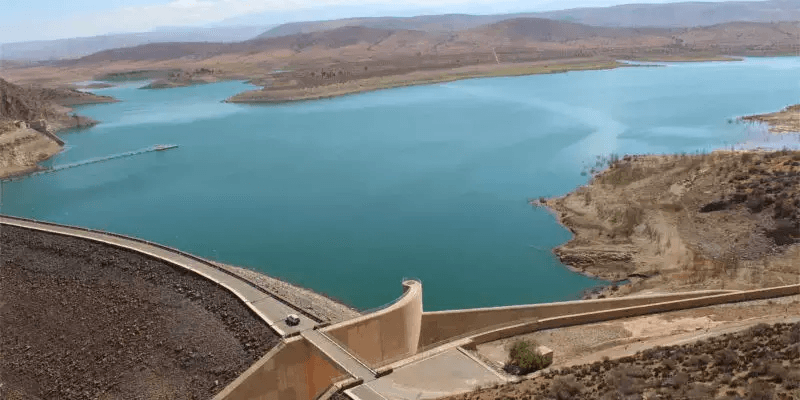
In Settat province, Al Massira Dam registered an increase of nearly 680,000 cubic meters, bringing its filling rate to 2.7%. Although levels remain low, the rise offers a cautiously positive sign for one of Morocco’s largest hydraulic structures, which has been severely affected by successive years of drought.
In Beni Mellal, Ahmed El Hansali Dam recorded a more substantial gain, adding close to 900,000 cubic meters to its reserves, raising its filling rate to 11.9% and supporting the region’s agricultural water needs.
Further north, Idriss I Dam in Taounate province saw its reserves increase by around 310,000 cubic meters, reaching a filling rate of 33.9%.
In Kenitra, Sebou Dam also benefited from recent rainfall, with an additional 760,000 cubic meters pushing its filling rate to 62.2%, among the highest levels recorded at the national level during this episode.
South-east: exceptional inflows, heightened vigilance
Alongside these developments, Saturday was marked by exceptional hydrological activity in Morocco’s south-east. In Errachidia, Oued Al Ahmar recorded significant flows following heavy rainfall exceeding 50 millimeters in upstream catchment areas, particularly within the Ziz basin.
These conditions led to increased discharges across several wadis under the Guir-Ziz-Ghris hydraulic basin.
Snowfall in upstream zones of the Ghris and Todgha basins further contributed to rising water volumes flowing downstream. In response, services of the Guir-Ziz-Ghris Basin Agency activated alert stations to warn populations living near wadis of potential flood risks.
These preventive measures rely on the integrated monitoring and early warning system deployed in the Ziz basin, enabling real-time tracking of hydrological developments.
At a time when Morocco continues to face structural water stress, these rainfall events provide welcome support to the country’s strategic water reserves.
They also underline the need to combine resource reinforcement, careful management of hydraulic infrastructure, and effective early warning systems to address increasingly contrasting climate patterns.
