


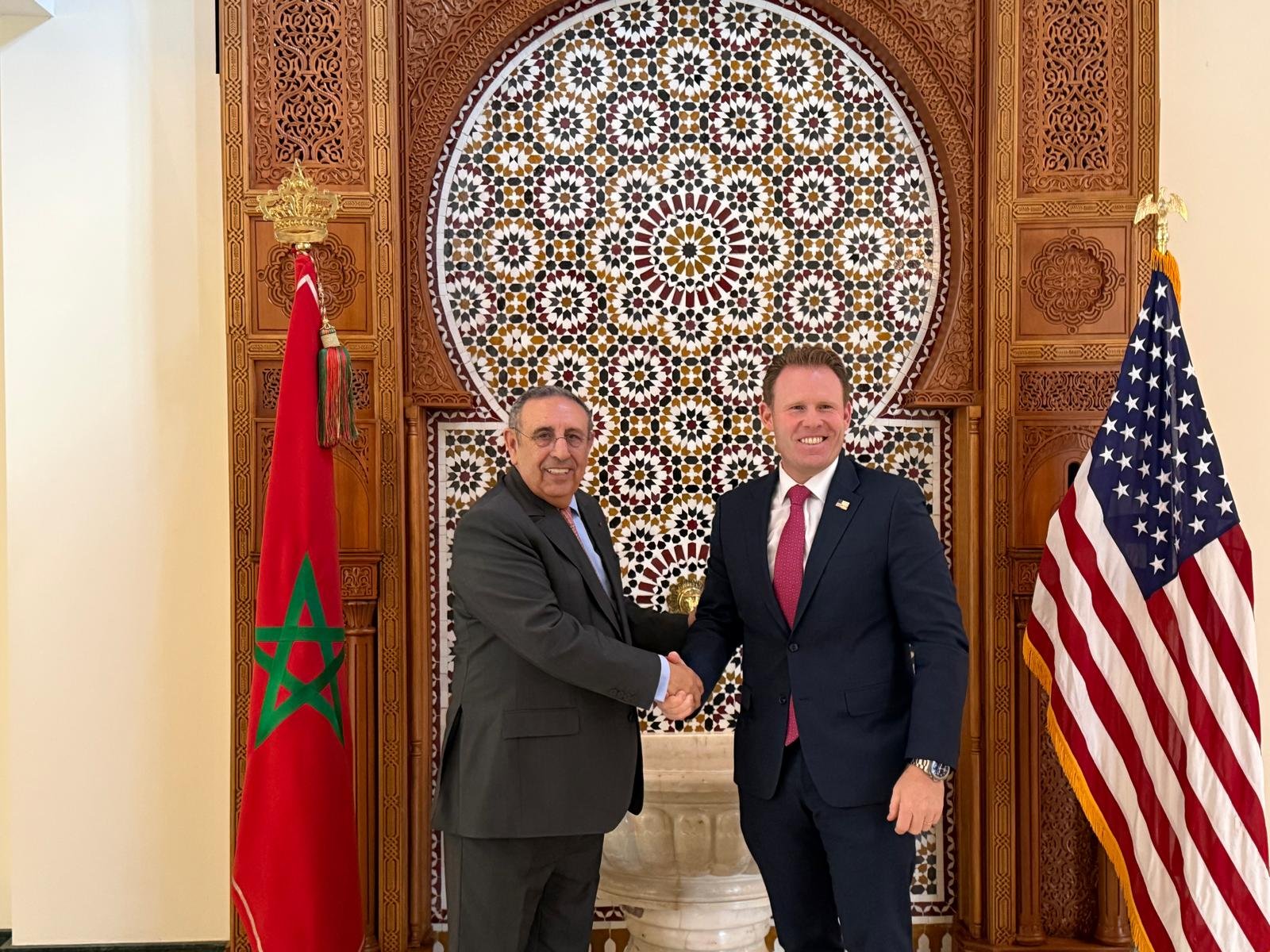
Rabat – In Washington, Morocco’s Ambassador to the United States, Youssef Amrani, met with Andrew Giuliani, who leads the White House FIFA Task Force, in a discussion that placed football within a broader diplomatic framework ahead of the 2026 FIFA World Cup.
The talks come at a moment when the US prepares to co-host the tournament with Mexico and Canada, an event that already stands as the largest in FIFA history in terms of scale and expected global attendance. Within the US administration, Giuliani oversees coordination across federal structures tasked with managing logistics, security, and fan mobility across multiple host cities.
For Washington, the conversation with Morocco fits into a broader pattern of cooperation that extends beyond sport. American officials view Morocco as a long-standing partner with historical weight, recalling its early recognition of American independence. That legacy now sits alongside shared interests in global sporting events and international visibility.
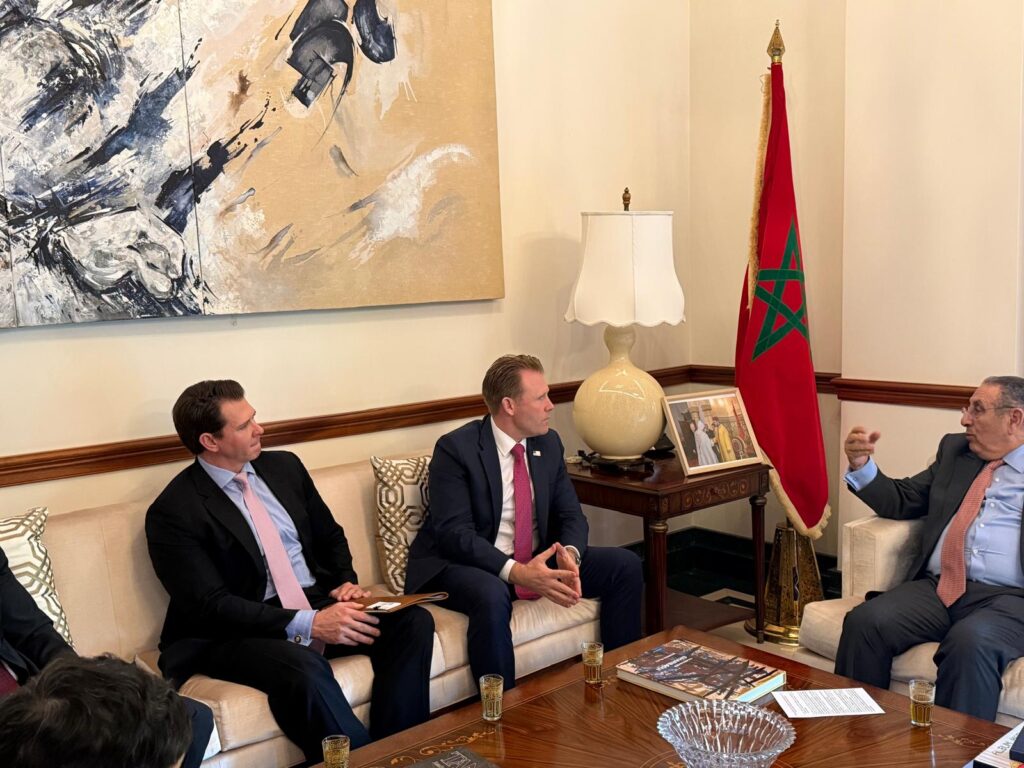
Giuliani pointed to Morocco’s rapid development in football infrastructure and its growing role in international sport. He noted that FIFA leadership has expressed strong appreciation for the country’s model, which links sport with long-term national development strategies. The remarks reflect how Morocco’s preparations for the 2030 FIFA World Cup, co-hosted with Spain and Portugal, are already influencing discussions about the 2026 edition.
The US side also confirmed readiness to deepen coordination with Moroccan counterparts across organizational and operational areas. Officials described the 2026 and 2030 tournaments as linked milestones that require sustained dialogue between host nations.
Simon Bland, Director of International Affairs at the US Department of the Interior, also joined the meeting. He described a shared interest in building practical mechanisms between the two countries, particularly in areas where experience from one country can support the other.
Ticket demand for the 2026 FIFA World Cup already signals the scale of the event. American officials cited figures showing millions of tickets sold and hundreds of millions of applications submitted since the first phase opened. The surge, they noted, has also shaped pricing dynamics within the US market.
For Ambassador Amrani, the World Cup carries meaning beyond stadiums and competition. He described it as a reflection of what he called the depth of the relationship between Morocco and the US, in which sport mirrors a broader diplomatic connection.
“This is a window onto the vitality, depth, and determination of an enduring friendship between Morocco and the United States,” he said.
He also placed the event within a historical continuum. “It gives us immense pride that Morocco will follow the United States as a World Cup host, especially as we mark 250 years of relations between our two countries,” he added.
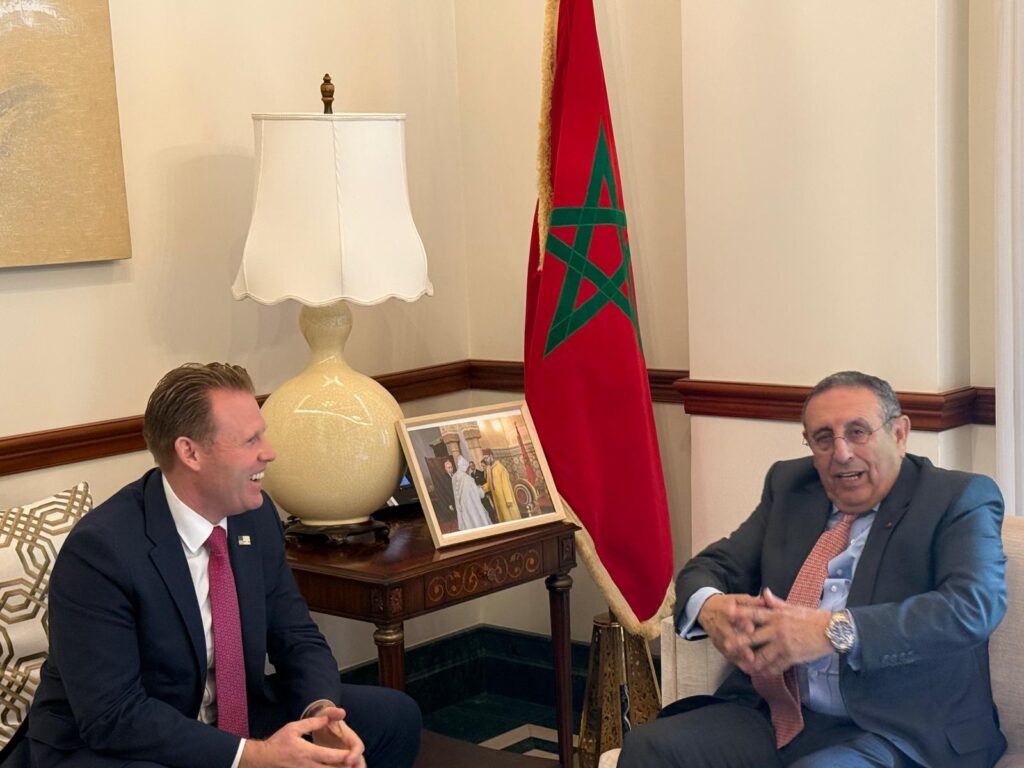
Amrani also referred to ongoing coordination with US authorities on security matters, noting that Morocco is included in the White House task force framework for the tournament. He presented this as evidence of trust and institutional confidence between the two sides.
As preparations for 2026 advance, Washington’s meeting reflects a broader trend in which football serves as a diplomatic space. For Morocco and the US, the sport now sits alongside trade, security, and history as another channel of strategic engagement.
