


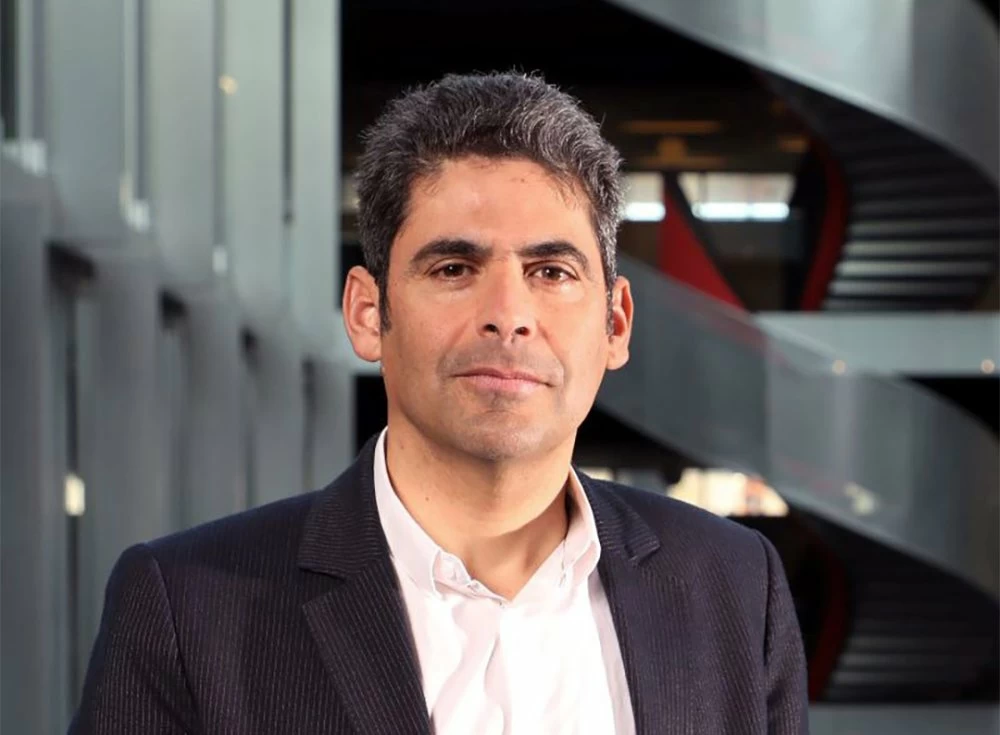
Rabat – Researchers at the Swiss Federal Institute of Technology in Lausanne (EPFL) have developed new software that could change the way artificial intelligence is used around the world. The breakthrough includes a strong Moroccan contribution; it is led by Professor Rachid Guerraoui, a Moroccan researcher at EPFL.
Working with researchers Gauthier Voron and Geovani Rizk at EPFL’s Distributed Computing Laboratory (DCL), Guerraoui helped develop Anyway Systems, a new software that allows powerful AI models to run locally, without relying on cloud services or massive data centers controlled by Big Tech.
Most AI systems currently depend on cloud infrastructure. When users ask AI to perform a task, their data is sent to remote servers where the processing happens. This model raises serious concerns about data privacy, technological dependence, and energy consumption. It also means that only a few global technology companies control most AI infrastructure.
The EPFL team’s solution challenges this model. Anyway Systems allows organizations to download open-source AI models and run them on local machines connected within the same network. These machines cooperate and share computing power, making it possible to run very large AI models while keeping all data on site.
According to EPFL, the software can be installed in about 30 minutes and works with standard, affordable hardware. Large AI models that usually require expensive data-center equipment can now run on a small number of local machines. This shows that powerful AI does not necessarily require massive infrastructure.
Professor Rachid Guerraoui explained that this work proves a long-standing belief wrong. For years, many thought that advanced AI could only exist through huge resources, at the cost of privacy, sovereignty, and sustainability. “Smarter and more frugal approaches are possible,” he said.
The innovation addresses three major issues. First, it improves privacy, since sensitive data never leaves the local network. Second, it strengthens technological sovereignty, giving institutions and countries more control over their own AI systems. Third, it supports sustainability, by reducing the need for energy-intensive data centers, which consume large amounts of electricity and water.
The technology is the result of years of research in distributed computing and fault tolerance, fields in which Guerraoui and his team have long been leaders. Originally developed for other technologies such as blockchain, these methods were later adapted to artificial intelligence with strong results.
Anyway Systems has now been spun off into a start-up and is being tested by companies and public administrations in Switzerland, including EPFL. The project has also received support from a national AI start-up program to help move it from research to real-world use.
