


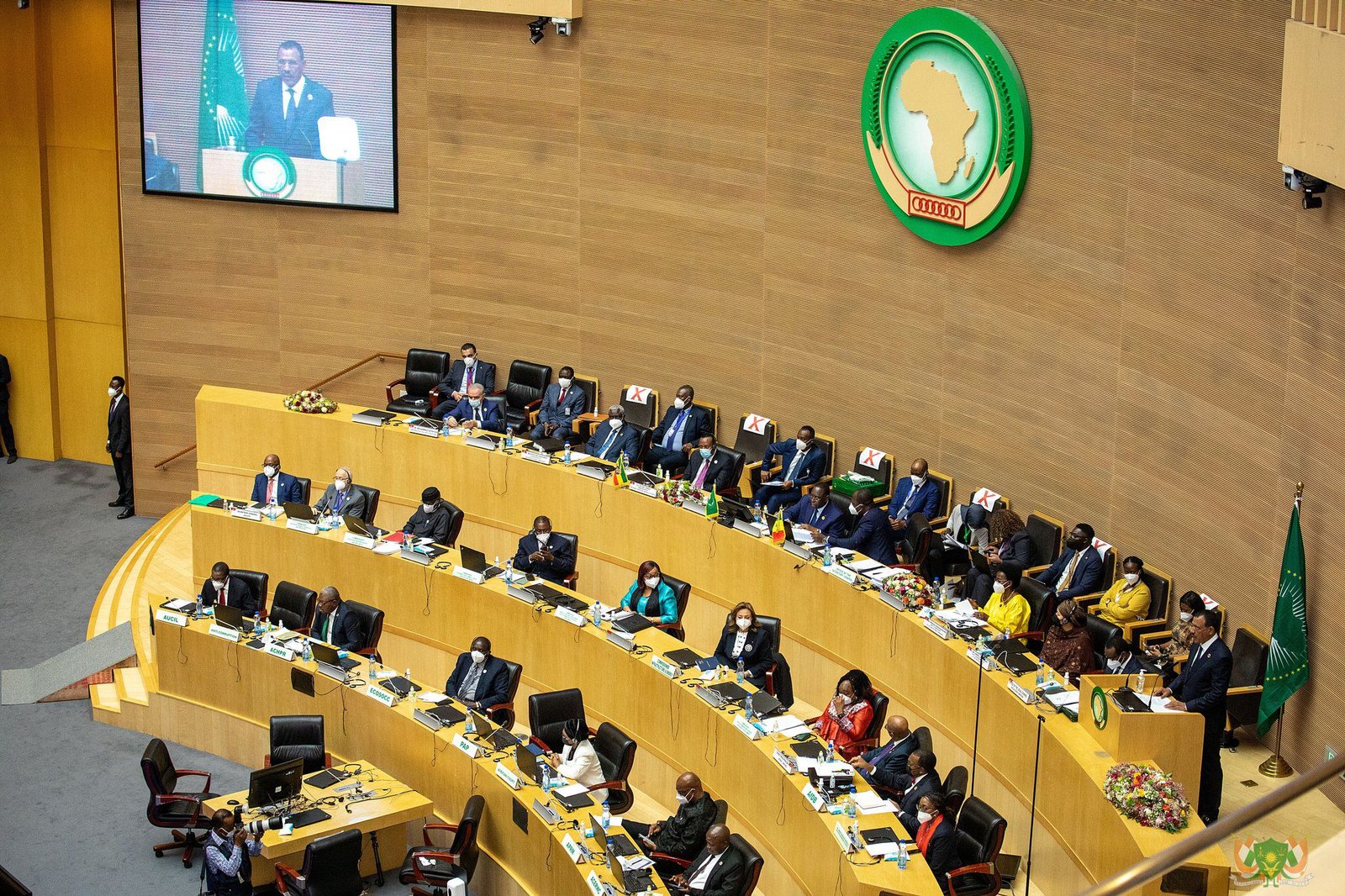
Marrakech – Morocco reaffirmed on Tuesday its unwavering solidarity with Mali before the African Union Peace and Security Council (AU PSC), condemning the coordinated terrorist and separatist attacks that struck the West African country last Saturday.
The Moroccan delegation at the AU PSC session dedicated to the situation in Mali “condemned with the utmost firmness the terrorist and separatist attacks targeting civilian and military zones,” expressing compassion and sincere condolences to the families of victims and the Malian people.
The delegation reiterated Morocco’s full support for Malian sovereignty, security, stability, and territorial integrity. It also called for the mobilization of relevant funds to ensure a rapid and adapted response, in close coordination with Malian authorities.
The Tuesday statement built on an earlier position Morocco had already expressed within hours of the attacks. A Moroccan diplomatic source declared on Saturday that “the Kingdom of Morocco condemns with the greatest vigor these cowardly and criminal acts,” reaffirming Rabat’s backing for Malian authorities in their fight against terrorism and separatism across Mali and the broader Sahel.
Saturday’s attacks were unprecedented in scale. Jihadists of the al-Qaeda-affiliated JNIM launched coordinated assaults alongside Tuareg separatists of the Front for the Liberation of Azawad (FLA) against seven cities, including Bamako, Kati, Kidal, and Gao.
Defense Minister General Sadio Camara was killed by a suicide car bomb at his residence in Kati, while Junta leader General Assimi Goita has not been seen or heard from since the coordinated attacks. The strategic city of Kidal fell to rebel control. Russian Africa Corps mercenaries withdrew from the city under an agreement with the armed groups.
But while Morocco moved swiftly to stand with Bamako, observers and analysts have turned their attention to what they describe as Algeria’s “shadow war” against Mali – a systematic destabilization campaign that has escalated dramatically since Bamako’s sovereign decision, barely two weeks ago, to withdraw its recognition of the self-styled “SADR” and formally endorse Moroccan sovereignty over the Western Sahara.
Algeria’s message: This is what happens when you leave our orbit
That geopolitical realignment detonated at the very structural core of Algeria’s regional posture, eviscerating decades of carefully cultivated diplomatic leverage and exposing the hollow scaffolding upon which Algiers had built its entire claim to Sahelian relevance.
The Mouradia Palace, which has constructed its entire diplomatic architecture in Africa around the instrumentalization of the Western Sahara conflict, interpreted Bamako’s pivot as an unforgivable act of strategic insubordination.
Analysts tracking Sahelian security dynamics are unequivocal: the coordinated attacks of April 25 did not materialize in a geopolitical vacuum. They represent, in substance, punitive retribution for Mali’s definitive rupture from the Algerian sphere of influence.
Bamako has on multiple occasions formally accused Algiers of harboring separatist factions and conducting hostile interference in Malian internal affairs. These are not rhetorical accusations. Algeria carries an extensively documented track record of bankrolling, arming, providing territorial sanctuary, and extending diplomatic cover to separatist proxies across the region.
The Polisario Front remains the most egregious and protracted illustration of this destabilizing doctrine. The same operational playbook, observers contend, is now being systematically replicated against the Malian state.
The Algerian media apparatus activated in near-perfect synchronization with the armed groups on the ground. Semi-official outlets and state-adjacent digital networks launched a coordinated information warfare offensive within hours of the first strikes.
They amplified separatist narratives wholesale, inflated Malian military casualties, and disseminated unverified claims about the fate of senior officials. The underlying messaging carried the unmistakable tone of coercive signaling: this is the cost of exiting Algeria’s orbit.
This orchestrated propaganda blitz proceeded in brutal and profoundly incriminating juxtaposition with the military junta’s own record of systematic concealment. Algiers imposes a hermetic blackout on terrorist incidents within its own borders. International monitoring reports have documented active security threats in the Blida region, and multiple Western embassies have issued travel advisories cautioning their nationals.
Yet the entirety of the Algerian media establishment engaged in collective institutional denial, enforcing a wall of silence that no outlet dared breach. The contradiction indicates a deliberate and deeply cynical duality at the heart of Algerian statecraft – suppress terrorism domestically, weaponize it regionally as an expendable instrument of geopolitical coercion.
The abrogation of the 2015 Algiers Accord by Bamako’s transitional military council, citing sustained hostile actions by the Algerian state, dismantled Algeria’s primary instrument of soft hegemony over Mali.
Algiers had for years leveraged that agreement as a mechanism of perpetual political subordination, maintaining armed groups as a standing threat against the central government in Bamako.
With that leverage neutralized and Mali actively diversifying its strategic partnerships beyond Algeria’s custodial grip, the response from Algiers has been a calculated escalation through proxy warfare, information operations, and territorial destabilization.
Read also: Morocco’s Embassy in Mali Urges Citizens to Exercise Vigilance
Morocco’s posture, by contrast, has remained doctrinally consistent and operationally transparent. Foreign Minister Nasser Bourita laid bare this doctrine during a joint press conference with his Burkinabe counterpart, Karamoko Jean Marie Traoré, in Rabat in June 2024. “Morocco firmly opposes the logic of those who lecture and blackmail Sahel countries,” Bourita declared.
In what many read as a direct indictment of Algiers, the top Moroccan diplomat went on to stress that “even in the Sahel’s neighborhood, there are countries that want to manage the situation through blackmail and settle their own problems at the expense of regional stability.”
At the time, Bourita affirmed that Morocco operates on a fundamentally different logic of confidence in the capacity of Sahel nations to resolve their own crises, offering expertise and accompaniment without conditionality or political subordination.
“They do not need guardians, they need partners,” he said. No paternalistic posturing, no exploitation of a partner’s vulnerability. Rabat extends partnership grounded in mutual sovereignty. Algiers, observers and regional analysts increasingly conclude, offers nothing but coercion dressed in the rhetoric of fraternity.
