


Agadir – A Moroccan delegation held a meeting with the Acting Director General of Culture at UNESCO, Lazare Assomo, and Secretary of the 2003 Convention, Fumiko Ohinata, to address an official complaint submitted by Morocco concerning the safeguarding and recognition of the zellige craft as part of its intangible cultural heritage.
The meeting was organized by Morocco’s Ministry of Culture, in coordination with the Secretariat of State in charge of Traditional Industries and the Social and Solidarity Economy, and under the supervision of the country’s Permanent Delegation to UNESCO.
It forms part of ongoing international discussions related to the inscription and protection of intangible cultural heritage.
According to Morocco’s Ministry of Culture, “the meeting focused on the official complaint submitted by Morocco within the framework of the ongoing session for the inscription of intangible cultural heritage, to defend the zellige element as an authentic Moroccan national heritage.”
It also aims to “strengthen the advocacy process for it based on documented historical facts and the continuity of this venerable craft, which remains alive and inherited across generations.”
The delegation reaffirmed the cooperative relationship between Morocco and UNESCO, expressing its commitment to the principles and requirements of the 2003 Convention for the Safeguarding of the Intangible Cultural Heritage.
It also stressed its determination to actively defend Moroccan heritage when it is perceived to face misrepresentation or appropriation.
The delegation reiterated its readiness to adhere to the spirit and letter of the provisions of the 2003 Convention on the Safeguarding of Intangible Cultural Heritage, and confirmed the partnership that exists between Morocco and UNESCO.
It further stated that it will “spare no effort in defending its heritage against the systematic appropriation attempts it is being subjected to.”
Zellige and the battle over heritage
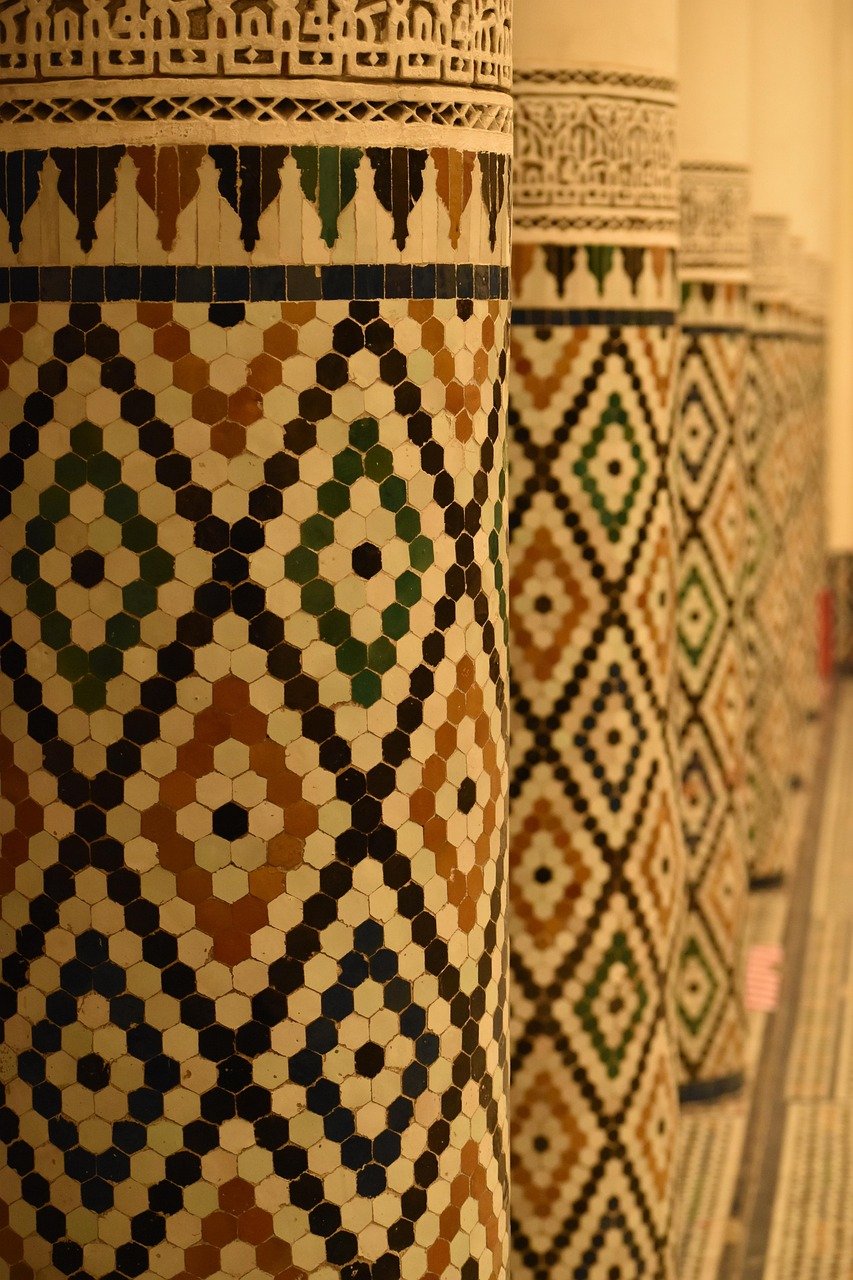
Zellige holds a central role in Morocco’s cultural identity as one of its most distinctive and enduring traditional crafts, deeply rooted in the country’s architectural and artistic heritage.
This cultural element is widely used in mosques, madrasas, palaces, fountains, and historic homes, particularly in cities such as Fez and Tetouan. It is regarded not merely as decorative work, but as a sophisticated visual language transmitted across generations of artisans.
Given its cultural significance, Morocco has recently intensified efforts to defend and secure international recognition for zellige, including through a UNESCO nomination initiative launched in 2025 and its engagement with heritage protection mechanisms, amid broader discussions on safeguarding traditional knowledge.
This meeting came as a result of Morocco’s efforts to protect its national cultural symbols as Algeria triggered a dispute over the origins and recognition of traditional heritage of several elements, one of which is zellige.
Since the dawn of time, Algeria has repeatedly sought to present zellige as part of its own heritage, turning a distinctly Moroccan craft into a point of regional contestation.
One instance that came to wider attention is during the 2022 Adidas controversy, when Morocco’s Ministry of Culture objected to the use of zellige-inspired motifs on Algerian football kits. Adidas later confirmed the design was inspired by Moroccan craftsmanship. Still, the claim continued to circulate, feeding a narrative that reduces Moroccan heritage to a shared Maghreb identity.
At the heart of the dispute is the way cultural elements can be rebranded over time, not through direct appropriation, but through gradual reinterpretation that blurs origins. The stakes go beyond symbolism. Cultural heritage also carries political and diplomatic weight, shaping how countries project identity and influence. When zellige is misattributed, Morocco sees not only a loss of recognition but a dilution of its cultural authorship.
Morocco, for its part, continues to rely on preservation efforts and international registration to protect its crafts. Zellige remains formally recognized through intellectual property frameworks, while artisans keep the tradition alive through intergenerational transmission.
Zellige is not the only element affected by this pattern. The Moroccan caftan, has also been subject to similar claims, with Algerian narratives appropriating it despite its firmly established Moroccan origins and historical continuity.
In Rabat’s view, these repeated disputes can no longer be treated as isolated cultural disagreements, but as part of a wider struggle over heritage and representation in the region.
