


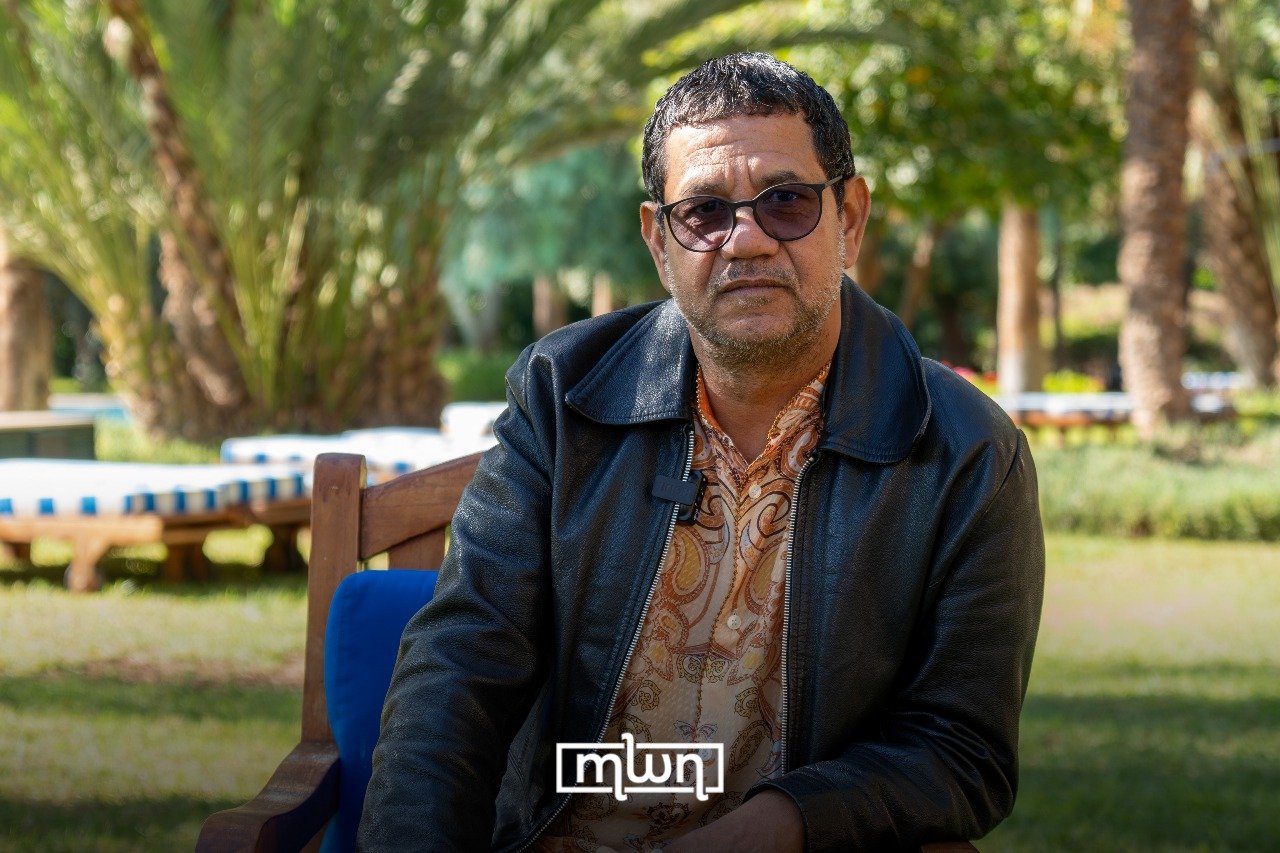
Marrakech – Moroccan filmmaker Karim Dabbagh premiered his directorial debut “Cinq Regards” (Five Eyes) at the 22nd Marrakech International Film Festival, offering a distinctly Moroccan perspective on American writer Paul Bowles and the forgotten artistic circle that surrounded him in Tangier.
The 71-minute documentary challenges decades of Western-centric narratives about the celebrated author of “The Sheltering Sky.”
Born in Tangier in 1972, Dabbagh established himself as one of Morocco’s leading producers through his company Kasbah Films, working on international productions including “Men in Black,” “Mosul,” and “A Hologram for the King.”
View this post on Instagram
“Five Eyes” marks his first feature-length documentary as a director, after many years working as a producer. The film revisits the legacy of Paul Bowles and a Moroccan artistic milieu largely forgotten today with a responsibility in representing these memories “through Moroccan eyes,” as opposed to the existing, more occidental-centric narratives.
Subaltern voices assert authorship
His transition to directing emerged from an urgent sense of cultural preservation rather than career ambition. Speaking to Morocco World News (MWN) at the festival, Dabbagh clarified that his directorial work represents “not a transition” but rather “a coincidence.”
He explained how the documentary originated from his recognition that aging artistic figures were “going to leave us.” This realization compelled him to “save or shoot them, film them so the next generation can hear their life and understand who they are.”
The film reconstructs the intimate world of Paul Bowles through 16mm footage shot 25 years ago, featuring the renowned Moroccan writer Mohamed Choukri, storyteller and painter Mohammed Mrabet, Mohammed Temsamany who served as Bowles’s driver for thirty years, and Abdelouahid Boulaich, who accompanied the American author during his final decade.
These four Moroccan voices, combined with Dabbagh’s perspective as the “fifth eye,” create what the director describes as a “different documentary” that moves beyond orientalist interpretations.
Dabbagh positioned his work as a counter-hegemonic intervention against previous documentaries about Bowles, noting that “what we have seen before were always filmed by Europeans or Americans or by the Westerners.”
The filmmaker’s approach challenges the colonial gaze that has historically dominated representations of cross-cultural encounters in North Africa.
He articulates the necessity of subaltern voices claiming narrative authority, allowing Moroccans to “be stars in their own country and talk about someone that changed their life and that they changed his life.”
Filmmaking enacts epistemic liberation
The documentary captures a vanished cultural moment when Tangier operated as an international zone, free from the colonial control that governed the rest of Morocco.
This liminal space of cultural hybridity fostered what Dabbagh describes as “very special and unique characters, artists, filmmakers, also writers.” The Moroccan director’s ethnographic approach treats his subjects not as exotic others but as cultural agents whose lived experiences shaped transcultural artistic production.
Addressing concerns about younger generations’ disconnection from literary culture, Dabbagh views the documentary’s role as bearing witness to a generation that “lived with a free spirit, with a lot of arts, with a lot of literature and poetry.”
The film functions as cultural memory work, preserving what Pierre Nora would term lieux de mémoire – sites where memory crystallizes and endures. He hopes the film will inspire reflection about future possibilities for artistic freedom and cultural expression.
“Five Eyes” differs from typical archival documentaries, the filmmaker clarified, explaining that the material consists of “footage that I filmed 25 years ago” rather than historical archives.
He noted that only “10% of the whole film” incorporates actual archival materials, with the remainder drawn from his own cinematographic work that he “just forgot about” due to professional obligations.
Dabbagh’s methodology represents what postcolonial theorists might recognize as an act of epistemic decolonization, reclaiming interpretive authority over cultural encounters that have been historically mediated through Western frameworks.
The documentary’s premiere at Marrakech represents a significant moment for Moroccan cinema’s engagement with its cultural memory, demonstrating how indigenous filmmakers can reframe cosmopolitan modernist narratives through locally situated perspectives.
Through intimate portraits of Bowles’s Moroccan companions, Dabbagh has created what he describes as a “unique” work that will interest both Moroccan and Western audiences seeking fresh perspectives on cross-cultural artistic exchange.
“Five Eyes” screened with the filmmaker and his team present, marking a homecoming for a story that places Moroccan voices at the center of their own cultural narrative.
