


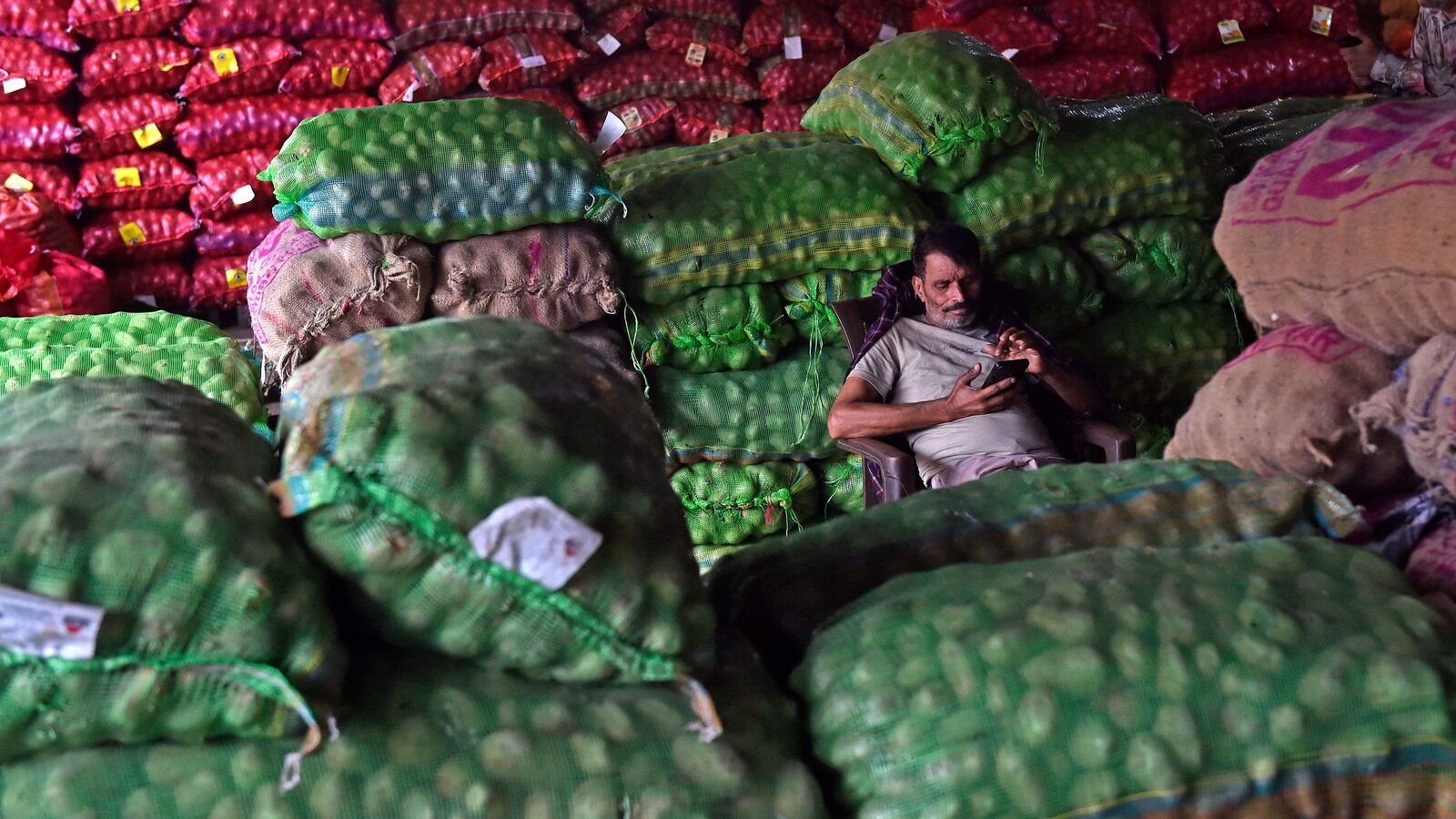
India, the world’s second-largest potato producer after China, is witnessing a quiet but crucial shift in how potatoes are grown. Scientists and agri-tech firms are increasingly using aeroponics, a soilless technique that helps produce high-yielding, disease- and climate-resistant potato seeds faster than ever before.
“The main motive is to ensure faster multiplication of quality seeds and to ensure farmers should have access to high yielding varieties, disease and climate resistant seeds,” said Brajesh Singh, director, ICAR-Central Potato Research Institute (CPRI), Shimla.
Mint explains how this new farming technology works, why adoption is rising now, and what it means for the country’s potato farmers, production and exports.
What is the aeroponics technique?
Aeroponics is a method of growing plants without soil and with minimal water. Plant roots are suspended in the air and periodically misted with a nutrient-rich water solution, giving them all the nutrients and oxygen they need to grow.
This system allows for precise control over temperature, humidity, and nutrient levels. Because it’s a closed, sterile environment, the risk of soil-borne pests and diseases drops sharply. The method is especially useful for high-value crops and seed production, including potatoes and leafy vegetables.
How is it transforming potato farming in India?
In traditional farming, it takes 5-6 years for a new potato variety to move from lab to farm. Aeroponics cuts that to 3-4 years, as it enables multiple seed generations in a single year.
This speed helps farmers access improved, high-yielding, and climate-resilient seed varieties much sooner. It also allows research institutions and private players to scale up quality seed production throughout the year, regardless of weather conditions.
Quicker access to improved seeds that can withstand pests, diseases, and erratic weather, can lead to better yields and more secure incomes. The technique also opens up opportunities for private companies, cooperatives, and farmer-producer organizations to enter the high-value seed potato segment.
Currently, about 20% of India’s potato seed area—of the total 2.2 million hectares under potato—is developed using aeroponic seed multiplication systems.
How is the government promoting aeroponic potato seeds?
The ICAR–CPRI in Shimla has developed 76 high-yielding potato varieties since 1956, suited to diverse climates. To expand reach, the institute has licensed its aeroponic seed technology to around 40 private companies and state horticulture departments.
This enables large-scale production of virus-free “mini-tubers” that can be multiplied further by seed growers and distributed to farmers more quickly. According to CPRI, nearly 90% of India’s potato acreage already uses its improved varieties.
Around 50 companies have already adopted aeroponics for potato seed production, with a combined annual capacity of over 100 million mini-tubers, signalling early commercial traction for this technology.
What is India’s current yield and export potential?
While India produced a record 60.18 million tonnes of potatoes in 2024-25—up 3.12 million tonnes year-on-year—yields vary sharply across states due to uneven seed quality.
For instance, Gujarat achieves an average yield of 42 tonnes per hectare, while Uttar Pradesh averages around 35 tonnes per hectare. Using aeroponic seeds can help bridge this gap by giving farmers uniform, high-quality seed material that performs better across regions.
India’s average potato yield is 25 tonnes per hectare, higher than China’s 18 tonnes, thanks to improved varieties and better crop management.
Potatoes account for 28% of India’s total vegetable production, contributing ₹37,200 crore to the vegetable sector’s gross value output in 2023–24.
India also exports dehydrated potato granules and pellets worth $63.3 million, and other processed potato products worth $18.8 million in FY2025.
Experts say that while aeroponics is primarily aimed at boosting domestic seed quality, it can also help India strengthen its position in the global potato seed and processed food market over time.
