


Rabat – Morocco’s Minister of Agriculture, Ahmed Bouari, said today that the livestock sector contributes around 35% of the country’s agricultural GDP.
Bouari made the remarks at a high-level international conference as part of the International Agriculture Fair in Morocco (SIAM).
Bouari said animal production is a key pillar in Morocco’s agricultural sector and a major source of income for nearly 1.2 million livestock breeders.
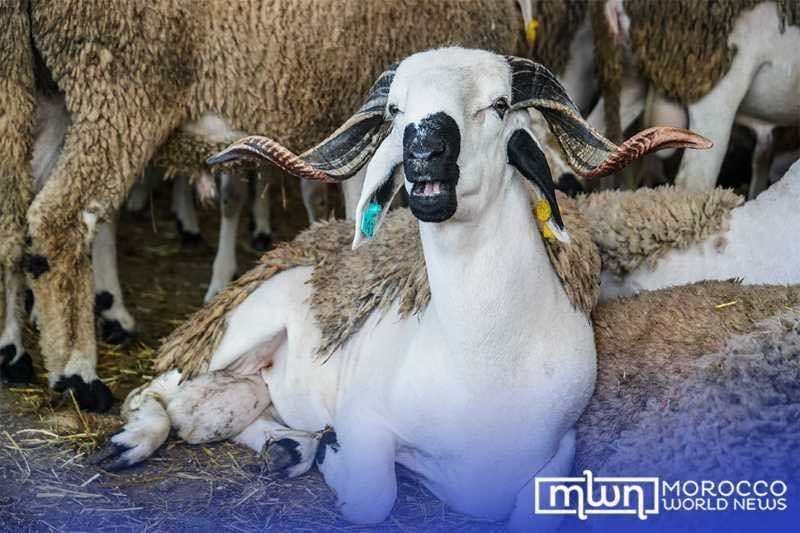
A census in 2025 shows Morocco has around 33 million head of livestock, including sheep, goats, cattle, and camels.
The resources help Morocco produce roughly 530,000 tons of red meat and nearly 2 billion liters of milk annually.
The poultry sector is also experiencing growth, with about 784,000 tons of white meat and 6.5 billion eggs produced for consumption. This covers national demand fully, Bouari said.
“The livestock production chains have received significant attention under Morocco’s agricultural strategy, enabling major achievements in production development, improved productivity, and meeting national needs,” Bouari said.
Morocco has been among the hard-hit countries with climate change. The situation prompted concerns, which triggered an alert to save the sector amid seven years of drought.
Among the measures were the cancellation of Eid Al Adha sacrifice rituals last year under King Mohammed VI’s instruction to safeguard livestock reproduction and resources.
Morocco also abolished the slaughtering of female goats and sheep to contribute to the reproduction of the sector.
Earlier this year, officials emphasized the importance of the recent rainfall that the country witnessed since mid-May in helping end the seven-year drought.
Morocco’s efforts are focusing on improving cattle breeds intended for meat production in the red meat sector, Bouari said, noting that beef accounts for 80% of national consumption.
The minister also reaffirmed Morocco’s plans to develop the camel breeding sector due to its economic and social importance in the southern provinces.
The sector contributes about MAD 225 million in added value annually and generates around 2.7 million working days.
