


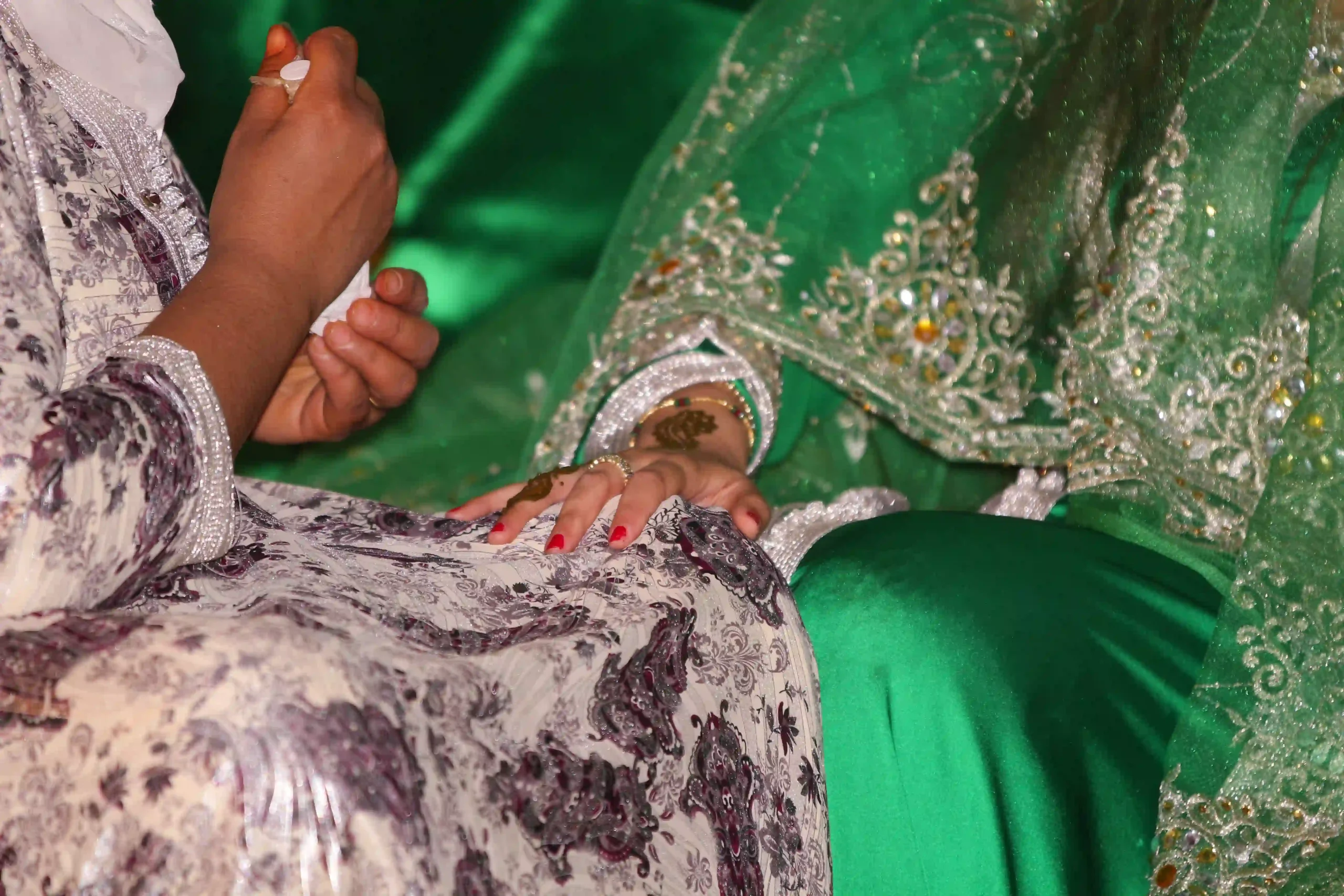
The first time I saw a Moroccan bride in her full wedding outfit, I couldn’t look away. The colors were so bright, the embroidery so detailed, and the whole look was like something from a beautiful dream. This wasn’t just a dress—it was art you could wear.
If you’re going to a wedding in Morocco, planning your own celebration here, or just interested in our traditional clothes, you’ll love learning about the Moroccan wedding outfit. These special garments are more than fashion. They carry our history, show our regional pride, and display skills that craftspeople have passed down for generations.
I’ve been to weddings across Morocco—from Fez to the Atlas Mountains to small villages near the Sahara. Each place has its own style, but all share that special Moroccan beauty. In this guide, I’ll share everything you need to know about these amazing outfits, from what they mean to how you can choose and wear one yourself.
Understanding Different Types of Moroccan Wedding Outfits
The Classic Kaftan
The kaftan is what most people picture when they think of Moroccan wedding clothes. It’s a long dress with long sleeves that goes down to your ankles. We make kaftans from beautiful fabrics—silk, velvet, or brocade—and decorate them with embroidery, beads, and sometimes real gold or silver thread.
Each city has its own style. In Fez, you’ll find delicate silk embroidery. In Tetouan, the kaftans shine with gold thread work. When you see a kaftan for wedding celebrations, you’re looking at hours of skilled handwork.
The Takchita
Many people mix up kaftans and takchitas, but they’re different. A takchita has two pieces—a dress underneath and a fancy overdress on top. Most Moroccan brides wear takchitas because they’re considered more formal.
One interesting tradition: brides often change outfits multiple times during the wedding! I’ve been to weddings where the bride wore seven different takchitas. Each one was more beautiful than the last. It’s quite a show!
The Handira
In the Atlas Mountains, Amazigh brides wear something special called a handira. This is a handwoven wedding blanket decorated with sequins and metallic thread. When the bride moves, it shimmers like stars. The handira tradition is very old and connects to our Berber heritage.
I once attended a mountain wedding where the bride’s handira was made by her grandmother. The whole village came to see it. That’s how special these pieces are.
Regional Styles
Every region in Morocco puts its own stamp on wedding clothes:
- In Chefchaouen, you’ll see lots of blue (like the city itself)
- In the Sahara, outfits feature bold geometric patterns
- Coastal cities prefer lighter fabrics
- Mountain areas use heavier materials
When you travel around Morocco, pay attention to these differences. They tell you a lot about where you are and who made the garment.
How to Style a Moroccan Wedding Outfit
Choosing Your Garment
Start by picking your kaftan or takchita. Traditional wedding colors in Morocco include:
- Deep emerald green
- Royal blue
- Rich red
- White and gold (especially for brides)
The fabric matters too. Silk feels light and elegant. Velvet looks royal and warm. Brocade adds texture and richness.
The Essential Belt (Mdamma)
Here’s something many visitors don’t know: you must wear a special belt with your kaftan for wedding events. We call it a mdamma. This ornate belt cinches your waist and gives shape to the flowing dress.
You have two main choices:
- Metal filigree belts for very formal occasions
- Embroidered fabric belts for slightly less formal events
Without the belt, the whole outfit looks incomplete. Trust me on this!
Footwear
Pair your outfit with babouche or balgha—our traditional Moroccan slippers. They have pointy toes and come in leather, often with embroidery or metallic decorations.
A practical tip: break in your babouche before the wedding day! New ones can pinch. Walk around your house in them for a few days first.
Jewelry
Moroccan weddings call for bold jewelry. Think big and beautiful:
- Brides often wear a taj (crown) on their head
- Long chandelier earrings with detailed metalwork
- Multiple bangles stacked on both arms
- Khamsa (hand) pendants for good luck and protection
Don’t be shy with jewelry. More is more at Moroccan weddings!
Headwear
Depending on the region and family tradition, you might need a head covering. Options include:
- Simple silk scarves
- Embroidered veils
- The dfina—an elaborate headpiece in some areas
Ask the bride or host family what’s appropriate. They’ll appreciate that you asked.
Traditional Beauty
Complete your look with these traditional touches:
- Henna on your hands and feet (especially important for brides)
- Kohl eyeliner around your eyes
- Rose or orange blossom perfume
In Morocco, we have henna artists who specialize in bridal designs. The patterns are incredible! Henna takes hours to apply and lasts about two weeks.
Where to Buy Your Moroccan Wedding Outfit
Best Shopping Locations
After years of shopping in souks and boutiques, here’s where I send friends:
For Authentic Pieces:
- The kaftan souks in Marrakech’s medina, especially Mouassine district
- Specialized boutiques in Fez (Fez has the finest craftspeople)
- Traditional shops in Rabat
For High-End Luxury:
- Boutiques in Casablanca’s Quartier Habous (these are expensive but stunning)
Walk around before you buy. Look at different shops. Compare quality and prices.
What to Expect for Prices
Prices vary a lot:
- Simple machine-made kaftans: from 1,000 MAD (about $100 USD)
- Mid-range handcrafted pieces: 5,000-10,000 MAD ($500-$1,000 USD)
- Fully handcrafted with gold or silver embroidery: can go over 30,000 MAD ($3,000 USD)
Always negotiate! In Morocco, the first price is never the final price. It’s part of our shopping culture. Start at about 60% of their asking price and work up from there.
How to Spot Authentic Quality
Look for these signs:
- Even, precise stitching (hold it up to the light)
- “Made in Morocco” labels
- Ask about the specific technique used (real craftspeople love to explain their work)
- Check if embroidery threads are real silk or metallic
If the seller gets annoyed by questions, that’s a bad sign. Good sellers are proud to explain their products.
Caring for Your Purchase
These outfits need special care:
- Hand wash delicate kaftans with mild soap only
- Lay flat to dry—never in direct sun
- Store in cotton garment bags
- Add cedar blocks to keep moths away
- Take pieces with metal embroidery to professional cleaners
I learned this the hard way. I once machine-washed a kaftan and ruined the embroidery. Don’t be like me!
Custom-Made Options
If you have time in Morocco, consider getting a kaftan made just for you. Many ateliers offer this service.
Timeline:
- Basic designs: 1-2 weeks
- Elaborate bridal kaftans: several months
Custom pieces fit perfectly and let you choose every detail—fabric, color, embroidery pattern, everything.
Other Ways to Enjoy Moroccan Wedding Style
Modern Fusion Styles
Not everyone can buy or carry a full traditional outfit home. I get it! Here are some alternatives:
Many Moroccan designers now make “fusion” kaftans. They use traditional embroidery but with modern shapes. You can wear these to formal events anywhere in the world.
Focus on Accessories
Buy smaller items instead:
- A handcrafted belt
- An embroidered clutch bag
- Traditional jewelry pieces
These are easier to pack and still give you authentic Moroccan style.
Home Décor Ideas
Old or vintage kaftans make beautiful:
- Wall hangings
- Pillow covers
- Table runners for special occasions
This way, you enjoy the craftsmanship without wearing the outfit.
Experience Without Buying
Many riads and photo studios in Marrakech and Fez offer dress-up experiences. You can wear traditional wedding attire for a photo shoot without buying the whole outfit. It’s fun and gives you amazing photos!
Other Wedding Traditions to Try
Bring Morocco to your celebration in other ways:
- Host a henna party for the bride
- Play traditional Moroccan wedding music
- Serve almond pastries and Moroccan mint tea
- Hire Moroccan musicians
These add authentic touches without the need for traditional clothes.
Moroccan wedding outfits show you our soul. They mix African, Arabic, Amazigh, Andalusian, and Mediterranean influences into something completely unique and beautiful. When you see a bride in seven different takchitas or watch an Amazigh bride shimmer in her handira, you’re seeing centuries of tradition come alive.
For travelers, engaging with these traditions—going to a wedding, visiting a craftsperson’s workshop, or choosing your own kaftan for wedding events—helps you understand Morocco on a deeper level. You’re not just buying clothes. You’re connecting with our heritage.
Every time I see these garments, whether at a village wedding in the mountains or in an expensive Casablanca boutique, I feel proud of our traditions. They remind me that some things are worth preserving—the slow, careful handwork, the passing of skills from teacher to student, the celebration of beauty and craftsmanship.
Your Turn!
Have you been to a Moroccan wedding? Have you worn a kaftan or takchita? Maybe you bought traditional wedding clothes during your travels, or you’re planning to?
I’d love to hear your stories in the comments! And if you’re coming to Morocco and want to buy an authentic piece, ask me anything. I’m happy to give you specific shop recommendations based on which cities you’re visiting.
What interests you most about Moroccan wedding traditions? Let me know below!
