


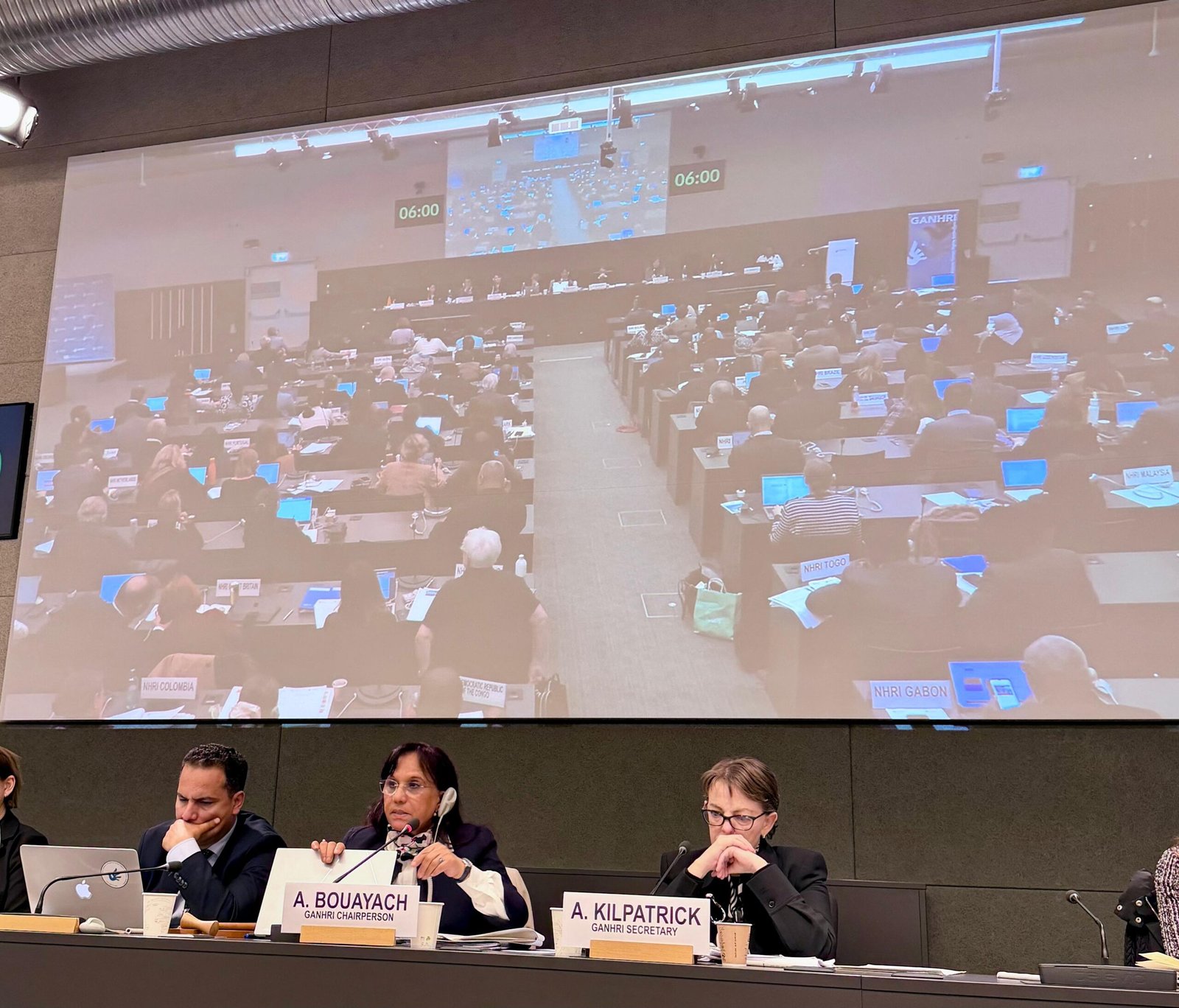
Rabat — Participants at the Global Alliance of National Human Rights Institutions (GANHRI) have recalled Morocco’s financial contributions and its commitment to boosting multilateral human rights mechanisms amid global instability.
During GANHRI’s General Assembly held today in Geneva, participants commended Morocco’s financial contributions, emphasizing the importance of such initiatives as a form of commitment to supporting action and strengthening the capacities of national institutions.
In her opening remarks as GANHRI’s chair, Amina Bouayach, President of Morocco’s National Human Rights Council (CNDH), stressed that financial sustainability remains a major challenge.
She emphasized the importance of national human rights institutions as they continue to gain increased recognition, urging the international community to continue joint efforts to ensure that these bodies are equipped to fulfill their missions.
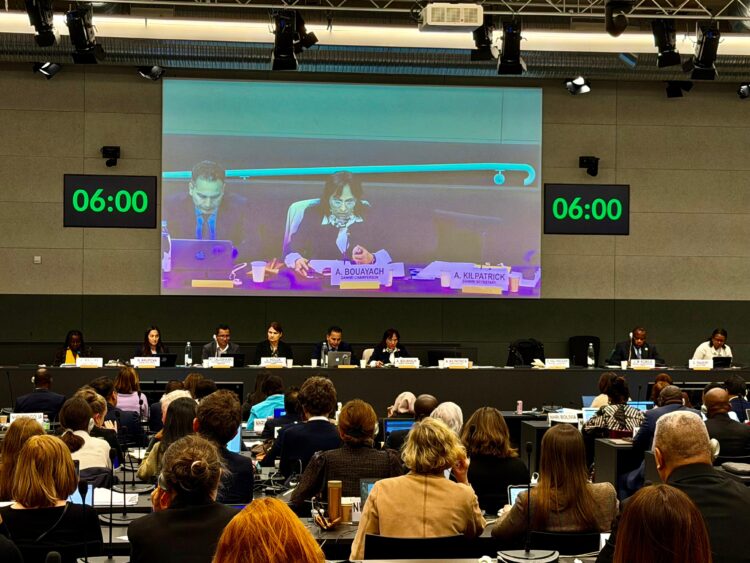
NRHIs role
Independent national human rights institutions are also known as NHRIs. They are considered key bodies in charge of promoting and protecting the fundamental rights of people in their countries.
Established by the state, they operate independently from the country and its government.
The role of NHRIs is to monitor and report the human rights situations of their respective countries and assist the government in meeting international standards to ensure these rights.
NHRIs operate under guidelines and standards from the Paris Principles, requiring institutions to be independent in law.
During her opening remarks, Bouyach renewed NHRIs commitment and essential role within the international system, particularly amid multiple conflicts and an unprecedented assault on rights around the world.
She said that these bodies critically link national and international actors to help bring real-world challenges to the UN system and enhance the effectiveness of international protection mechanisms locally.
True source of strength
Insisting on the credibility of the multilateral system, she said this credibility cannot rely solely on strong international institutions.
Instead, Bouayach emphasized that this situation requires an independent national institution that operates in accordance with the Paris Principles and has the freedom and capacity to carry out its mandate effectively.
She also spoke to the diversity of NHRIs s and their varied experiences within their practices. The CNDH president described this diversity as a “true source of strength, enabling the exchange of knowledge and the improvement of collective performance.”
Concluding her opening remarks, Bouayach said the world’s challenges require stronger solidarity between national institutions and continued joint effort to protect human rights in an international environment undergoing rapid and complex transformations.
“We are going through a phase of profound transformation… One that is putting the foundations of international human rights law under unprecedented strain,” Bouayach said.
She recalled the crises that span all regions across the world, including Africa, the Middle East, Europe, Asia, and the Americas.
Bouayach and GANHRI also expressed deep regret over the serious human rights violations being recorded worldwide, acknowledging a decline in the effectiveness of international protection mechanisms and the marginalization of fundamental principles of international law.
The human rights expert pointed out that NHRIs continue to uphold t their mandates amid crises, through documenting violations and defending rights.
“Our meeting today in Geneva reflects a renewed collective commitment to continue advancing the protection and promotion of human rights globally. Our role becomes even more critical during times of crisis,” she continued.
Bouayach made a similar appeal on Monday in a meeting on the sidelines of the GANHRI’s general assembly.
The meeting of the African Migration Group in Geneva, which brought together representatives from 23 African countries, focused on migrant rights and the challenges they endure under global, political, and economic tension.
