


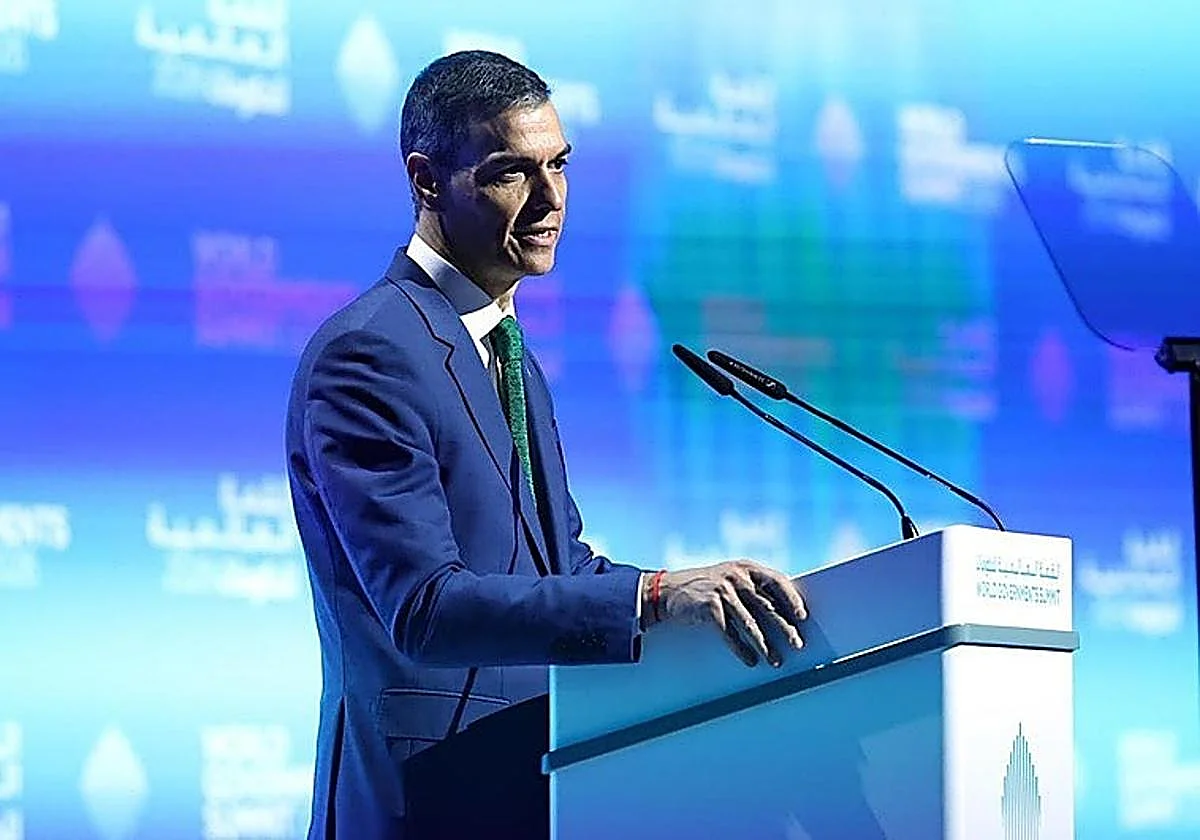
Marrakech – Spanish Prime Minister Pedro Sánchez credited Morocco’s migration cooperation during a CNN interview at the World Governments Summit in Dubai, positioning the partnership as a template for European Union policy.
Sánchez stated that close coordination with Rabat has “very significantly” reduced irregular arrivals on Spanish territory. He identified Morocco as an essential strategic partner in regional migration management, attributing migration flow control to joint engagement and coordination with origin and transit countries.
Spanish Interior Ministry figures validate Sánchez’s assessment. Irregular migrant arrivals to Spain dropped 42.6% in 2025, falling from 64,019 to 36,775 people. The Canary Islands route experienced the most dramatic decline, with arrivals plummeting 62% from 46,850 to 17,800 migrants.
The migration reduction followed improved diplomatic relations between Madrid and Rabat. Spain’s 2022 endorsement of Morocco’s Western Sahara autonomy plan accelerated bilateral cooperation on migration management and border security.
Morocco expanded maritime surveillance and coastal patrol operations since the diplomatic reset. These enhanced security measures proved decisive in curbing migrant flows along the Atlantic route, historically Europe’s deadliest migration corridor.
However, tighter Moroccan coastal controls redirected some migration toward Algeria. The Balearic Islands saw arrivals increase 24.5% from approximately 5,900 to 7,300 people, mostly from Algeria.
Circular migration agreements between Spain and West African countries also contributed to the decline. Spain signed bilateral accords with Mauritania, Senegal, and Gambia in September 2024, providing legal pathways for temporary workers while managing migration flows more effectively.
Read also: Spain Pledges to Fund ‘Voluntary Return’ Program for Undocumented Migrants in Morocco
Sánchez linked Spain’s migration appeal to economic strength and institutional resilience, noting that around 90% of migrants enter the country through regular channels. He added that migrants contribute roughly 10% of Spain’s social security revenues while accounting for just 1% of total expenditures.
His government has recently moved to regularize the status of undocumented migrants already living in Spain, announcing a decree that will provide a legal pathway to residency for up to 500,000 people. The decision sharply contrasts with the European Union’s broader shift toward tighter border controls.
Last month, Sánchez positioned Morocco at the center of EU southern neighborhood policy during Spain’s Ambassador Conference in Madrid. He advocated for enhanced strategic partnerships with Morocco, Senegal, and Mauritania, urging the European Union to update cooperation instruments for a peaceful and secure southern neighborhood.
The prime minister’s Dubai statements build on December’s successful 13th High-Level Meeting between Morocco and Spain. That meeting produced 14 cooperation agreements spanning economic, social, diplomatic, agricultural, and security sectors.
Spain remains Morocco’s top trading partner since 2012, with bilateral trade reaching €24 billion. Over one million Moroccans reside in Spain, including 335,000 registered social security contributors – the largest foreign contributor group.
Sánchez’s position signals Spain’s effort to convert geographic proximity to Morocco into diplomatic capital, positioning North Africa as a structured interface between the EU and Africa.
