


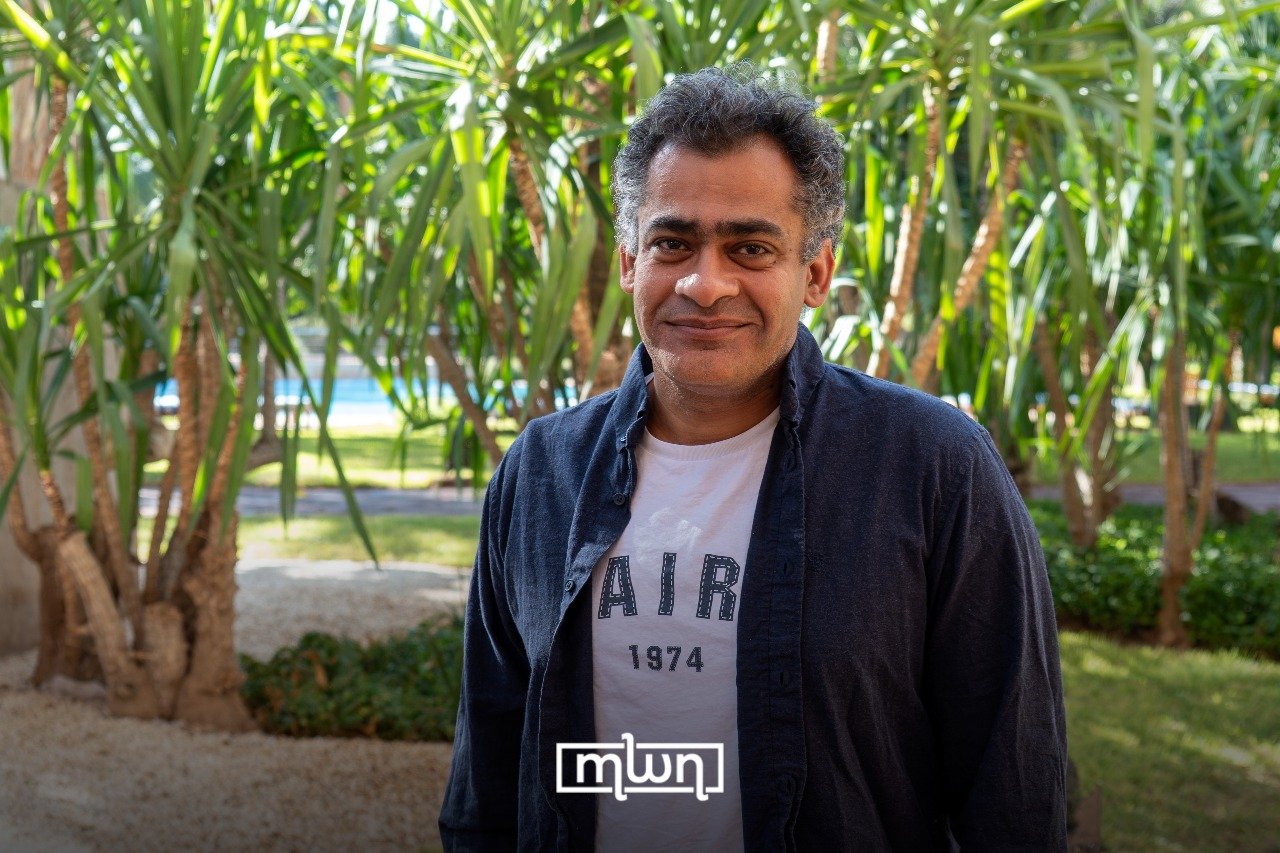
Marrakech – Franco-Egyptian filmmaker Namir Abdel Messeeh brought his deeply personal documentary “Life After Siham” to the 22nd Marrakech International Film Festival, where the film received its first Moroccan screening.
The 76-minute documentary represents the director’s second feature-length work, following his acclaimed 2012 debut “The Virgin, the Copts and Me.”
Born October 7, 1974, to a Coptic Egyptian family, Abdel Messeeh graduated from La Fémis in 2000. His parents were forced into French exile during the 1970s after his father’s imprisonment under Nasser’s regime due to communist affiliations. This biographical backdrop constitutes much of his cinematic interrogation of identity and displacement.
View this post on Instagram
“Life After Siham” emerged from the director’s struggle with his mother’s death from cancer. Speaking to Morocco World News (MWN), Abdel Messeeh described filmmaking as “a survival act,” his continued mourning of his mother’s death.
“I felt like I had to maintain that promise to make another film with her, and she wasn’t here anymore,” he explained about transforming private mourning into public storytelling.
The initial filming moment crystallized through serendipitous circumstances when his cameraman’s cancelled flight allowed documentation of funeral proceedings.
Cinema rekindles fractured bonds
The documentary conflates extensive family footage with archival material and cinematic references to Youssef Chahine’s films. Abdel Messeeh spoke of discovering previously unknown aspects of his family history during production.
“I discovered that my father was working in the cinema. I didn’t know about that. I discovered love letters from my parents,” he said. These discoveries problematized his understanding of family narratives, creating what he termed competing versions of biographical truth.
The integration of Chahine’s cinema serves a specific narrative function in constructing cultural memory. Abdel Messeeh recalled his father’s story about kissing his mother in Cairo Tower during a power outage.
“I suddenly remembered the Youssef Chahine film I watched as a child – the one with the Cairo Tower and the two lovers. It was my way of turning my parents into movie heroes,” he explained, demonstrating how cinematic intertextuality operates to mythologize personal history.
The director positioned the film’s capacity for multiple interpretations within broader theoretical frameworks. “Movies are open doors. You can enter into movies through different doors,” he noted, articulating cinema’s polysemic potential.
Teenage audiences connected through grandparent relationships, prompting some viewers to contact elderly relatives. “I want to talk with my grandfather. I want to know his story before he dies,” Abdel Messeeh quoted them, illustrating how cultural texts facilitate intergenerational dialogue.
Adult audiences found resonance through various themes, including parent-child relationships, cultural displacement, and narrative construction. The director reported that many viewers expressed a desire to reconnect with family members after screenings.
“The best thing I heard about the film was people telling me, ‘After watching your film, I just wanted to call my mother… I wanted to call my father,’” he recounted, in what appears to be cinema’s capacity to catalyze familial reconciliation.
Stories dismantle orientalist frameworks
The film addresses contemporary cultural tensions through its representation of Arab family life. Amid intensifying racial anxieties and the discursive fallout of the Gaza conflict, Abdel Messeeh argues that foregrounding “a story of love taking place in an Arab family” actively disrupts reductive orientalist imaginaries while affirming the value of safeguarding cultural memory.
“In this period of big racism, seeing a story of love, of humanity, taking place in an Arab family, screened in France and in Europe, connects the French audience to things that they are not used to seeing about Arabs,” he explained, articulating how counter-narratives operate within dominant cultural discourses.
Abdel Messeeh theorized his project as simultaneously personal and universal, negotiating between intimate experience and collective meaning-making. “I turned a personal story into a universal story,” he stated, describing the documentary’s translation of private grief into shared cultural understanding.
The film interrogates trauma’s temporal dimensions, with the director asserting that “when you have a trauma, the story stays hidden inside of you, and it creates a block, and this block is not in the past, this block is in the present.”
The production process itself embodied therapeutic functions, requiring collaborative support to sustain emotional labor. “I wanted to stop three or four times this film, because it was so painful,” Abdel Messeeh admitted, acknowledging the psychological toll of autobiographical filmmaking. His creative team’s investment in the project provided necessary scaffolding for completion.
“Life After Siham” has garnered international recognition since its world premiere at ACID in Cannes 2025. The film won the El Gouna Star Award for Best Arab Documentary and received the Grand Prize at the International Film Festival in Amiens, France. At the Du Grain Festival, it claimed three awards: the Audience Prize, Grand Jury Prize, and Special Mention from cinema enthusiasts.
Cameras preserve endangered histories
The production represents a Franco-Egyptian co-production between Abdel Messeeh’s Oweda Films and Camille Laemle’s Paris-based Les Films d’Ici, with support from Egyptian partners Ambient Light and Red Star. Météore Films handles distribution while Split Screen manages international sales.
Addressing Moroccan audiences specifically, Abdel Messeeh privileged cultural preservation through technological mediation.
During the festival screening, an audience member thanked him for a particular scene where his aunt asks about memory loss remedies. “My only remedy is my camera; if we film, then we will not forget,” he responded, positioning cinema as mnemonic technology.
The director hopes the film will inspire Arab youth to document their own stories. “Cameras are our medicine, and we need not to forget our stories. I hope this film will create the desire for young Arab audiences to grab our stories and bring them to life and to today,” he concluded, articulating documentary practice as cultural preservation and identity formation.
The documentary continues screening at international festivals, including IDFA, Turin, and maintains distribution through specialized art house circuits, extending its reach beyond festival programming into broader cultural discourse about memory, identity, and cinematic representation.
The 22nd edition of the Marrakech International Film Festival, running from November 28 to December 6, constitutes a significant cultural intervention within global cinema circuits.
Presided over by Oscar-winning filmmaker Bong Joon-ho, the festival curates 82 films from 31 countries, foregrounding both emerging talent and established auteurs.
The programming apparatus includes official competition screenings, gala presentations featuring prominent international cinema figures, and tributes to industry luminaries, including Jodie Foster and Guillermo del Toro.
The festival opened with Gus Van Sant’s “Dead Man’s Wire” and is scheduled to conclude with Annemarie Jacir’s “Palestine 36,” demonstrating its commitment to diverse cinematic voices while particularly showcasing Moroccan and Arab cinema within broader transnational frameworks.
