


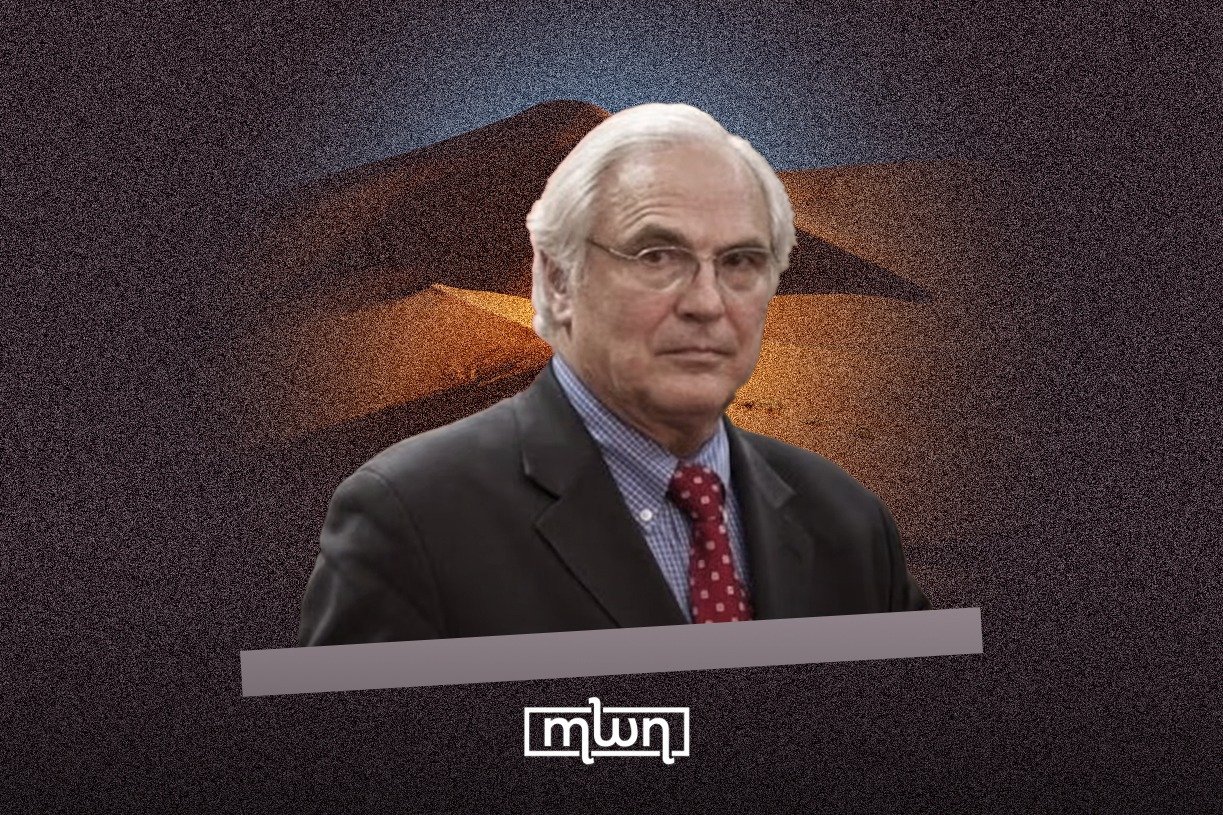
Christopher Ross writes as if he were a neutral observer reflecting on White House-sponsored, ongoing negotiations on Morocco’s Western Sahara. Yet his recent article, “Western Sahara: A Step Forward or Return to Stalemate?” (published by the International Center for Dialogue Initiatives on March 6, 2026), reads less like a diplomatic analysis and more like a continuation of the partisan narrative he curiously advanced during his tenure as the UN Secretary-General’s Personal Envoy.
Christopher Ross portrays the current diplomatic process on Western Sahara as deeply biased in favor of Morocco, arguing that UN Security Council Resolution 2797 sidelines the Polisario’s demand for a referendum while privileging Morocco’s autonomy proposal as the dominant framework for negotiations. He also criticizes the central role assumed by the United States, suggesting that Washington’s recognition of Moroccan sovereignty disqualifies it from acting as an impartial mediator.
Throughout the article, Ross frames Algeria and the Polisario as defenders of the Tindouf-based separatist movement’s claim to “self-determination,” while ignoring Morocco’s legal and historical claim to the territory and depicting Rabat as seeking to impose autonomy through diplomatic pressure and geopolitical leverage. He concludes that any settlement emerging from this process would lack legitimacy among the Polisario and could provoke instability rather than produce a durable political solution.
As usual with Christopher Ross, his article has the appearance of neutrality but is deeply skewed in favor of Algeria and its Iran- and Hezbollah-linked proxy, the Polisario. It reveals three fundamental problems: the systematic negative framing of Morocco; the implicit legitimization of Polisario narratives; and the consistent normalization of Algeria’s role as a supposedly neutral observer.
These are precisely the positions that framed his tenure as United Nations Special Envoy, raising serious questions about his neutrality and placing him closer to an advocate of Algerian positions and interests than to an impartial mediator.
Ross repeatedly presents Morocco through a lens of suspicion and delegitimization. First, the Autonomy Proposal is portrayed as fundamentally deficient. He suggests that the proposal “ties many activities in a ‘self-governing’ Western Sahara to supervisory bodies in Rabat” and that it “foresees the suspension of self-government under certain circumstances,” adding that “much work needs to be done to transform this proposal into a credible document.”
In doing so, Ross portrays the Moroccan initiative as structurally flawed, desperately trying to delegitimize the only proposal currently on the negotiating table.
Ross’s critique is not analysis but a speculative judgment about Morocco’s intentions. In his view, Morocco is structurally incapable of meaningful decentralization. Yet he never explains how he arrives at this conclusion when he writes that Morocco is “highly centralized despite its attempts at regionalization.” He provides no figures, no statistics, no benchmarks—only categorical statements thrown into the air, as if the mere fact of having said them were sufficient proof of their validity. For Ross, Morocco “may be unable to go the distance” in granting autonomy; why this should be the case, he never explains.
This is speculative political commentary, not diplomatic analysis. It ignores Morocco’s advanced regionalization reforms, the massive development investments in the Moroccan Sahara, and the growing authority of the elected regional institutions already operating there.
Ross then engages in alarmist speculation about repression. Without providing any evidence, he claims that “this could lead Morocco to reinstitute severe repression.” This is a highly charged accusation presented without substantiation. Such conjecture belongs more to the realm of polemical commentary than to serious diplomatic analysis. It resembles the kind of rhetoric often encountered in social media echo chambers populated by activist networks hostile to Morocco and sympathetic to Algeria’s narrative, rather than the measured language one would expect from a former UN envoy. A former UN envoy implying future repression crosses from analysis into political advocacy.
Ross also suggests that the Polisario should control phosphates, fisheries, minerals, energy, and tourism resources. This view ignores not only the wishes of the majority of Sahrawis living in the territory, who benefit from the region’s economic development, but also the broader reality on the ground. The implicit narrative is that Morocco is exploiting these resources illegitimately. Like many advocates of the Algerian narrative and certain radical activists elsewhere, this framing overlooks the massive reinvestment of resource revenues into the region and the ambitious development model implemented in the southern provinces.
On the other hand, Ross systematically presents the Polisario’s position as politically legitimate and morally justified. He portrays the movement primarily as a diplomatic actor, writing that its participation reflects “ongoing diplomatic engagement.” Yet this framing omits several key realities: the Polisario is not recognized as a state, operates outside democratic accountability, and has been associated with networks and actors linked to Iran and Hezbollah—connections that have raised concerns in several policy circles in Washington.
Ross also painstakingly seeks to normalize the referendum narrative, even though it is widely regarded in diplomatic circles as a relic of the past. Thus, he asserts that “only a referendum of self-determination can resolve the conflict.” This claim ignores decades of UN experience demonstrating that the referendum option proved impracticable.
When reality becomes inconvenient, romanticism often becomes the last refuge. Romanticizing the separatist struggle has long been a recurring feature of Ross’s discourse, reflecting an enduring attachment to Algeria’s outdated liberation narratives. He describes the Polisario’s position as “a fifty-year quest for independence.” Such language reproduces the stale rhetoric of Cold War–era liberation movements rather than offering serious diplomatic analysis.
Acting almost as a pseudo-spokesperson for Algeria and the Polisario, Ross further attempts to justify the movement’s distrust of Morocco. He writes that “the Polisario has no trust in Moroccan intentions,” attributing this to “Morocco’s 2003 rejection of the referendum foreseen in the UN/OAU settlement plan.” Yet this is a highly selective reading of history. It ignores the collapse of the voter identification process, the impossibility of establishing a credible and consensual electoral list, and the fact that the Baker II proposal effectively disregarded Morocco’s non-negotiable claim to sovereignty.
Perhaps the most revealing bias lies in Ross’s treatment of Algeria. In his narrative, Algeria is presented as a neutral actor—an extraordinary sanitization of its role in the conflict. This portrayal ignores the broader regional context, including Algeria’s tensions with France, its economic frictions with Spain, and its diplomatic and media confrontations with the United Arab Emirates, among others, largely because these actors have supported Morocco’s position. Algeria has repeatedly shown a willingness to sacrifice economic opportunities and regional cooperation in order to sustain its stance on the Sahara issue.
Yet Ross writes, quite uncritically, that “Algeria is not a party to the conflict.” This simply repeats Algeria’s official diplomatic line, despite overwhelming evidence that Algeria hosts the Polisario leadership, finances and arms the movement, and exercises decisive influence over the Tindouf camps.
Not only does Ross sanitize Algeria’s role, but he also portrays the country as a constructive partner. In the tone of a sympathetic consultant, he writes that “the US and Algeria are forming a genuine long-term partnership.” Even more strikingly, he adds that “the US appreciates the support that President Tebboune and Foreign Minister Attaf are providing.” This language effectively praises Algeria’s diplomatic role while ignoring its central responsibility in prolonging the conflict.
The final flourish comes when Ross presents Algeria as a principled defender of self-determination. He argues that “neither inducements nor pressure will bring Algeria to accept settlement terms that the Polisario opposes.” This framing portrays Algeria as defending a principle, when in reality it conditions any progress in negotiations on the approval of the Polisario.
Ross, of course, does not remind the reader that in 2003 Algeria signaled its openness to the partition of the territory with Morocco—precisely the moment when the supposed principle of self-determination quietly slipped out of the window. In reality, that principle often served as little more than window dressing for hegemonic ambitions that Ross conveniently ignores.
Of course, Ross’s aim is to delegitimize the only realistic solution currently on the table. At the same time, he acknowledges that UN Security Council Resolution 2797 takes Morocco’s autonomy proposal as the basis for negotiations. Yet he simultaneously argues that the Security Council has favored one party. This is a striking contradiction for someone who once served as a UN envoy. If diplomacy today advances around the autonomy proposal, it is simply because no other viable framework exists.
Ultimately, the deeper issue is one of institutional credibility. A former UN envoy who systematically delegitimizes Morocco, legitimizes the Polisario, and normalizes Algeria’s role can hardly claim to have acted as an honest broker. In this sense, Ross’s article inadvertently confirms a perception widely shared in diplomatic circles during his tenure: that his mediation leaned heavily toward the Algerian–Polisario narrative.
Ross’s article does not clarify the conflict.
Instead it reproduces outdated diplomatic tropes, selective historical interpretations, and narratives aligned with Algerian and Polisario positions. Rather than offering insight into the path toward resolution, the piece illustrates how entrenched biases continue to distort discussion of the Western Sahara issue.
