


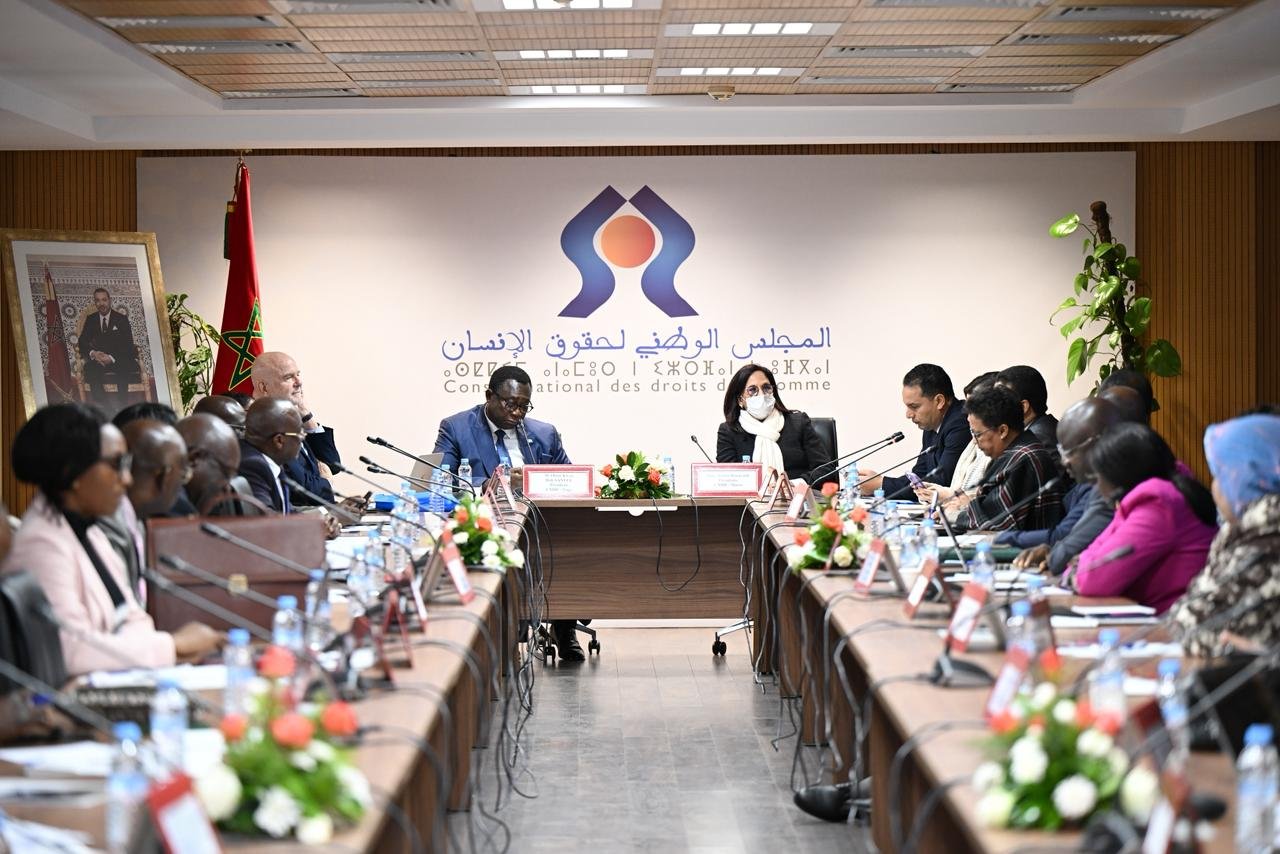
Rabat – Rabat is hosting the seventh conference of the Network of National Human Rights Institutions in Francophone spaces, as representatives gather to reflect on the future of human rights protection amid rapid digital transformation and the growing influence of artificial intelligence.
The two-day conference, held at the headquarters of Morocco’s National Human Rights Council (CNDH), opens at a time marked by mounting global pressures, including political tensions, armed conflicts, and accelerating technological change that raises complex questions about privacy, equality, and human dignity.
Opening the conference, Amina Bouayach, President of CNDH and Chair of the Global Alliance of National Human Rights Institutions, called for renewed momentum in the work of national human rights bodies within international and regional networks.
She pointed to increasing financial constraints facing many institutions and stressed the need for stronger cooperation and unified advocacy to reinforce their independence and effectiveness.
Bouayach underlined the importance of sharing good practices among national institutions, describing this exchange as a key driver for influencing public policies and translating international human rights standards into concrete national actions.
AI at the center of discussions
AI and human rights stood at the core of the conference agenda.
While AI systems offer significant opportunities to support the work of national institutions, participants acknowledged the serious concerns they raise, particularly regarding the right to privacy, non-discrimination, personal data protection, and respect for human dignity.
Bouayach warned that many existing algorithms fail to comply with fundamental human rights principles, making vigilance and accountability essential.
She called on human rights institutions to question technology developers and decision-makers about the social and rights-related impacts of digital systems.
She also stressed that digital transformation requires stronger coordination among national institutions, civil society, technical experts, and policymakers, in order to strike a fair balance between technological innovation and the protection of rights and freedoms.
Global advocacy for universal protection
Speaking during a dedicated session on AI and human rights, Bouayach noted that the dominance of major technology companies in designing, training, and operating AI systems can sometimes tilt decisions toward private interests, at the expense of the rights of large segments of society.
She argued that protecting human rights and human dignity must remain a universal priority, calling for stronger and more inclusive international advocacy.
Bouayach also noted unequal access to advanced technologies, particularly in emerging countries and across Africa, despite AI’s potential to improve access to essential rights such as health and education.
At the same time, she emphasized that the negative effects of AI systems know no borders, as their impact on fundamental rights extends far beyond national jurisdictions.
This reality requires global standards and shared responsibility to ensure universal protection without exclusion or discrimination, she said.
Toward a common roadmap
The conference is expected to conclude with the adoption of a practical roadmap aimed at strengthening the role of national human rights institutions in Francophone spaces.
The roadmap will focus on enhancing institutional capacities to address digital transformation, including the development of ethical and rights-based frameworks for the use of artificial intelligence in public policies.
Morocco’s hosting of the conference reflects its ongoing engagement in international human rights cooperation and dialogue among national institutions, at a moment when digital technologies are reshaping societies and redefining the conditions for protecting rights worldwide.
