


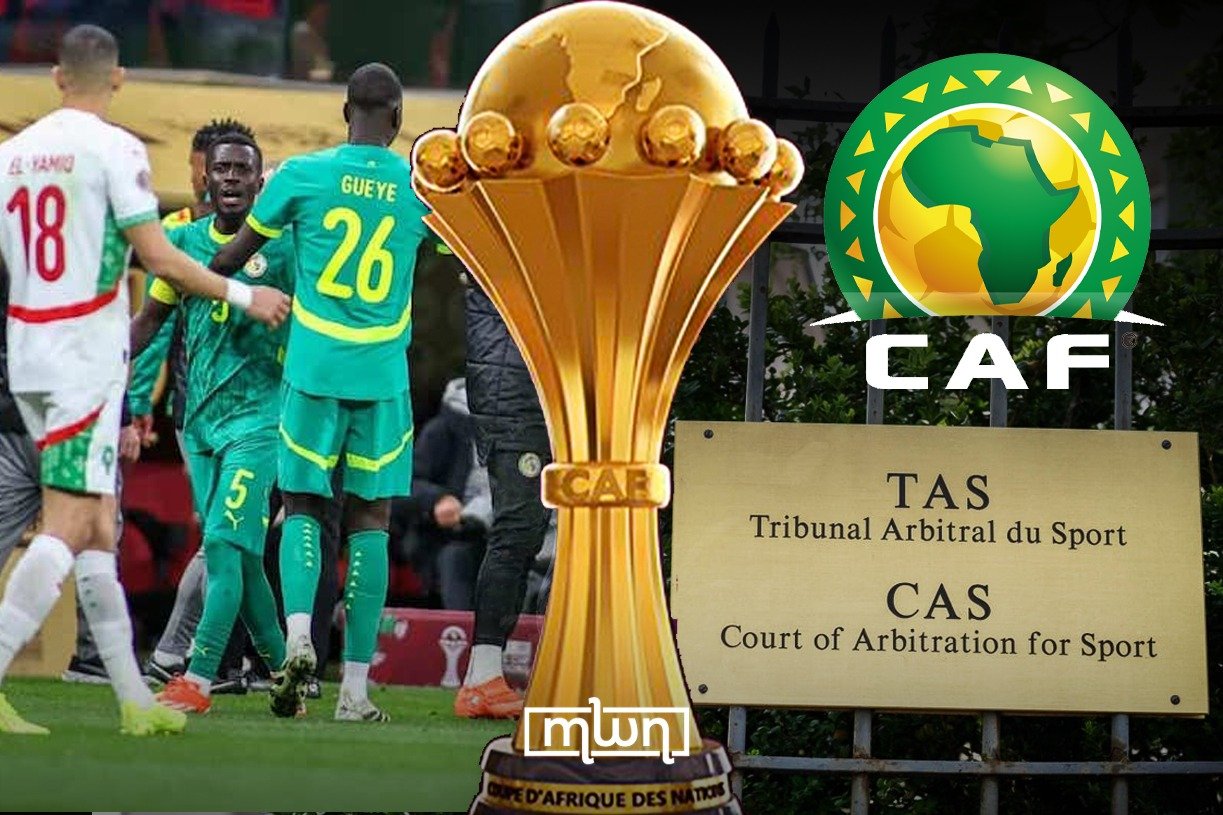
The Senegal–CAF AFCON final crisis is not about a marginal refereeing decision or a fleeting moment of frustration. It is a governance stress test at a moment when African football is stepping onto the global stage with unprecedented visibility.
CAF’s handling of this incident—and FIFA’s acceptance of the regulatory outcome as part of the global record—is far more than administrative housekeeping. It is a vital signal: African football is governed, rules possess inherent weight, and institutions will no longer be held hostage by the theater of optics.
When Manufactured Outrage Becomes Strategy, Not Emotion
The walk-off, the prolonged refusal to resume play, the inflammatory public statements, and the subsequent fan disorder did not emerge in a vacuum. The sequence followed a pattern consistent with a well-rehearsed script of strategic disruption: create chaos to invalidate the sporting process; claim persecution to mask technical or tactical failure; attack institutions to delegitimize the regulator; mobilize outrage via digital and traditional media; then pressure regulators to retreat in the name of harmony.
This pattern is a classic tactic in environments where actors have long relied on the fungibility of rules. When that ambiguity is removed, outrage becomes a poor substitute for legal argument. CAF’s refusal to bend marks a watershed moment: the old playbook of noise and moral grandstanding has finally met its institutional limit.
The Facts Are Not in Dispute
Unlike many sporting controversies, this case is not clouded by evidentiary ambiguity. The contumacy—stubborn defiance of authority—was recorded in a clear factual matrix. The walk-off was a public, televised event. The delay and refusal to resume were documented by match officials. Disorder in the stands was recorded and reported by independent security observers. The statements attacking CAF were published by the Senegalese Football Federation (FSF) itself.
There is no serious dispute about what happened: there is only conduct.
CAF’s Appeals Board did not reinterpret the match; it applied Articles 82 and 84 of the AFCON Regulations to a self-evident breach. Attempts to reframe the episode as “injustice” rest not on facts, but on a narrative designed to distract from a fundamental obligation: the duty to compete.
The Global Regulatory Ecosystem
CAF is not an isolated regional body. It is a critical node in a global governance architecture anchored by FIFA and recognized by the Court of Arbitration for Sport (CAS). Undermining CAF’s authority in a flagship competition is, structurally, an attack on the integrity of continental governance, the coherence of FIFA’s global regulatory ecosystem, and the stability of the international disciplinary order.
When CAF’s Appeals Board issues a decision applying its own statutes, and that decision is treated by global stakeholders as authoritative, the message is clear: CAF’s rulings sit within, not outside, the FIFA–CAS governance triangle. Any federation escalating disagreement from press releases to litigation is testing the resilience of that entire global architecture.
What CAS Actually Examines
Public statements from Senegalese officials have repeatedly invoked CAS as the next battlefield. However, CAS is not a court of public opinion; it is a technocratic arena of normative consistency. It will not revisit who deserved to win. It will examine whether CAF applied its own statutes and competition regulations correctly, respected procedural rights (specifically the right to be heard), and acted within the bounds of its disciplinary competence.
By correcting the procedural defect at first instance—ensuring the Moroccan FA’s right to participate—CAF has erected a formidable defense. Senegal would need to demonstrate not that the decision was unpopular, but that it was legally defective: a high bar, given the televised nature of the abandonment.
A Federation Already Vulnerable
Institutional capital is holistic. A federation that is internally divided, facing irregularity, and engaged in contentious proceedings before CAS enters the international legal arena with weakened moral authority. The Senegalese Football Federation (FSF) is currently involved in an active CAS matter concerning internal governance disputes and leadership legitimacy—a procedural reality that forms part of the broader credibility landscape.
CAS arbitrators, global sponsors, and regulatory partners do not assess disputes in a vacuum. They evaluate the totality of a federation’s governance environment. A party already navigating internal legal turbulence is structurally disadvantaged when attempting to present itself as a victim of external injustice.
The point requires no embellishment. The institutional optics speak for themselves.
CAF’s Strategic Position: Proactive Institutional Protection
CAF is no longer merely defending a single decision. It is defending the predictability and enforceability of its regulatory framework. In any potential CAS proceeding, CAF can credibly present itself as a regulator acting within a rule-of-law paradigm—and frame the case as a test of whether orchestrated pressure campaigns will be rewarded or deterred. CAS, as an institution dedicated to the stability of sports law, is unlikely to ignore this framing.
The “Plot” Question: Coordination, Not Conspiracy
Without indulging in conspiracy theories, it is analytically legitimate to ask whether the sequence of events—the walk-off, the delay, and the subsequent media offensive—reflects a coordinated strategy to delegitimize any adverse institutional outcome.
If walk-offs become an accepted template for contesting results, the regulatory system is replaced by the politics of noise. CAF and FIFA cannot allow this template to harden into precedent.
Deterrence Theory: The Case for Escalating Sanctions
Sanctions serve two core functions: accountability for past behavior and deterrence of future infractions. If institutional attacks and fan disorder are not met with escalating consequences, they become rational tactics in high-stakes matches.
Should such behavior recur, the next step must be structurally significant—including multi-cycle competition bans, total federation suspensions, stadium closures for “atmospheric coercion,” and exclusion from FIFA-sanctioned global tournaments. This is not vindictiveness. It is institutional self-defense. A system that cannot deter strategic disorder is not a system—it is an open invitation to chaos.
ESG and Governance Risk: The Commercial Imperative
Global sponsors and broadcasters now treat governance risk as seriously as financial risk. A confederation that appears unable to enforce its own rules sends a damaging ESG signal to multinational sponsors and sovereign wealth funds. CAF’s decisive action functions as essential governance signaling to those commercial partners.
If behavior of this kind is not firmly sanctioned, it is the reputational capital of the entire continent—not merely one federation—that suffers.
Player and Fan Safety: The Security Threat of Abandonment
Walk-offs in charged stadium environments are not harmless symbolic gestures; they are public safety risks. They can catalyze stampedes, clashes with security forces, and heightened emotional volatility.
CAF and FIFA carry a duty-of-care obligation. Any federation that weaponizes chaos as a bargaining tool is not merely breaking competition rules; it is endangering lives. This alone justifies the most severe sanctions.
The Bigger Picture: The End of Gamesmanship
In the current international climate, major sporting actors are increasingly intolerant of institutional disrespect. A local political performance can quickly metastasize into a global disciplinary crisis. The rational course is de-escalation and compliance—not the further inflammation of public sentiment.
Defending CAF’s authority is ultimately about protecting the African Football Renaissance—ensuring that the credibility of continental governance is beyond reproach.
CAF acted decisively. FIFA has absorbed that decision into the official record. The world is watching not just the scoreline, but the governance. If this behavior recurs, the response must be structurally significant.
The future of African football must be built on integrity, not theatrics; on robust institutions, not manufactured outrage; and on the unwavering application of the law. The era of the “footballing hooligan” at the executive level must be brought to a definitive, legal end.
African football stands at a historic inflection point. The continent’s game has never been richer in talent, wider in global reach, or more consequential to the future of the sport as a whole. That promise can only be fulfilled if the institutions entrusted to govern it are strong, credible, and fearless in upholding the rules. Every act of defiance met with firm, lawful consequence is not a punishment—it is an investment in the beautiful game’s African future. The stakes could not be higher, and the time to get this right is now.
The views expressed in this article are the author’s own and do not necessarily reflect Morocco World News’ editorial views.
