


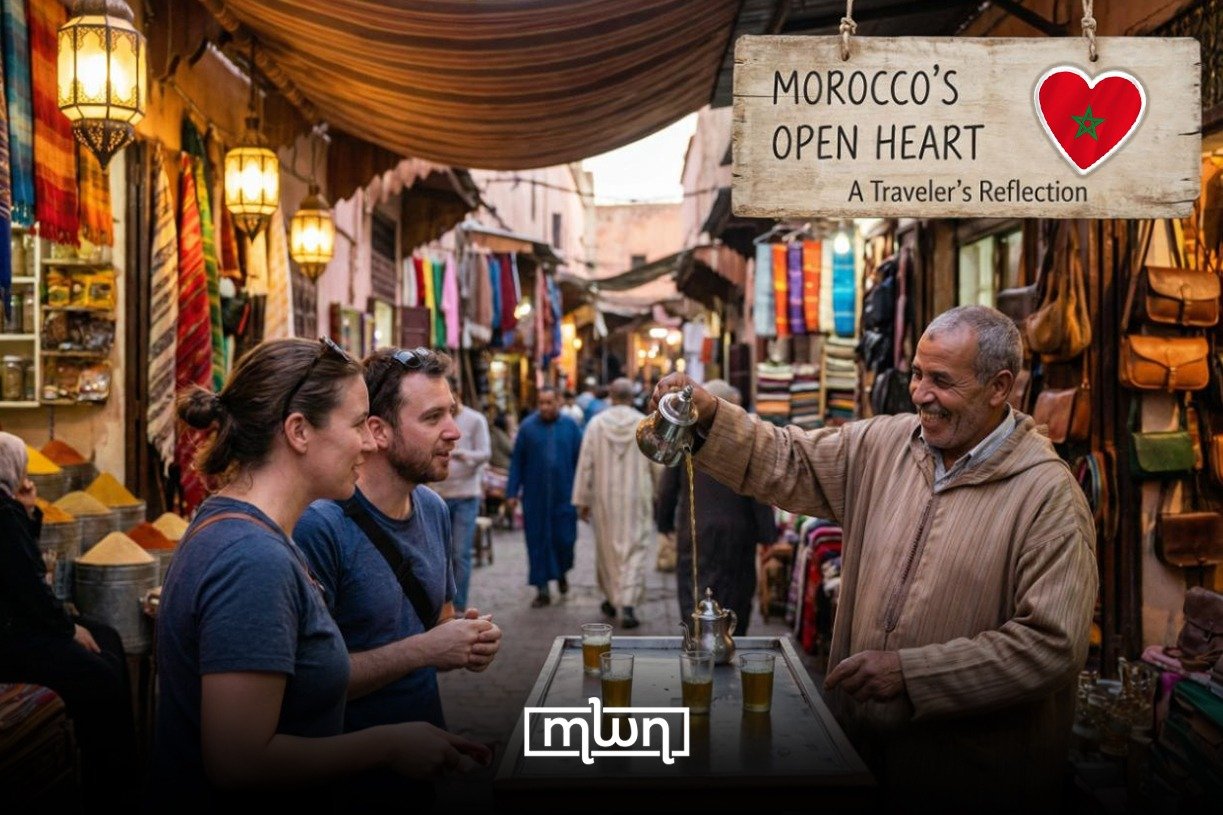
Having visited Morocco several times — across major cities and smaller towns — I have always returned with the same feeling: I was never treated as a stranger. From bustling medinas to quiet neighborhood cafés, I was welcomed not as a tourist, but as a guest.
Hospitality as a Way of Life
Moroccan hospitality is not performative; it is instinctive.
Shaped by centuries of Arab, Amazigh, and African traditions, generosity here is regarded as a moral value rather than a social courtesy.
On more than one occasion, I was invited into homes by people I had met only moments earlier — shopkeepers, drivers, and acquaintances who quickly became hosts. There was no expectation of return. Just an open door, a smile, and the words: “Marhaba—welcome.”
In Morocco, hospitality is unhurried. Time slows for guests. Conversations linger, meals expand, and attention is given fully. One feels seen, heard, and included.
Mint Tea: More Than a Drink
No symbol captures Moroccan hospitality better than mint tea. Often called “Moroccan whisky,” it is never merely served—it is offered.
Accepting tea opens the door to connection. Poured slowly, often from a height, it is accompanied by conversation, laughter, and shared stories. Whether in a family home, a carpet shop, or a roadside stall, mint tea becomes a ritual of trust.
In those moments, language barriers fade. A smile, a nod, the warmth of the glass in your hands—these speak louder than words.
The Soul of the Souks
Morocco’s souks are not just markets; they are living theatres of culture. The scent of spices, the rhythm of bargaining, the vibrant colors—all form part of a deeply human experience.
What stood out most was not commerce, but connection. Vendors rarely push; they invite. Conversations begin with family, travel, and life before prices are discussed. I recall a shopkeeper who closed his store for nearly an hour simply to explain the history of Amazigh symbols woven into a rug—without any guarantee of a sale.
That, to me, defines Moroccan generosity.
A Layered Cultural Identity
Morocco’s identity is beautifully layered. Arab traditions, indigenous Amazigh roots, and African influences coexist in language, music, architecture, and daily life.
This fusion is felt everywhere: in the call to prayer echoing over ancient kasbahs, in jewelry passed through generations, and in the rhythms of Gnaoua music tracing their origins to sub-Saharan Africa. This diversity does not divide — it enriches. Moroccans wear their heritage with pride and share it generously with those who show genuine curiosity.
Family, Music, and Storytelling
Evenings in Morocco often feel timeless. Music drifts through courtyards, meals are shared communally, and elders pass down wisdom through stories rather than instruction.
Family remains the cornerstone of Moroccan society. Respect for parents and grandparents is deeply ingrained, and guests are treated as extended family. Storytelling, in particular, serves not only to entertain but to preserve memory, values, and identity.
Why Morocco Stays With You
Many countries impress you. Morocco stays with you.
Long after the journey ends, what remains is the warmth of strangers who became friends, the quiet dignity of everyday generosity, and the feeling of belonging far from home.
In a world that often feels rushed and divided, Morocco offers something profoundly human: time, kindness, and openness. It is not merely a destination — it is an experience of the heart.
And that is why I continue to return.
