


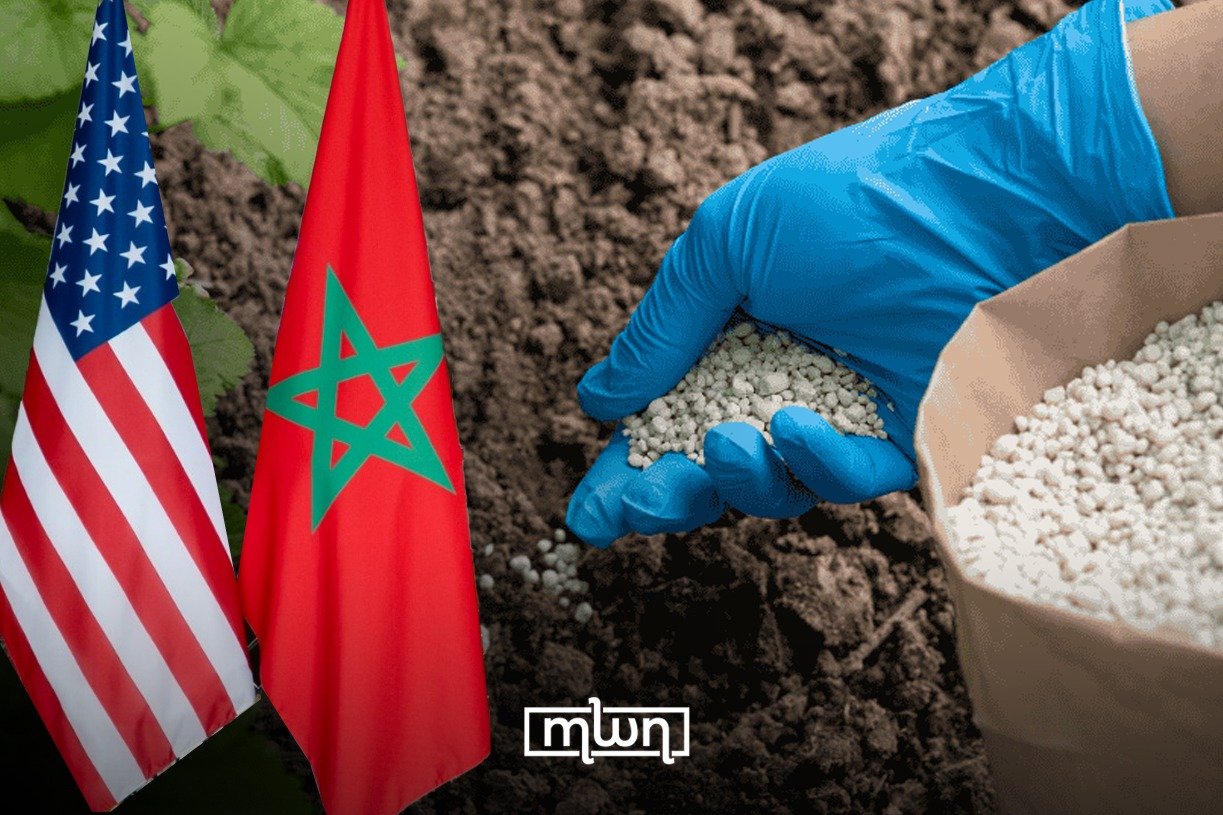
Marrakech – US Senator Roger Marshall (R-Kansas) introduced on Tuesday a bill to eliminate tariffs and countervailing duties on phosphate fertilizer imports from Morocco. The legislation comes as American farmers face a severe fertilizer crisis driven by the war in the Middle East and the near-total closure of the Strait of Hormuz.
The bill, titled the Lowering Input Costs for American Farmers Act, is cosponsored by Senators Chuck Grassley (R-Iowa), Cindy Hyde-Smith (R-Mississippi), and Joni Ernst (R-Iowa). It targets the countervailing duty order issued on April 7, 2021, against phosphate fertilizers from Morocco, which was imposed after Florida-based Mosaic Company alleged that Morocco’s state-owned OCP Group benefited from unlawful government subsidies.
“Kansas farmers are getting hit by a fertilizer market that’s working against them,” Marshall said in a statement announcing the bill. “Phosphate is a critical nutrient for crop production, and right now farmers are paying prices that threaten their bottom line.”
Under the text of the bill, duties imposed under sections 122 and 301 of the Trade Act of 1974 would no longer apply to phosphate products classified under headings 3103 and 3105 of the Harmonized Tariff Schedule imported from Morocco. The bill also mandates the revocation of the 2021 countervailing duty order within four business days of enactment, effective only with respect to Morocco.
The legislation goes further. It requires the Secretary of Commerce to ensure that no duty or cash deposit is collected following revocation, and directs US Customs and Border Protection to refund all cash deposits paid by importers within 90 days of enactment. The only exception applies to duties assessed through administrative reviews completed before the bill takes effect.
The bill arrives in the context of a prolonged legal and trade dispute between OCP and the US Department of Commerce. In 2021, Commerce imposed a 19.97% countervailing duty on Moroccan phosphate imports. The rate was later revised through successive administrative reviews, reaching 16.60% in the second review covering OCP’s 2022 imports.
However, the legal tide began shifting in OCP’s favor. In December 2025, the US Court of International Trade sustained a remand finding that a key Moroccan tax program cited in the case was not specific to OCP and therefore not countervailable.
Commerce subsequently revised the subsidy rate to 2.11% and published the amended results in the Federal Register in January this year. Then, on March 4, the US government voluntarily dismissed its appeal at the Federal Circuit, ending the five-year legal battle.
The five-year sunset review of the countervailing duty order is now underway at the Department of Commerce. The Marshall bill, if enacted, would bypass that process entirely and eliminate the duties through legislation.
The farm economy cannot absorb more
The Marshall bill also follows a letter sent on March 20 by more than 60 American agricultural organizations to US Commerce Secretary Howard Lutnick, urging the department to revoke the countervailing duty orders on phosphate fertilizer imports from Morocco.
The signatories included the National Corn Growers Association, the American Soybean Association, the National Association of Wheat Growers, USA Rice, and over 50 state-level farm groups. In the letter, the coalition warned that the duties restrict supply, drive up prices, and concentrate market power in the hands of a small number of domestic producers.
Fertilizer accounted for up to 40% of US farmers’ operating costs in 2025, the groups revealed, and rising prices were directly affecting planting decisions and farm viability. The letter also cited a Texas A&M Agriculture and Food Policy Center report estimating that the countervailing duties on Moroccan phosphate alone cost US farmers $6.9 billion across the 2021 to 2025 growing seasons.
“Maintaining the phosphate fertilizer CVDs will allow a small set of powerful corporations to continue to limit supply options for farmers,” the letter stated. The Trump administration has signaled it is weighing the possibility of lifting the duties, with USDA Secretary Brooke Rollins confirming there are “varying views” within the administration on the matter.
The timing of the bill is not coincidental. Since the US and Israel launched strikes on Iran on February 28, the Strait of Hormuz has been largely closed, disrupting the flow of fertilizers from the Arabian/Persian Gulf to global markets. Nearly one-third of globally traded fertilizers typically pass through the strait. The disruption sent urea prices surging by roughly 49% and pushed phosphate and potash prices sharply higher.
American farmers are bearing the brunt. An American Farm Bureau Federation survey found that 70% of US farmers cannot afford enough fertilizer for the current planting season. The USDA projects that net farm income will drop to $153.5 billion in 2026, while total farm debt is expected to reach a record $624.7 billion. Many farmers are cutting back on fertilizer applications or shifting acreage from nitrogen-intensive crops like corn to soybeans.
The pressure is mounting on Washington
Morocco’s role in the global phosphate market makes it a strategically critical supplier. The country holds over 70% of the world’s known phosphate rock reserves, totaling roughly 50 billion metric tons.
OCP, which operates all of Morocco’s phosphate mines, holds a 31% share of the global phosphate market. In February, the Trump administration added phosphate and potash to the US Critical Minerals List, further indicating the resource’s importance to national security.
Senator Grassley described the duties as a relic of the Biden era. “The Biden phosphate duties are making things worse, boxing out access to an important market for this essential input,” he said.
Senator Hyde-Smith called the legislation “targeted, practical relief at the farm gate.” Senator Ernst pointed to her record of pushing for phosphate’s designation as a critical mineral and called the bill another step in supporting American agriculture.
The bill has drawn support from major agricultural organizations. The National Association of Wheat Growers noted wheat farmers have borne nearly $1 billion in additional costs from the duties. The American Soybean Association labeled the legislation “an important step toward lowering costs” for producers.
USA Rice maintained that eliminating the duties would “help restore balance to fertilizer markets” and provide “immediate relief to US rice farmers facing elevated input costs and a lack of availability.”
The National Corn Growers Association, American Farm Bureau Federation, National Cotton Council, and Sorghum Growers also endorsed the bill.
Whether the legislation advances through committee and reaches the Senate floor remains to be seen. But the convergence of the Middle East fertilizer crisis, the resolution of OCP’s legal battle, and growing bipartisan pressure from farm-state lawmakers suggests the momentum behind scrapping the Moroccan phosphate duties is stronger than at any point since they were first imposed five years ago.
