


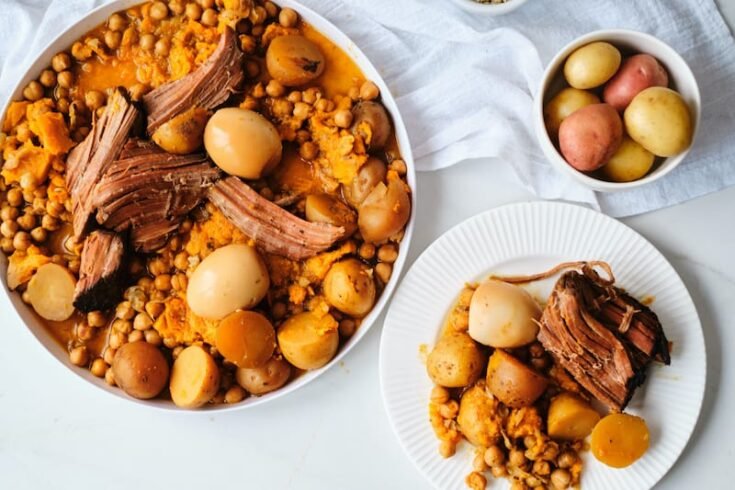
When it comes to culinary delights, the fusion of Jewish and Moroccan cuisines creates a unique and flavourful experience that tantalises the taste buds. The rich history and cultural diversity of Morocco have greatly influenced the traditional dishes of the Jewish community, resulting in a vibrant and diverse gastronomic heritage.
Harmony of Flavours
Jewish Moroccan food is a harmonious blend of aromatic spices, fresh herbs, and succulent meats. From fragrant tagines to crispy pastries filled with savoury ingredients, each dish tells a story of tradition and innovation.
Signature Dishes
One iconic dish that showcases the marriage of Jewish and Moroccan flavours is Couscous with Seven Vegetables. This hearty and colourful dish combines fluffy couscous with a medley of vegetables such as carrots, zucchini, chickpeas, and tomatoes, seasoned with a blend of spices that create a symphony of tastes.
Another beloved classic is Brik, a crispy pastry filled with a mixture of tuna, egg, parsley, and harissa. The contrast between the crunchy exterior and the savoury filling makes it a popular choice for appetisers or light meals.
Sweet Delights
No Jewish Moroccan meal is complete without indulging in some sweet treats. Rugelach, flaky pastries filled with nuts, raisins, and honey, are a delightful dessert that reflects the influence of both cultures in its ingredients and preparation.
Celebratory Feasts
Jewish holidays such as Passover and Rosh Hashanah are celebrated with special dishes that showcase the culinary traditions passed down through generations. During these festive occasions, tables are laden with dishes like Lamb Tagine with Prunes or Honey-soaked Almond Pastries, symbolising prosperity and sweetness for the coming year.
Preserving Tradition
Through the preparation and sharing of these cherished recipes, Jewish Moroccans keep alive their cultural heritage while embracing modern influences. The flavoursome dishes not only nourish the body but also serve as a reminder of unity among diverse communities.
So next time you sit down to enjoy a meal inspired by Jewish Moroccan cuisine, savour each bite as you embark on a culinary journey steeped in history and tradition.
Exploring the Rich Tapestry of Jewish Moroccan Cuisine: A Fusion of Flavours, Culture, and Health
- 1. Rich Fusion of Flavours
- 2. Cultural Heritage
- 3. Unique Ingredients
- 4. Festive Celebrations
- 5. Health Benefits
- 6. Culinary Creativity
Challenges of Jewish Moroccan Cuisine: Time, Ingredients, and Taste Preferences
- Some Jewish Moroccan dishes can be time-consuming to prepare due to intricate cooking techniques and multiple steps involved.
- Certain ingredients used in Jewish Moroccan cuisine may not be readily available in all regions, making it challenging to recreate authentic dishes.
- Traditional Jewish Moroccan recipes often involve rich flavours and spices that may not appeal to individuals with milder taste preferences.
- The combination of sweet and savoury elements in some Jewish Moroccan dishes may not suit everyone’s palate, especially those who prefer distinct flavour profiles.
1. Rich Fusion of Flavours
Jewish Moroccan food stands out for its rich fusion of flavours, combining aromatic spices and fresh ingredients to create a delightful culinary experience. The harmonious blend of traditional Jewish recipes with the vibrant Moroccan palate results in dishes that tantalise the taste buds with every bite. From fragrant tagines to crispy pastries, each dish showcases a unique combination of seasonings and textures that reflect the diverse cultural influences present in this exceptional cuisine.
2. Cultural Heritage
Each dish in Jewish Moroccan food encapsulates a cultural heritage that spans generations. The fusion of Jewish and Moroccan culinary practices not only results in tantalising flavours but also serves as a testament to the rich history and traditions of both communities. Through these dishes, cultural identity is preserved and celebrated, creating a culinary tapestry that honours the past while embracing the present. The intricate blend of ingredients and cooking techniques tells a story of unity and diversity, showcasing the enduring legacy of Jewish Moroccan cuisine.
3. Unique Ingredients
In Jewish Moroccan cuisine, the use of unique ingredients adds a distinctive touch to every dish. From the warm and earthy notes of cumin and cinnamon to the sweetness of dates and figs, these exotic flavours create a sensory experience like no other. The fusion of these diverse ingredients not only enhances the taste but also reflects the cultural richness and culinary creativity that define Jewish Moroccan food.
4. Festive Celebrations
Special dishes prepared for holidays in the Jewish Moroccan culinary tradition bring families together to share in the joyous spirit of celebration through delicious meals. Festive celebrations are elevated by the preparation and enjoyment of traditional dishes that hold deep cultural significance, fostering a sense of unity and togetherness among loved ones. The act of gathering around a table laden with symbolic and flavourful foods not only nourishes the body but also nourishes the soul, creating lasting memories and strengthening familial bonds during these special occasions.
5. Health Benefits
Many Jewish Moroccan dishes offer a notable health benefit through their emphasis on wholesome ingredients such as fresh vegetables, nutrient-rich legumes, and lean meats. This culinary approach not only enhances the flavour profiles of the dishes but also promotes a balanced diet rich in essential nutrients. By incorporating these nutritious elements into their traditional recipes, Jewish Moroccan cuisine contributes to overall well-being and supports a healthy lifestyle.
6. Culinary Creativity
The culinary creativity found in Jewish Moroccan food shines through the fusion of Jewish and Moroccan cooking styles. This unique blend not only honours traditional favourites but also sparks innovation, leading to the creation of fresh and exciting recipes that captivate the palate. By combining diverse ingredients, techniques, and flavours, chefs in this culinary tradition continuously push boundaries and delight food enthusiasts with new and inventive dishes that celebrate the best of both worlds.
Some Jewish Moroccan dishes can be time-consuming to prepare due to intricate cooking techniques and multiple steps involved.
Creating authentic Jewish Moroccan dishes can be a labour of love, as some recipes require intricate cooking techniques and involve multiple steps, making the preparation process quite time-consuming. From slow-cooking tagines to hand-rolling delicate pastries, the dedication and attention to detail needed to craft these culinary delights highlight the commitment to preserving tradition and ensuring that each dish is a true reflection of the rich cultural heritage of Jewish Moroccan cuisine.
Certain ingredients used in Jewish Moroccan cuisine may not be readily available in all regions, making it challenging to recreate authentic dishes.
Certain ingredients used in Jewish Moroccan cuisine may pose a challenge for enthusiasts looking to recreate authentic dishes outside of regions where these ingredients are readily available. From specific spices and herbs to unique vegetables and condiments, the essence of Jewish Moroccan food can sometimes be difficult to capture without access to the original components. This limitation adds a layer of complexity for those seeking to experience the true flavours and aromas of this culinary tradition, requiring creativity and resourcefulness in substituting ingredients while striving to maintain the authenticity of the dishes.
Traditional Jewish Moroccan recipes often involve rich flavours and spices that may not appeal to individuals with milder taste preferences.
Traditional Jewish Moroccan recipes are renowned for their bold and robust flavours, incorporating a diverse array of spices and seasonings that may be overpowering for those with more delicate taste preferences. The intense combination of aromatic herbs, pungent spices, and tangy preserved lemons can create a sensory experience that some individuals may find too strong or unfamiliar. While these rich flavours are deeply rooted in the cultural heritage of Jewish Moroccan cuisine, they may pose a challenge for those seeking milder or less complex taste profiles in their meals.
The combination of sweet and savoury elements in some Jewish Moroccan dishes may not suit everyone’s palate, especially those who prefer distinct flavour profiles.
The fusion of sweet and savoury elements in certain Jewish Moroccan dishes may present a culinary challenge for individuals with a preference for more distinct flavour profiles. The harmonious balance of contrasting tastes, such as the use of honey in savoury dishes or the pairing of fruits with meats, can be an acquired taste that may not appeal to everyone. While this unique blend of flavours is a hallmark of Jewish Moroccan cuisine, it is understandable that some diners may find the combination unconventional or unexpected, highlighting the diversity and complexity of this rich gastronomic tradition.
