


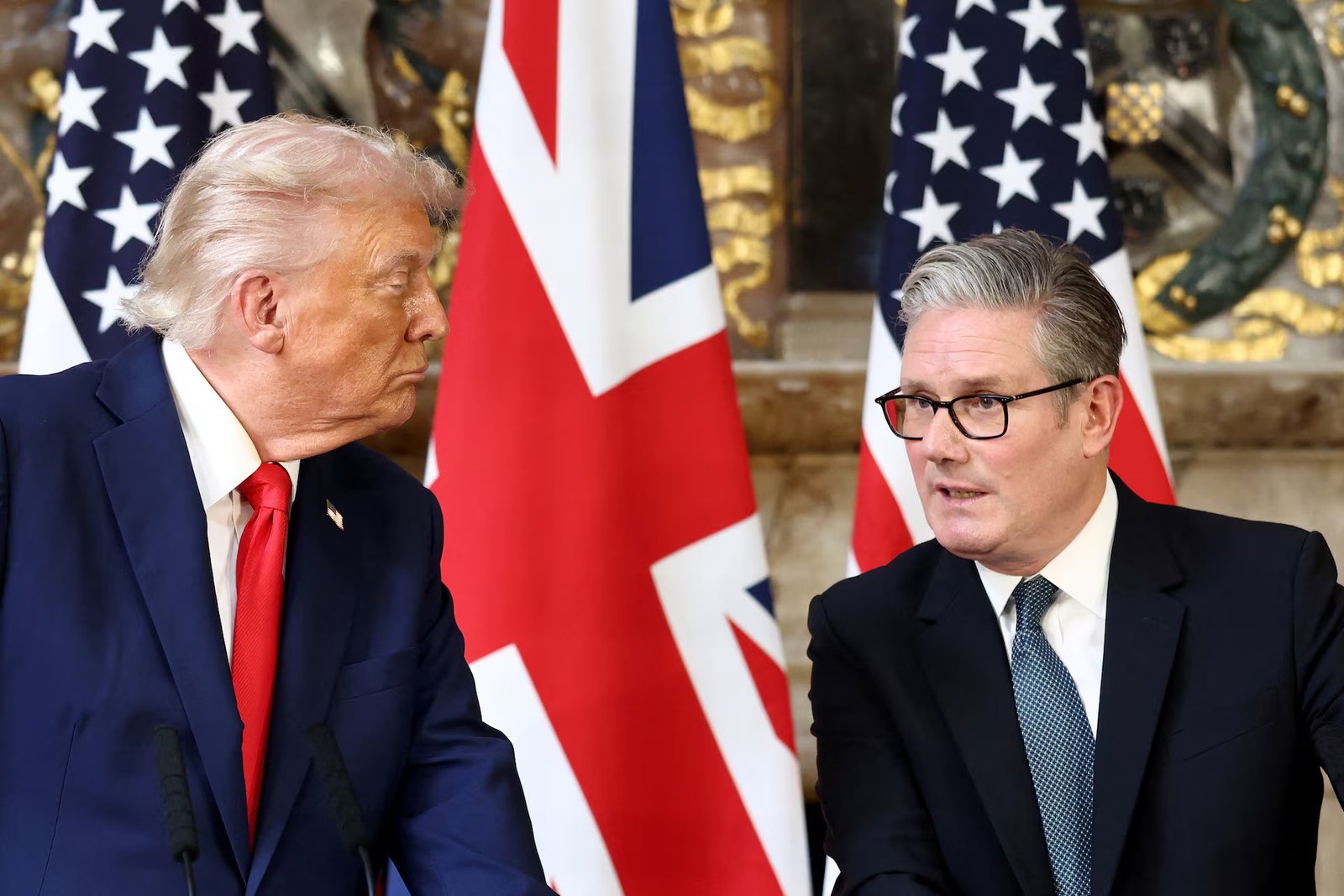
Rabat – Sir Keir Starmer and Donald Trump have spoken for the first time since the US president criticized the UK’s response to the conflict with Iran.
Downing Street released limited details of the call, saying the two leaders discussed the situation in the Middle East and military cooperation between the UK and the US.
The phone call comes after Trump publicly criticized Britain’s stance on the conflict and accused the UK of being slow to support US military action against Iran.
‘No Winston Churchill’
On Saturday, President Trump said the UK was considering sending aircraft carriers to the Middle East but dismissed the prospect, writing on social media, “We don’t need people that join wars after we’ve already won!” He also referred to Britain as “our once great ally.”
Sir Keir has previously said the UK would not take part in offensive military action against Iran but agreed to allow the US to use British bases for defense strikes targeting missile sites.
Trump repeatedly expressed frustration with the prime minister after he refused an earlier US request to use UK bases for the initial offensive strikes.
Earlier this week, Trump said he was “not happy with the UK,” adding that Sir Keir was “no Winston Churchill.”
Speaking on Sunday with Laura Kuenssberg, Foreign Secretary Yvette Cooper said the prime minister was “right to stand up for Britain’s interests” and that the UK government would not agree with the US president “on every issue.”
“It’s for the US president to decide what he thinks is in the US national interest,” she said.
“But it is our job as the UK government to decide what’s in the UK national interest, and that doesn’t mean simply agreeing with other countries or outsourcing our foreign policy to other countries.”
Collective self-defense of partners
Following the phone call, Downing Street said in a statement that the leaders discussed the latest developments in the Middle East and cooperation between British and American forces.
“The leaders began by discussing the latest situation in the Middle East and the military cooperation between the UK and the US through the use of RAF bases in support of the collective self-defense of partners in the region,” the statement said.
The prime minister also shared his heartfelt condolences with President Trump and the American people following the deaths of six US soldiers.
“They looked forward to speaking again soon.”
Despite Trump’s criticism, the UK has defended its decision not to join the initial strikes and reiterated that Britain does not want to take part in a wider offensive campaign in the Middle East.
Cooper said the UK would provide defensive support when Iranian attacks threaten partner countries where British citizens are living.
RAF jets have already been sent to the region to intercept missiles and drones launched by Iran at UK allies.
The aircraft carrier HMS Prince of Wales has also been placed on advanced readiness, although the foreign secretary declined to confirm whether it would be deployed.
The issue has also sparked debate within British politics. Former Labour prime minister Sir Tony Blair said the UK should have supported the strikes from the beginning, arguing that the US remained an “indispensable cornerstone” of Britain’s security.
But Cooper said it was important to learn from past conflicts, including the Iraq War.
“All our decisions need to be about what is right for British citizens,” she said.
Appearing on the same program, Iran’s ambassador to the UK warned Britain to be “very careful” about becoming further involved in the conflict.
Seyed Ali Mousavi said that if British facilities or military bases were used against Iran, they could be considered “legitimate targets.”
Reform UK’s Robert Jenrick said his party did not believe Britain should take part in offensive bombing raids against Iran but argued the government should have allowed the US to use UK bases “from the outset.”
