


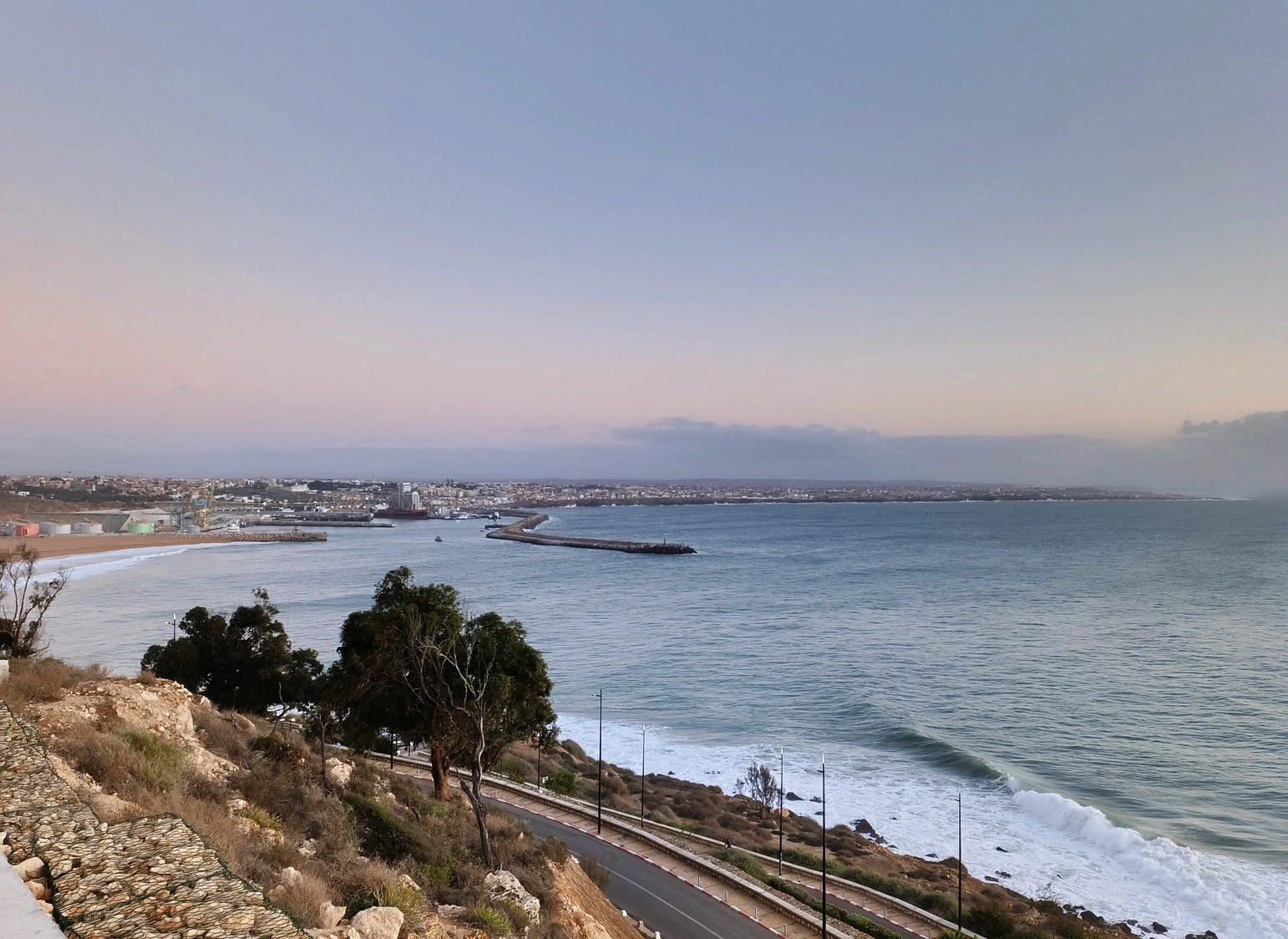
Most people who visit Morocco stick to the famous spots — Marrakech, Chefchaouen, Essaouira. And yes, those places are beautiful. But what happens when you leave the tourist trail and just keep riding north along the Atlantic?
That’s exactly what I did. And the hidden coast of Morocco between Essaouira and Casablanca stopped me at every turn.
Leaving Essaouira Behind
Essaouira is wonderful — but it’s also busy, well-known, and well-photographed. Once you head north from there toward Safi, something changes.
The crowds disappear. The hotels disappear. Even the buildings disappear.
What’s left? Kilometre after kilometre of raw, open Atlantic coastline. No villas. No resorts. No construction crews. Just beach, wind, and the sound of waves.
It made me wonder: how long before this changes? How long before the developers arrive and turn this into another tourist hub? If you want to see it as it is right now — go soon.
Safi: The Ceramic Capital of Morocco
A Town Most Tourists Skip
About 110–120 kilometres north of Essaouira, you’ll find Safi — and most travellers drive straight past it. That’s a mistake.
Safi is Morocco’s industrial heart on this stretch of coast. It’s a major export hub for phosphate and sardines, which means it’s not glamorous. The beaches near the factories are littered with rubbish, which is a shame. But the town itself? Genuinely pretty.
And here’s what almost nobody knows: Safi is the ceramic capital of Morocco.
The Pottery Hill
Head up to the pottery hill — the Colline des Potiers — and you’ll find an open-air workshop unlike anything else in the country.
Craftsmen sit in small workshops cutting raw rock with their bare hands — no gloves, no protection — shaping the material that will eventually become the painted ceramics sold across Morocco. The rocks are crushed, melted into dense mud, shaped, fired in large clay ovens, and then handed to master painters who cover each piece in intricate geometric patterns.
One craftsman told me his family has been doing this for nine generations. Nine. That’s not a job. That’s a dynasty.
If you find a piece you love, buy it. These are made by hand, by people who have dedicated their lives to the craft. A small bowl or tile makes a far better souvenir than anything you’ll find in a tourist market.
Practical tip: The pottery hill is easy to find and free to explore. Most craftsmen are happy for you to watch — just be respectful and don’t photograph anyone without a smile and a nod of permission.
Oualidia: The Lagoon Nobody Told You About
A Hidden Gem on the Hidden Coast
Between Safi and El Jadida, I stopped for coffee in a town called Oualidia — completely by accident, because it was just there on the road.
It turned out to be one of the most beautiful spots on the entire coast.
The town sits beside a natural lagoon where calm, shallow water is protected from the open Atlantic by a strip of golden sand. The colour of the water, the colour of the sand, the quiet — it’s the kind of place that makes you put your phone away and just sit.
Oualidia is actually known to Moroccans, especially for its oysters — it’s one of the best places in the country to eat fresh seafood. But international tourists rarely make it here, which means you get a genuinely peaceful experience even during busier seasons.
Practical tip: Stop here for lunch. Order oysters or grilled fish. Eat by the lagoon. You can thank me later.
El Jadida: A Portuguese Fort on the Moroccan Coast
History Hiding in Plain Sight
The last major stop before Casablanca is El Jadida, and it carries one of the more unusual histories on the Moroccan coast.
The Portuguese built this town in 1514, calling it Mazagan. They constructed the entire settlement — thick walls, cannon bastions, a deep cistern — as a strategic Atlantic trading post. For over two centuries, it was a Portuguese city on Moroccan soil.
In 1769, the Moroccan army surrounded Mazagan and the Portuguese fled. Morocco reclaimed the city, renamed it El Jadida, but left the Portuguese architecture largely intact.
Today, the old fortified medina is a UNESCO World Heritage Site. Walking inside the walls, you’ll notice something that feels distinctly un-Moroccan — the wide streets, the European archways, the old Catholic church. It’s a fascinating reminder that Morocco’s history is layered, complex, and full of surprises.
Practical tip: Allow at least two hours to explore the old city. The Portuguese cistern — an underground vaulted hall that once stored water — is the highlight. The reflection of the vaulted ceiling in the shallow water on the floor is one of the most photographed images in Morocco.
How to Travel the Hidden Coast of Morocco
Getting there: The most flexible way is by motorbike or car. You can hire a car in Essaouira or Marrakech. Shared taxis (grand taxis) also run between most towns on this route — they’re cheap, and they leave when full, so be patient.
Best time to visit: Spring (March–May) and autumn (September–November) offer the best weather. Summer can be windy on this Atlantic coast, but surfers love it.
How long does it take? Essaouira to El Jadida is roughly 250 kilometres. With stops at Safi, Oualidia, and El Jadida, allow two full days minimum — one if you want to rush, but why would you?
Safety: Morocco is generally a safe country for travellers. Like anywhere, stay aware of your surroundings in busy urban areas, keep valuables out of sight, and trust your instincts. Thousands of travellers move through this coast every year without any issues.
Final Thoughts
The hidden coast of Morocco between Essaouira and Casablanca doesn’t have a famous nickname. You won’t find it trending on travel Instagram. There are no influencer hotspots with queues around the block.
What it has is something rarer — space, silence, and authenticity. Pottery families who’ve been shaping clay for nine generations. A lagoon town that appears like a gift on a long drive. A Portuguese fort standing quietly inside a Moroccan city.
This coastline is still a gem. Get here before that changes.
Have you travelled this stretch of the Moroccan coast? Did you stop in Safi or Oualidia? Drop your experience in the comments below — I’d love to hear what you discovered.
