


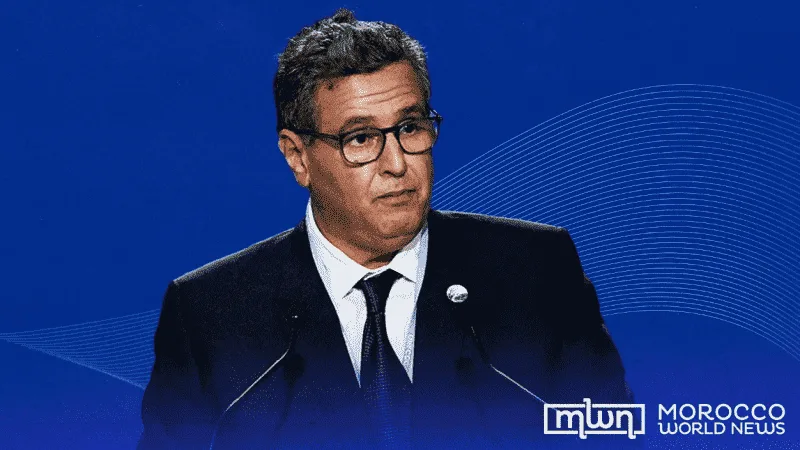
Rabat – The success of the 2025 Africa Cup of Nations (AFCON) hosted in Morocco did not happen by chance. It reflects years of public investment and a long-term strategic approach, Head of Government Aziz Akhannouch said on Tuesday in Rabat.
Addressing the Chamber of Counselors during a plenary session on general policy devoted to sports and public action, Akhannouch described this AFCON as the outcome of a deep conviction that sport plays a central role in national development.
For the government, sport no longer stands as a secondary sector tied only to competition results, but as a pillar of social and economic policy.
Akhannouch pointed to the broad consensus among sports officials, journalists, specialists, and supporters, who regarded the Moroccan edition as one of the strongest in the tournament’s history.
He cited the modern stadiums, efficient transport networks, high security standards, quality services, record crowds, and wide international media coverage as concrete indicators of that assessment.
The head of government also said the political and symbolic dimension of the tournament carried equal weight. He recalled that King Mohammed VI described the event not as a Moroccan achievement alone, but as a collective African success.
Through this approach, Morocco presented an image of a continent capable of hosting major sporting events in an atmosphere of unity and mutual respect.
Akhannouch also referred to the King’s response to criticism and attempts to discredit the tournament. According to him, the monarch reaffirmed that such efforts would fail and that the historical bonds between African peoples remain stronger than any campaign of denigration.
The message of AFCON 2025, Akhannouch said, extends far beyond the world of football. It confirms Morocco’s determination to place sport at the service of development and continental outreach, while reinforcing confidence in Africa and its capacities.
This vision rests on a realistic understanding of sport and its social role. Sport, in this context, contributes to improved living conditions, individual fulfillment, and enhanced social cohesion.
Akhannouch concluded that discussions about sport must move past narrow technical debates or isolated sporting outcomes. Instead, sport must occupy a strategic position within Morocco’s development model, a shift that explains the massive changes the sector has experienced in recent years.
