


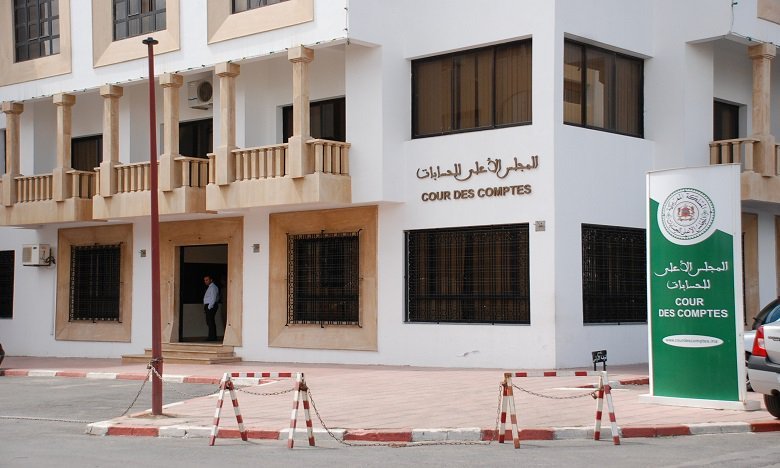
Marrakech – King Mohammed VI has appointed 24 auditors as second-grade magistrates to financial courts, following recommendations from the financial courts magistracy council during its meeting on December 9 last year.
According to the Court of Accounts, the monarch also approved 155 promotions of financial court magistrates to the newly created principal grade, “demonstrating royal attention to the financial judiciary family’s professional development.”
The Court of Accounts is Morocco’s supreme audit institution and one of the kingdom’s most important constitutional bodies. Established in 1979 through Law 12-79 and elevated to constitutional status in 1996, the institution serves as the highest authority for public financial oversight in Morocco.
The court operates with guaranteed independence under the constitution and reports directly to the King while assisting both Parliament and the government in financial governance matters.
The court’s primary mission encompasses three core functions: judging accounts of state departments and public companies, enforcing budgetary and financial discipline, and conducting management audits of public entities.
Beyond traditional auditing, the institution has expanded its mandate to include overseeing political party expenditures, monitoring electoral campaign financing, and managing mandatory asset declarations by public officials.
Read also: Moroccan Political Parties Fail to Justify Over MAD 5 Million in Spending
Since February 2010, ministers, parliamentary members, and judicial officials must declare their assets to the court at the beginning and end of their mandates.
The court’s structure includes both national and regional components, with nine regional Courts of Accounts established since 2004 to control territorial collectivities and their groupings as part of Morocco’s decentralization policy.
Currently led by Zineb El Adaoui, who became the fourth president in 2021, the court operates under rigorous professional standards and maintains its independence through dedicated budgetary allocations and specialized magistrates.
The institution’s work extends beyond mere financial control to performance auditing, helping optimize public fund management and strengthen transparency in Moroccan governance.
International recognition of the Court’s effectiveness has grown significantly, with countries like Kenya studying Morocco’s financial oversight model as a benchmark for institutional independence and professional standards.
The court publishes annual reports to parliament, conducts thematic studies on public policy implementation, and serves as a crucial mechanism for ensuring accountability and preventing financial mismanagement across Morocco’s public sector.
