


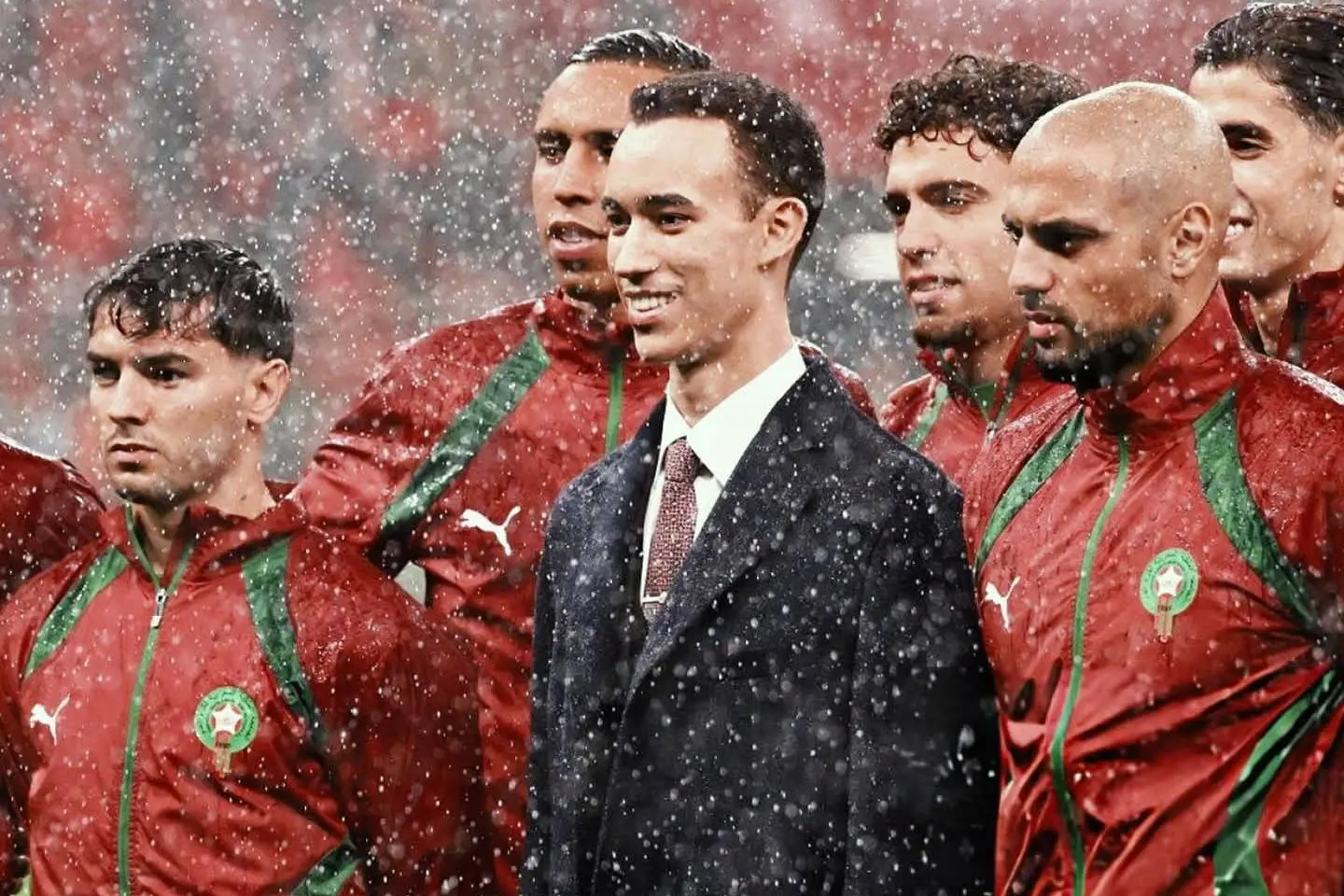
Have you ever stood in a stadium, hand over heart, singing your country’s anthem? That powerful moment when thousands of voices unite as one? In Morocco, that moment almost didn’t happen. For years, the Moroccan national anthem had no words—just a beautiful melody floating in silence. The story of how it finally got its lyrics involves a football match, a king’s vision, and a single powerful phrase that would unite a nation.
Let me share this incredible piece of Moroccan history that most visitors never hear about.
The Silent Anthem: Morocco Before 1970
Picture this: Morocco has its independence, its flag waves proudly, but when the national anthem plays, people stand in respectful silence. There’s a melody—beautiful and moving—but no words to sing. No lyrics to shout with pride. Just instrumental music.
This was Morocco’s reality for years after independence. The anthem existed, but it couldn’t be sung. It couldn’t be chanted in stadiums or hummed by children learning about their country. It was incomplete, like a story waiting for its ending.
I’m crafting this in Hassan’s style – personal, engaging, using imagery and simple language. I’m setting up the context before revealing the football connection. The tone is conversational and builds curiosity.
Football Changes Everything: The 1970 World Cup Qualification
Then came 1970—a year that would change Moroccan music history forever.
Morocco qualified for the FIFA World Cup. The Atlas Lions were heading to Mexico to represent their country on the world’s biggest football stage. Excitement filled every corner of the kingdom. But there was one small problem—a problem that suddenly became very big.
How do you represent your nation at a global event when you can’t even sing your own anthem?
Think about it. Players from every country line up before the match. The anthems play. Teams sing with passion, with pride, their voices carrying across the stadium. But what would Morocco do? Stand in silence while their melody played? It didn’t feel right. It didn’t feel complete.
A King’s Decision: Hassan II Steps In
This is where King Hassan II, may he rest in peace, enters the story.
The late king understood something important: an anthem without words is like a heart without a voice. Morocco needed lyrics—words that every Moroccan could sing, words that captured the spirit of the nation, words that would echo in stadiums around the world.
King Hassan II made a decision. The Moroccan national anthem would finally get the lyrics it deserved. But these weren’t just any lyrics—they needed to be perfect. They needed to represent every Moroccan, from the Atlas Mountains to the Sahara Desert, from Tangier to Lagouira.
The Competition That Made History
So, how do you create lyrics for an entire nation? You ask the nation itself.
A competition was organized—open to Moroccan writers and poets. The challenge was clear: write words that would make every Moroccan proud. Words that would work with the existing melody. Words that would last for generations.
I can only imagine the pressure. Writing for your country isn’t like writing a poem for school or a song for friends. These words would be sung by millions. They would represent Morocco at the Olympics, at international ceremonies, at every important moment when the nation needed to speak with one voice.
Good, I’m maintaining Hassan’s conversational style while building the narrative. I’m using simple language and creating emotional connection. Now I need to introduce Ali Squalli Houssaini and the actual lyrics.
Ali Squalli Houssaini: The Man Behind the Words
From all the submissions, one stood out. One set of lyrics captured everything Morocco was and everything it aspired to be.
The winner was Ali Squalli Houssaini.
His words weren’t just poetry—they were a declaration. They transformed the Moroccan national anthem from a silent melody into a living, breathing expression of national identity. Suddenly, the anthem wasn’t just music you listened to. It was something you participated in. Something you felt in your chest when you sang it.
“Allah, Al-Watan, Al-Malik”: Three Words That Unite a Nation
The most powerful phrase in the anthem is simple but profound: “Allah, Al-Watan, Al-Malik”—God, Country, King.
Three words. Three pillars of Moroccan identity.
When Moroccans sing this phrase, it’s not just words leaving their mouths. It’s a connection to something bigger than themselves. It’s history, faith, pride, and belonging all wrapped into one moment. Whether you’re in the Stade Mohammed V in Casablanca or watching from your living room in Essaouira, when these words ring out, you’re part of something ancient and modern at the same time.
I’ve heard this anthem sung at football matches, at school ceremonies, at national celebrations. Each time, I see the same thing—people standing a little taller, voices rising together, faces showing pure pride. It’s beautiful to witness.
From Melody to Voice: The Transformation
After 1970, everything changed.
The anthem was no longer just background music at official events. It became participatory. It became personal. Children learned it in school. Football fans belted it out in stadiums. Moroccan athletes sang it at the Olympics. Expatriates sang it at embassies abroad, tears in their eyes, connecting to home through those powerful words.
The Moroccan national anthem found its voice, and in doing so, it gave voice to millions of Moroccans who could finally sing their love for their country out loud.
Why This Story Matters Today
You might wonder why I’m telling you this story on a travel blog. What does an anthem’s history have to do with visiting Morocco?
Everything.
Understanding this story helps you understand Morocco itself. It shows you how football, monarchy, faith, and national pride are woven together in Moroccan culture. It shows you that sometimes the most important things come from unexpected places—like a World Cup qualification sparking a musical revolution.
Next time you’re in Morocco and you hear the national anthem—maybe at a café when a match is about to start, or at a public ceremony, or even just in passing—you’ll know the story behind those voices. You’ll understand that what sounds like a simple song is actually a hard-won victory of national expression.
Your Turn: Share Your Anthem Story
Did you know about this piece of Moroccan history? Have you ever heard the Moroccan national anthem live at a football match or ceremony? What’s the story behind your own country’s anthem?
I love hearing from readers who share their experiences and knowledge about Morocco. Drop a comment below and let’s keep this conversation going. And if you found this story as fascinating as I did when I first learned it, share it with someone who loves Morocco or is planning to visit.
Because the best stories—like the best anthems—are meant to be shared.
Baraka Allahu fik (May God bless you), and until next time, keep exploring Morocco’s hidden stories!
