


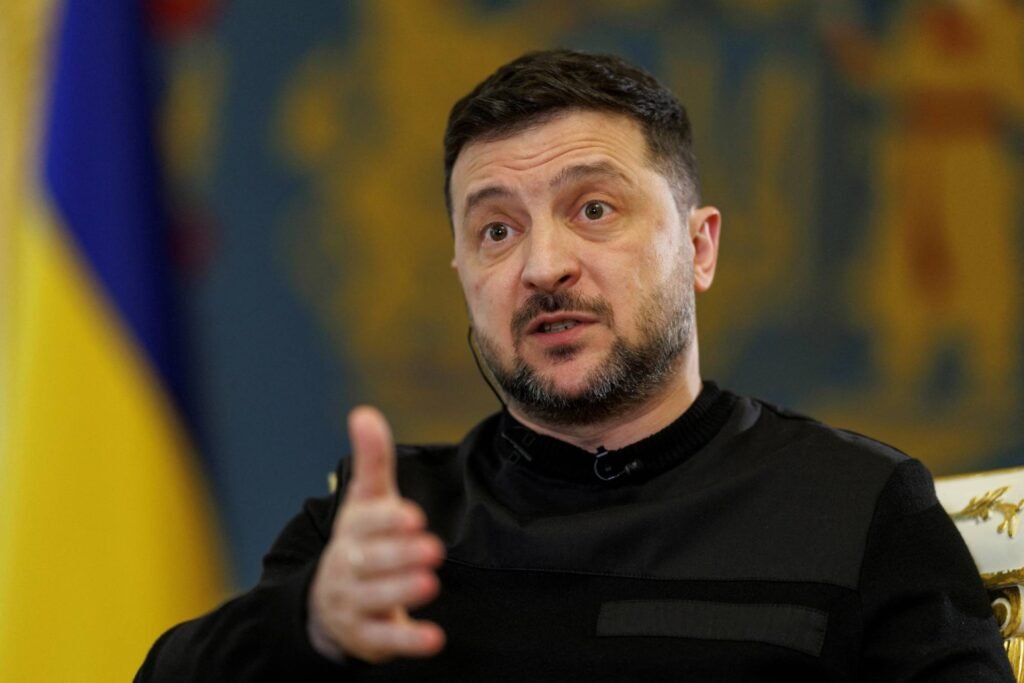
Rabat – Ukrainian President Volodymyr Zelensky said some of Kyiv’s allies have urged him to scale back attacks on Russia’s energy infrastructure amid a global fuel crunch, but indicated such strikes would stop only if Moscow ceased targeting Ukraine’s energy system.
In a WhatsApp voice message to BBC journalists, Zelensky said Ukraine’s attacks were a direct response to Russian actions.
“We have received messages from one of our partners asking about how our responses against Russia’s oil sector, the energy sector, can be reduced,” he said. “If Russia is ready not to strike Ukraine’s energy, then we’ll respond by not attacking theirs.”
He did not specify which countries had raised concerns. Major economies, including China and India, remain heavily reliant on Russian crude, while the European Union continues to depend on Russian gas and liquified natural gas.
Zelensky’s remarks come as Ukrainian forces have intensified long-range strikes on Russian energy facilities, including the key oil export terminal at Ust-Luga near St. Petersburg. He said an earlier strike this week had knocked out 60% of the port’s capacity.
Russian officials reported further overnight attacks into Tuesday, with local authorities in the Leningrad region saying infrastructure was damaged and three people, including two children, were injured.
The escalation coincides with rising global energy prices, driven in part by conflict involving Iran and disruptions to shipping through the Strait of Hormuz, a vital oil transit route. In response, the United States has recently eased some sanctions on Russian oil.
China and India accounted for around 85% of Russia’s crude exports in February, according to the Centre for Research on Energy and Clean Air. The European Union remains the largest buyer of Russian gas, including pipeline supplies and LNG.
Ukraine’s own energy system has been severely strained by repeated Russian strikes, with more than one million people left without electricity and heating during winter. The country now relies heavily on imported fuel, largely from Poland, Greece, Lithuania, and Turkiye.
Gas imports from Hungary, once a key supplier, appear to have been suspended amid a dispute over pipeline repairs and an EU loan.
Details of Ukraine’s strikes on Russian energy infrastructure remain closely held, making their full impact difficult to assess. In addition to energy sites, Russian attacks have also targeted Ukrainian defense facilities.
Speaking on Saturday, Zelensky said Ukraine currently has sufficient fuel supplies but is seeking additional reserves. During a recent tour of Saudi Arabia, the United Arab Emirates, Qatar, and Jordan, he offered Ukraine’s drone expertise and sought support to strengthen air defenses.
He also pointed to Ukraine’s experience in maintaining grain exports through the Black Sea as evidence that it could help address disruptions to global trade routes, including those affecting the Strait of Hormuz.
While higher oil prices bolster Russia’s revenues, Zelensky warned they also pose risks to Ukraine’s war effort by increasing the cost of sustaining its economy and military.