


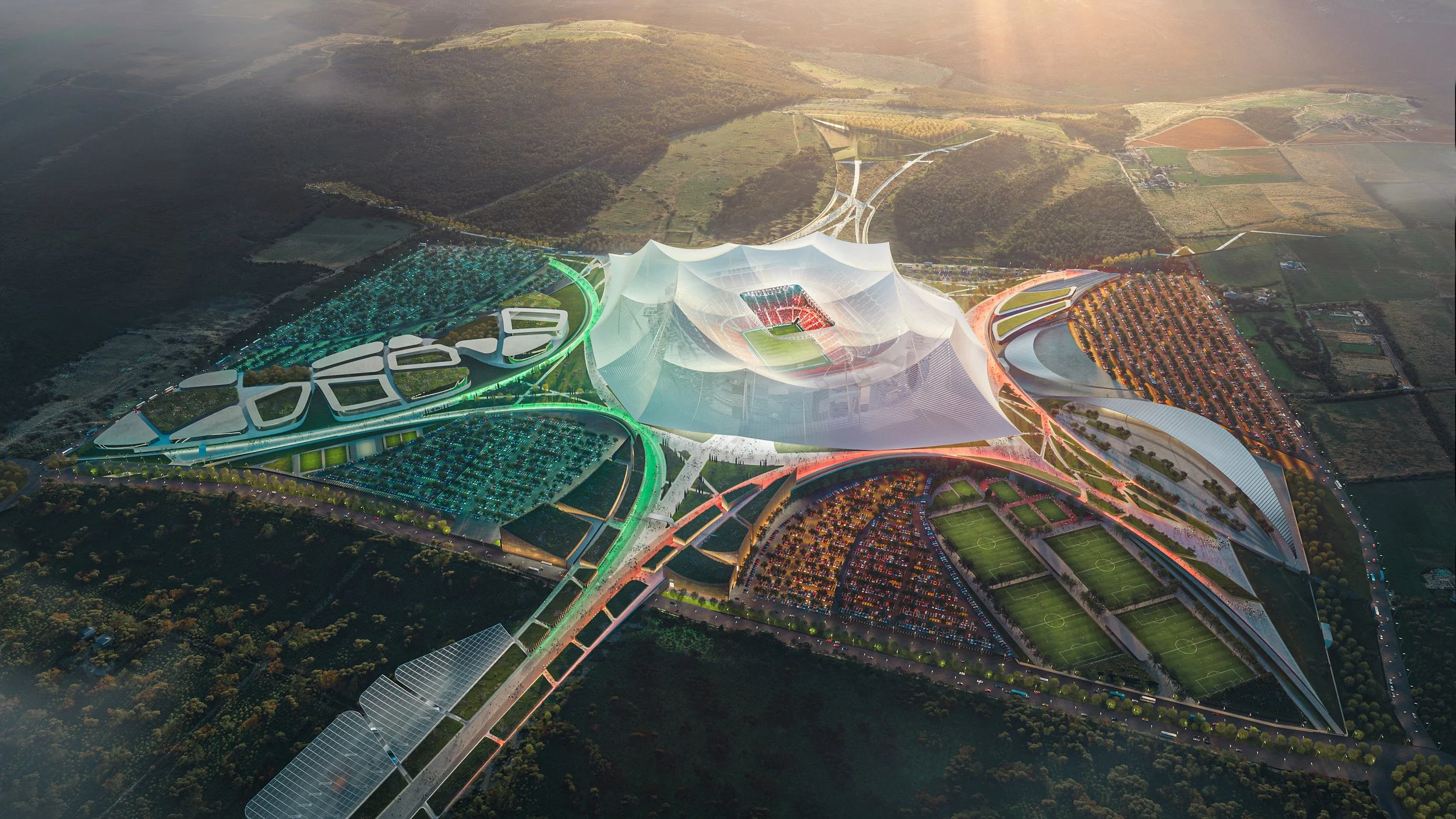
Something historic is happening in Morocco right now, and the football world is watching closely. When I first heard about the Morocco 2030 World Cup stadium project, I thought it might be just another ambitious announcement. But this is real—officially validated, actively planned, and set to change everything we know about sports infrastructure in Africa.
The Grand Stade Benslimane isn’t just another stadium. With a capacity exceeding 115,000 spectators, it will become the largest football stadium on the planet. And it’s being built right here in Morocco, in Benslimane province near Casablanca, as the centerpiece of the 2030 FIFA World Cup that Morocco will co-host with Spain and Portugal.
Walking through Casablanca today, you can feel the excitement building. This isn’t just about football—it’s about Morocco stepping onto the world stage in a way we’ve never seen before.
Why Morocco Needs the World’s Largest Stadium
More Than Just Size
You might wonder: why does Morocco need the biggest stadium in the world? The answer goes deeper than national pride.
When you’re co-hosting a World Cup with European powerhouses like Spain and Portugal, you need something that makes you stand out. Morocco isn’t just participating in football history anymore—it’s shaping it. This stadium ensures that when people think about the 2030 World Cup, Morocco won’t be an afterthought. It will be front and center.
Comparing Giants
Let me put this in perspective. Right now, North Korea’s Rungrado 1st of May Stadium holds slightly over 110,000 people. Barcelona’s legendary Camp Nou, even after renovations, seats around 105,000. In the United States, even the largest sports venues rarely exceed 100,000 capacity.
By announcing a stadium with more than 115,000 seats dedicated primarily to football, Morocco isn’t just joining this elite circle—it’s redefining what’s possible. The country is setting a new global standard.
The Strategic Location: Why Benslimane?
Beyond Casablanca’s Shadow
Benslimane wasn’t chosen for its historical prestige. This provincial town earned its place through strategic advantages that architects and urban planners dream about.
First, there’s the proximity to Casablanca—Morocco’s economic heart and largest city. Major highways connect directly to the site, making access straightforward for both local and international visitors. But here’s what really matters: the available space.
Unlike building in a congested city center, Benslimane offers room to breathe. Room to create not just a stadium, but an entire ecosystem around it. We’re talking hotels, commercial zones, entertainment districts, and modern transport infrastructure. The stadium becomes the beating heart of a new urban development.
Architecture That Tells Morocco’s Story
Where Tradition Meets Innovation
The design of the Morocco 2030 World Cup stadium draws inspiration from something deeply Moroccan—the traditional tents used during large gatherings and celebrations. This isn’t just about aesthetics (though it will be stunning). It’s about creating something that says: “This is Morocco. Modern, yes. But rooted in our heritage.”
I’ve attended events in various Moroccan venues, and there’s always this balance between honoring tradition and embracing progress. This stadium takes that philosophy and amplifies it on a global scale.
Inside the Arena
Everything inside is designed for maximum impact:
- Optimal visibility from every seat
- Powerful acoustics that amplify the crowd’s energy
- Smooth circulation for over 115,000 people
- State-of-the-art security systems
The security aspect alone is revolutionary for Morocco. Managing crowd flow, rapid evacuation protocols, and real-time surveillance for this many people requires technology and coordination Morocco has never needed before. This learning experience will benefit the country far beyond football.
The Economic Reality Behind the Vision
Billions in Investment, Thousands of Jobs
Let’s talk about money—because this is a massive investment. We’re looking at billions of dirhams flowing into construction, engineering, logistics, and security.
But here’s what people sometimes miss: that money doesn’t disappear. It circulates through Morocco’s economy. During construction, thousands of jobs are created. Moroccan companies work alongside international firms, learning skills they’ll use on future projects. This knowledge transfer is invaluable.
The construction industry in Morocco is already strong. This project pushes it to world-class levels.
Life After 2030
The real test comes after the World Cup ends. What happens to a 115,000-seat stadium when the global spotlight moves on?
If managed properly—and that’s crucial—the possibilities are endless:
- International concerts attracting global superstars
- African Cup of Nations finals
- Champions League finals
- Cultural festivals and ceremonies
- Corporate events and exhibitions
Each major event brings tens of thousands of visitors. Hotels fill up. Restaurants buzz with activity. Transportation networks earn revenue. Local businesses thrive. Sports tourism can become a cornerstone of Morocco’s economy for decades.
But this only works with rigorous governance and creative programming. An empty stadium is an expensive monument to poor planning.
The Infrastructure Challenge
Building More Than a Stadium
A venue this size doesn’t function in isolation. You can’t just drop 115,000 people in one location without completely rethinking transportation.
Morocco must upgrade or create:
- Highway connections
- Rail links
- Massive parking facilities
- Public transportation systems
- Traffic management technology
During major events, getting everyone in and out safely within hours becomes a logistical puzzle of extraordinary complexity. The solutions Morocco develops for this stadium will improve mobility for everyone in the region, long after the World Cup.
The Debate: Priorities and Criticism
Legitimate Questions
Not everyone in Morocco celebrates this project unconditionally. I’ve heard the concerns in cafes and markets: “Is this really what we need most? What about education, healthcare, employment?”
These are fair questions that deserve honest answers.
The government’s position rests on long-term economic thinking. Major infrastructure attracts investment. Investment creates growth. Growth generates jobs. Jobs fund social programs. It’s not about choosing between a stadium and social services—it’s about using strategic projects to enable better social services.
But the debate remains healthy and necessary. A democracy includes questioning priorities, and Moroccans are right to demand accountability.
Morocco’s Soft Power Play
Football as Diplomacy
Sports and politics have always been intertwined. By hosting the world’s largest stadium and a World Cup, Morocco strengthens its international image dramatically.
For three years now, I’ve watched Morocco position itself as a stable, capable nation that bridges continents. This stadium reinforces that message to investors, tourists, and political partners worldwide.
When billions of viewers associate Morocco with a successful, modern, well-organized World Cup experience, it influences tourism decisions, business investments, and diplomatic relationships for years to come.
A Symbol for the Next Generation
Beyond Economics and Politics
There’s something powerful about witnessing history in your own country. Moroccan children will grow up knowing their nation hosted the world’s greatest football tournament in the world’s largest stadium.
That kind of experience shapes ambitions. It builds confidence. It says: “We belong on the global stage. We can achieve extraordinary things.”
During my time in Morocco, I’ve noticed this growing sense of possibility, especially among young people. They’re proud of their country’s progress, and projects like this fuel that pride.
Conclusion: Morocco’s Bold Bet on the Future
The Morocco 2030 World Cup stadium represents more than concrete, steel, and 115,000 seats. It’s a statement of intent from a nation refusing to be overlooked.
Yes, there are risks. Massive projects can fail. Infrastructure can become underutilized. Money can be wasted if governance falters.
But there’s also tremendous opportunity. Morocco has the chance to show Africa—and the world—what’s possible when ambition meets careful planning. When tradition guides innovation. When a country believes in its own potential.
In 2030, when cameras broadcast from this magnificent arena, they won’t just be showing a football match. They’ll be showing a Morocco that dared to dream bigger than anyone expected.
What do you think about Morocco’s ambitious stadium project? Does it inspire you, or do you share some of the concerns about priorities? I’d love to hear your perspective—drop a comment below and let’s discuss what this means for Morocco’s future!
