


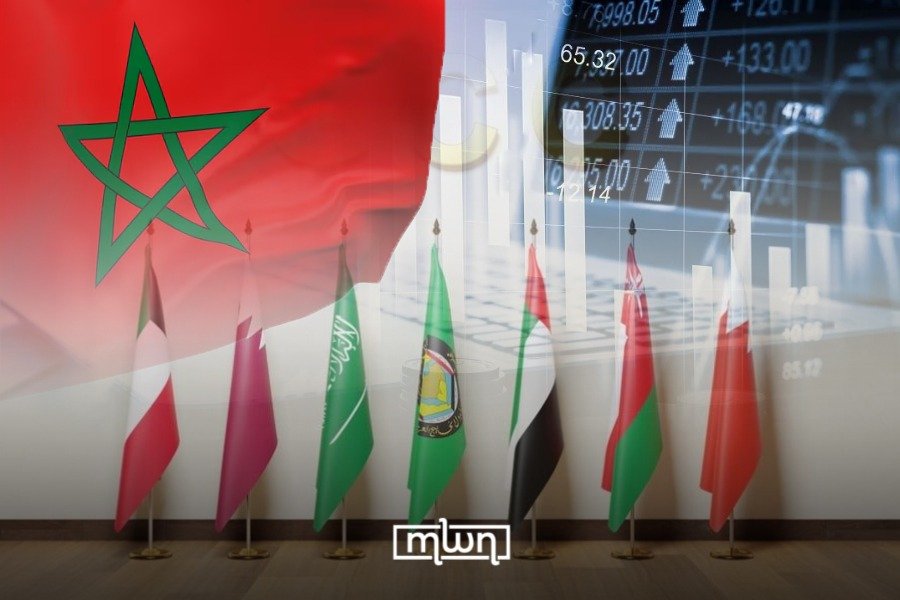
In today’s global economy, geography alone no longer guarantees relevance. What ultimately determines a country’s strategic importance is how intelligently it governs that geography and converts location into lasting economic value. Ports must become platforms, trade routes must become networks, and infrastructure must translate into opportunity. Without this transformation, geography remains little more than a line on a map. Over the past decade, Morocco has demonstrated how a state can redefine its position not simply as a North African market, but as a gateway economy linking Africa, Europe, and the Middle East.
This shift is visible in both policy and performance. According to International Monetary Fund estimates for 2025, Morocco’s GDP stands at roughly $155 billion, with growth projected around 3.5 to 3.7 percent, outperforming many African peers at a time of global uncertainty. More important than the headline figure, however, is the quality of that growth. The country has gradually moved away from reliance on traditional sectors toward manufacturing, logistics, renewable energy, and export-oriented industries that embed Morocco more deeply into global value chains.
At the center of this transformation stands the Tanger Med Port. By 2024–2025, it had become the largest container port in Africa and the Mediterranean, handling more than nine million containers annually and connecting directly to over 180 ports worldwide. Yet Tanger Med is not simply a shipping terminal. It operates as an integrated industrial ecosystem hosting hundreds of companies across automotive manufacturing, aerospace components, food processing, and logistics services. In effect, northern Morocco has evolved from a transit point into a production hub, enabling goods assembled on Moroccan soil to reach European and African markets within days rather than weeks.
For Gulf investors, this distinction is decisive. Investing in Morocco is not merely investing in a domestic market of around 37 million people. It is investing in access. Through Morocco, capital gains entry to fast-growing West African economies while simultaneously benefiting from preferential trade agreements with the European Union and the United States. Combined with the African Continental Free Trade Area, which connects a market of more than 1.4 billion consumers, Morocco offers something rare: emerging-market growth supported by institutional stability and global connectivity.
This explains why Gulf capital has increasingly looked westward. Sovereign wealth funds and state-backed investors across the Gulf are no longer focused solely on short-term returns. Their priorities have shifted toward long-term positioning securing logistics corridors, energy assets, and industrial platforms that provide durable strategic value. In Morocco, investments have moved beyond tourism and real estate into renewable energy, infrastructure, ports, manufacturing, and finance. These are sectors that generate steady returns while simultaneously strengthening trade and geopolitical ties.
Yet the true significance of these investments extends beyond balance sheets. Their most lasting impact may be domestic. As new industrial zones, logistics centers, and energy projects take shape, they generate tangible benefits for Moroccan citizens. Thousands of direct and indirect jobs emerge around ports, factories, and service ecosystems. Demand rises for engineers, technicians, logistics specialists, and skilled labor. Local small and medium-sized enterprises find opportunities to integrate into supply chains as suppliers, contractors, and service providers. With each project, capital brings not only funding but also technology transfer, training, and managerial know-how. Over time, this process builds capabilities that remain even after the initial investment cycle ends.
In this sense, Gulf investment in Morocco is not merely financial, it is developmental. A solar or wind project, for example, does more than produce clean electricity. It creates engineering roles, maintenance services, and local expertise in emerging energy technologies. A logistics hub does more than move containers. It stimulates surrounding cities, supports transport companies, and raises household incomes. Industrial partnerships enable Moroccan workers to participate in advanced manufacturing sectors that were once out of reach. Geography, when properly governed, translates directly into employment and social mobility.
Trust plays an equally important role. Morocco’s relative political stability, gradual reform approach, and predictable regulatory environment reduce the risks associated with long-term capital deployment. For sovereign investors managing intergenerational wealth, predictability often outweighs rapid growth. Returns can be optimized over time, but institutional uncertainty can quickly destroy value. Morocco’s ability to maintain continuity and credibility has therefore become one of its strongest competitive advantages.
Obstacles to overcome, path forward
Challenges, of course, remain. Trade data for 2025 indicate a widening trade deficit as imports continue to outpace exports, reflecting the need to deepen local production and increase value-added manufacturing. Human capital development also remains critical. Without continuous investment in education and vocational training, the country risks missing opportunities created by its own infrastructure. Gateway economies succeed only when local skills rise alongside global connectivity.
Looking ahead, the next phase of Morocco-Gulf cooperation will likely depend less on the volume of capital and more on its quality. Partnerships that emphasize technology transfer, industrial localization, workforce training, and SME integration will create more sustainable outcomes than projects focused solely on financial returns. Joint investment platforms, specialized industrial zones, and financial integration between Casablanca and Gulf markets could further position Morocco as a regional base for expansion into Africa.
Ultimately, Morocco’s appeal lies in a simple but powerful realization: in the 21st century, success belongs not to isolated markets but to interconnected hubs. The most valuable places are not those at the center of maps, but those at the intersection of flows — of goods, capital, talent, and ideas. By aligning geography, governance, and infrastructure, Morocco is steadily becoming one of those intersections.
That is precisely why Gulf capital is moving west not simply to invest in a country, but to anchor itself at a strategic crossroads. And if managed wisely, this flow of investment will deliver returns not only to investors, but to Moroccan communities in the form of jobs, skills, and long-term economic opportunity. In the end, the gateway is not just a passage for trade. It is a pathway to shared growth.
