


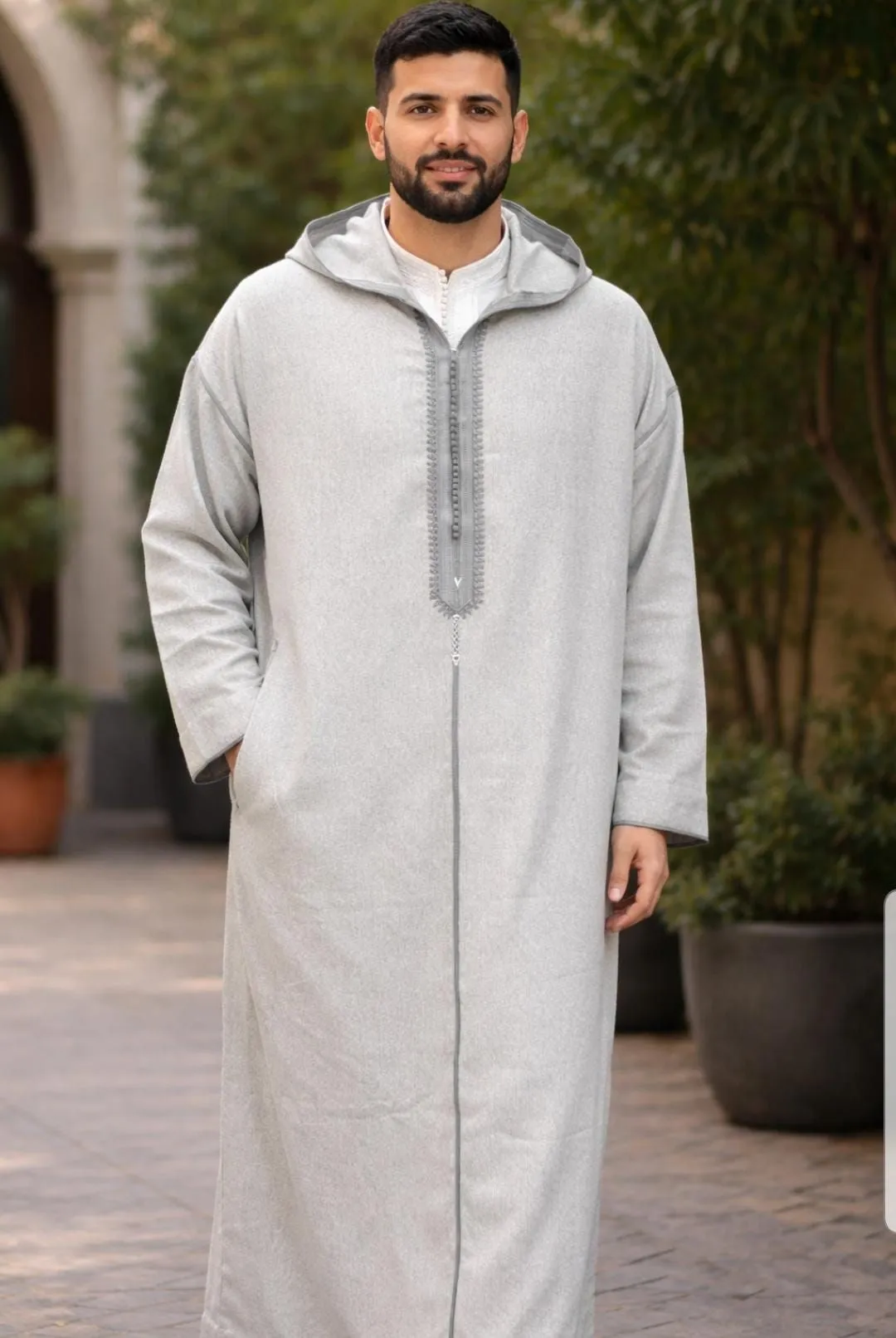
The first time I picked up a Djellaba at a souk stall, I had no idea what I was looking at. I just knew it was beautiful — long, flowing, with that distinctive pointed hood called a qob. A vendor smiled at me and said, ‘This is Morocco.’ He wasn’t wrong.
If you want to buy a Djellaba in Marrakech, you are in the right place. This city is full of options — from bustling market stalls deep inside the souks to quiet artisan workshops tucked behind old medina walls. But not all Djellabas are created equal, and knowing where to look (and what to pay) makes all the difference.
This guide shares everything I know as a local — the best souks, fair prices, quality tips, and a few spots most tourists never find.
Walk through any street in Morocco — from Marrakech to the mountain villages of the Atlas — and you will see people wearing Djellabas. Young and old. Men and women. On a quick trip to the market or on a major religious holiday. This garment is everywhere because it fits Moroccan life perfectly.
The loose, flowing design keeps you cool in the summer heat and warm during cooler mountain nights. The hood is not just stylish — it is practical, offering shelter from wind, dust, and rain. For men, the Djellaba is a traditional outer robe, usually with full-length sleeves. For women, it becomes an expression of artistry — rich colors, intricate embroidery, patterns that can take weeks to complete.
The Djellaba also has a clever little detail that always makes me smile: men’s versions often have a small opening in the side to access trouser pockets underneath. Function and tradition, together in one garment.
When you buy a Djellaba in Marrakech, you are not just buying clothes. You are taking home a piece of Moroccan culture that has been worn for centuries.
The souks are the heart of Marrakech shopping, and they are your best starting point. The energy alone is worth the visit — spices in the air, colors everywhere, vendors calling out from every direction. Here is where to focus your search:
Souk Semmarine
This is one of the main souks and an excellent place to start. You will find a wide range of Djellabas here, from simple everyday styles to more elaborate designs. Good for getting a feel of what is available and what prices look like before you commit.
Souk El Kebir
Another strong choice for traditional clothing. Souk El Kebir is known for its variety, which makes it ideal for comparing styles and prices side by side.
The Clothing Souk off Rue Mouassine
If you are heading towards Djemaa el Fna from the north, keep an eye out for the souk branching off Rue Mouassine. This area has many stalls selling ready-made wool Djellabas — simpler in design but very authentic and practical.
Past the Spice Souk (Rahba Kedima)
This is one of my favourite spots to point visitors toward. Just past the spice souk, follow the main alley and turn left. You will find four streets that make up the main clothing souk — the same place where many local shops come to buy their stock. This means better prices and less tourist markup.
Let’s talk numbers, because this is where many first-time visitors get caught off guard.
For a simple, good-quality men’s Djellaba, expect to pay between 100 and 150 Moroccan Dirhams (Dh) after negotiation. Finer ones — with richer fabric or hand-stitched embroidery — can go from 200 to 300 Dh. Women’s Djellabas with elaborate designs can range even higher depending on the craftsmanship.
The price you see first is rarely the final price. Haggling is part of the experience here — not rude, not awkward, just expected. A good approach: offer about 30 to 50 percent of the starting price and work from there. Keep it friendly, keep smiling, and do not be afraid to walk away. More often than not, the vendor will call you back.
One thing I always tell visitors: if you have a local friend with you, bring them along. Their presence alone can save you a significant amount.
Not all Djellabas are made the same way. Here is what to check before you hand over your dirhams:
- Fabric: Cotton is the most common choice for everyday wear. Wool is warmer and often signals higher quality — great for the Atlas Mountains or cooler seasons. Linen blends are also available.
- Stitching: Run your finger along the seams. Good stitching is even, tight, and does not pull away easily. Single stitching on cheaper models wears out faster.
- Embroidery: On more decorative Djellabas, look at the detail closely. Handmade embroidery has slight natural variations — that is actually a good sign, not a flaw.
- Weight: A quality Djellaba feels substantial. If it feels thin or flimsy, it probably is.
Once, while exploring a small workshop near the old Medina, I watched an artisan embroider a Djellaba by hand — stitch by stitch, moving with calm precision. He told me each piece takes days to complete. That kind of craft deserves a fair price. Machine-made options are cheaper, but there is a visible difference when you hold both side by side.
If you prefer a calmer shopping environment with fixed prices and guaranteed quality, Marrakech has some excellent specialty shops and artisan cooperatives:
Akbar Delights
Tucked near Jemaa El Fna, this shop is known for stylish kaftans and contemporary Moroccan fashion including Djellabas. A good option if you want something more upscale without diving deep into the souks.
JilbabCo
This shop proudly focuses on handcrafted garments made by artisans in Marrakech and Fes. Their pieces are described as cultural heirlooms — built with precision and quality in mind.
Djellaba-Shop.com
This platform connects directly with local Moroccan artisans, offering handmade Djellabas for men, women, and children in a wide range of colors and embroidery styles. A good option if you want to browse before your trip or order directly from craftspeople.
- Wear comfortable shoes — souk streets are uneven and you will walk a lot.
- Dress modestly out of respect for local customs. It also helps you blend in and can soften initial prices.
- Decide what you need before you start: a casual everyday Djellaba, a warmer winter version, or something elegant for a special occasion? Knowing this saves time.
- Djellabas are meant to be loose. Do not expect a tailored fit — embrace the flow.
- If the price feels wrong, take your time. Compare a few shops, come back later, and never rush the decision.
And if you are ever unsure whether to go to Marrakech, Fez, or Casablanca for the best quality — all three cities offer excellent options. Fez and Casablanca (especially the Lhoubous area) are known for exceptional craftsmanship, but Marrakech holds its own if you know where to look.
Shopping for a Djellaba in Marrakech is one of those experiences that stays with you long after you leave. It is not just about buying something to wear — it is about the conversation with the vendor, the feel of the fabric in your hands, the smell of the souk around you. It is Morocco, in one garment.
Start at Souk Semmarine, wander through Souk El Kebir, and make your way past the spice souk to find the local clothing market. Haggle with a smile, check the stitching, and do not settle for the first one you see.
When you find the right one — and you will — you will know.
Have you bought a Djellaba in Marrakech? Which souk did you find it in? Drop your experience in the comments — I would love to hear your story. And if you found this guide helpful, share it with someone planning a trip to Morocco!
