


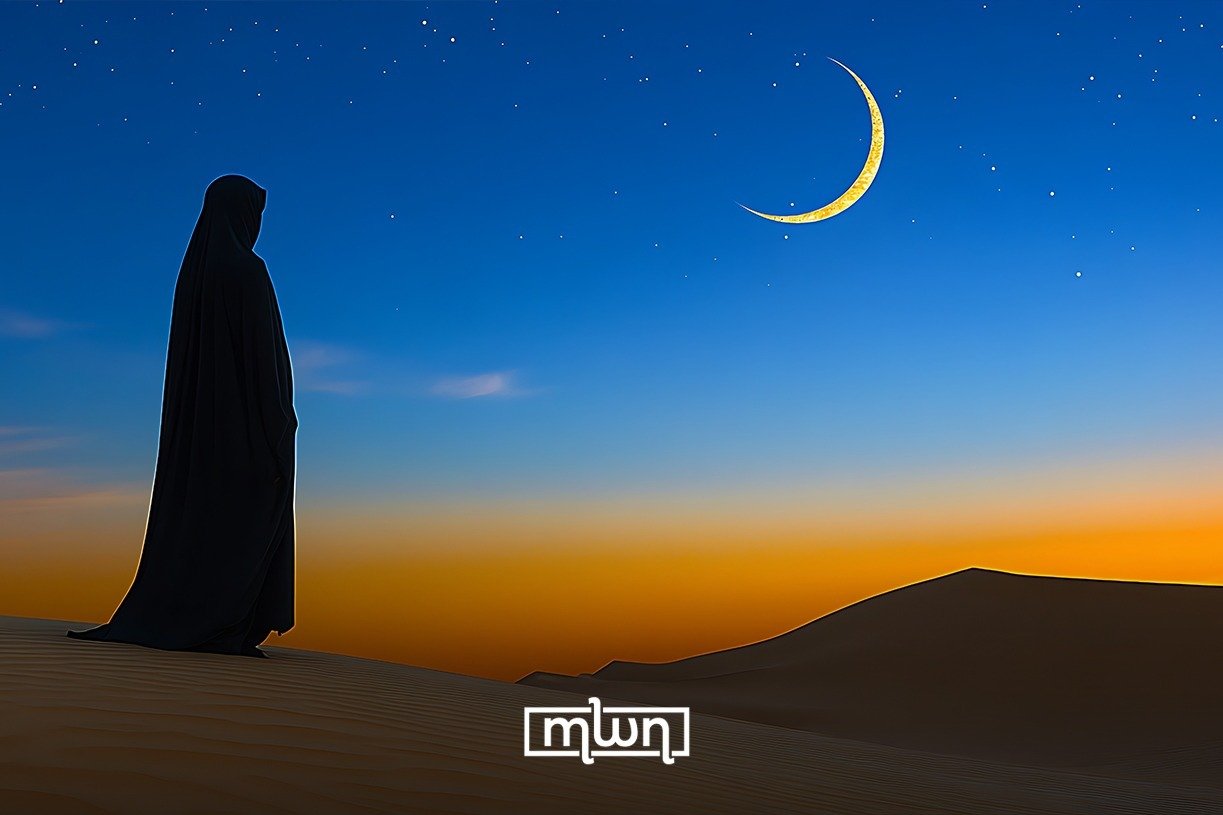
Marrakech – As with every lunar-calendar observance in non-Muslim-majority countries, Ramadan’s start is rarely a single date. The holy month begins with the start of the ninth month in the Islamic calendar, and that start is tied to the sighting of the new crescent moon (hilal).
In practice, this produces a recurring split between communities that rely on astronomical calculations and others that insist on confirmed local sighting.
In Spain, the question can become even more layered because much of the Muslim population is Moroccan, and some families align their start with Morocco due to proximity and long-standing ties, especially in Ceuta and Melilla, where cross-border connections shape everyday religious life.
In that context, both enclaves are often perceived as “technically Moroccan” in geography as much as in culture, even while remaining under Spanish rule. Others prefer to follow Saudi Arabia’s timetable, given its central symbolic role in Islam and the weight its announcements carry across many Muslim communities.
Spanish outlets have already published differing expectations for 2026. El Mundo said Ramadan “should begin” on February 19, while noting it could start a day earlier depending on lunar visibility, and it projected the end between March 20 and 21, with Eid al-Fitr expected then.
Islamic Relief España, meanwhile, stated that Ramadan in Spain should begin on February 18 and end on March 20 or 21, stressing that dates remain provisional until confirmed and that the final decision depends on the hilal.
In Spain, the Islamic Commission of Spain (Comisión Islámica de España), founded in 1992, is the national interlocutor that coordinates many religious matters and is commonly referenced in public discussions around Islamic observance.
Yet even with national structures, Spain’s Muslim communities remain diverse in their reference points and methods, making small differences in start dates a familiar feature rather than an exception.
Islam in Spain
Spain’s Islamic heritage dates back to 711 CE, when Amazigh Muslim General Tarik ibn-Ziyad, identified as coming from the Nafza tribe in the Rif (northern Morocco), landed at Gibraltar, marking the beginning of the Umayyad conquest of Hispania.
After Tarik ibn-Ziyad defeated the Visigothic king Roderick at the Battle of Guadalete, most of the peninsula came under Islamic rule, becoming known as Al-Andalus for centuries, including long periods under Moroccan-led dynasties such as the Almoravids, Almohads, and later the Marinids.
That legacy was later met with an exceptionally harsh Catholic reassertion of control, marked by forced conversions, expulsions, and the systematic erasure of Muslim and Jewish life.
The repression of the Moriscos and the criminalization of Islamic practice were not merely episodes of religious intolerance but foundational traumas that continue to shape Spain’s uneasy relationship with its Islamic past – a history that still produces what many scholars describe as a lingering “Moorish complex,” where Islam is remembered as heritage but managed as a discomfort.
Today, Spain is home to a Muslim community of over 2.5 million people, described as about 5% of a national population of 49 million. Within that community, Moroccans form a substantial share. The Moroccan resident population in Spain is estimated at around 1.1 million people, making Moroccans the country’s largest foreign community.
Naturalization has also been significant: 42,910 Moroccans obtained Spanish nationality in 2024, and more than 237,000 are reported to have obtained Spanish citizenship between 2018 and 2024.
For observant families, Ramadan in Spain reshapes daily routines around dawn and sunset. The fast begins after the suhoor, the pre-dawn meal, and ends at sunset with iftar, traditionally starting with dates and water.
Beyond abstaining from food and drink, Ramadan is presented as a month of introspection, discipline, and improved conduct, alongside intensified prayer and Qur’an reading, including the night prayers known as Tarawih.
Exemptions are also consistently noted for those who are ill, children, pregnant or breastfeeding women, older people, travelers, and women during menstruation, with missed days expected to be made up later when possible.
In Spain’s major cities and neighborhoods, communal life often becomes more visible during the month. ElDiario describes community iftars and local organizing in places such as Lavapiés in Madrid and El Raval in Barcelona, hosted by mosques or associations, sometimes with meals shared beyond immediate family circles.
Charity is also channeled through zakat and sadaqa, with Islamic Relief España coordinating food distribution and basic kits for vulnerable families.
Shops and bakeries in areas with a Muslim presence are reported to adjust hours and stock typical Ramadan products such as dates, honey, and sweets, reflecting how a lunar-month ritual translates into a predictable shift in Spain’s everyday urban rhythms.
