


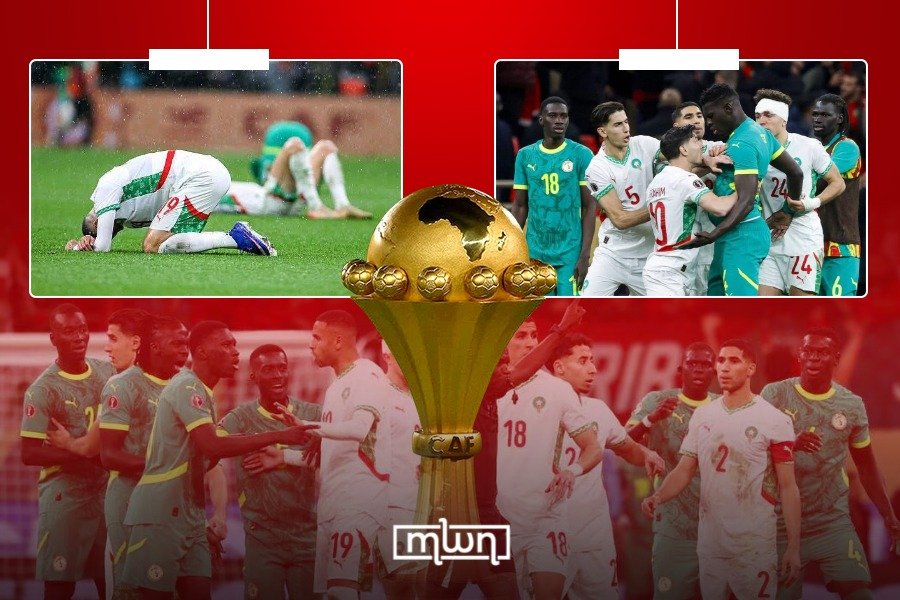
As Morocco AFCON 2025 came to an end last night, Moroccans will probably see the one-month tournament as a mixed bag with all its ups and downs. Nonetheless, it’s good to draw some lessons both in terms of how Morocco played the game and other aspects surrounding its role as hosts.
Don’t play with two extremes
Moroccans went to extremes in the way they showed too much love or too much anger at, sometimes the same team. The two striking examples are that of Egypt and Senegal.
Both teams received the best accommodations in terms of hotels compared to the other 20+ squads that participated in AFCON 2025. Yet, it’s from both teams that the noisiest complaints came, trying to cast a shadow on the quality of the tournament’s organization.
They both did it for different reasons. On the Egyptian side, Coach Hossam Hassan apparently didn’t want to take responsibility for his team’s poor performance against Senegal in the semi-final, so instead he started talking about the accommodation in Tangier, stating that it wasn’t to up to the appropriate standards.
As a result, some over-zealot Moroccan fans booed the Egyptian national anthem during the third place game in Casablanca – an irresponsible behavior that alienated the Egyptian public against Morocco and caused many to wish for the Atlas Lions defeat in the final.
When it comes to Senegal, many Moroccans preferred to meet Lions of Teranga in the final, naively thinking that the game will be marked by fair play. They wanted to avoid any controversies that might have emerged from a scenario where Egypt is the opposing team, especially with Hossam Hassan, with all his tense relationship with Moroccan fans, as The Pharaohs head coach.
Prior to the final, Moroccans cited the ‘’brotherly and friendly’’ ties between the two nation as to a major reason they were excited to match up for the game, only to wake up to a bitter reality at the end.
The Senegalese players walked off the pitch after a penalty was rightly called in Morocco’s favor, at which time their fans decided to assault security personnel in efforts to storm the pitch. Even after Senegal clinched the title, Senegalese head coach Pape Thiaw treated Morocco’s Walid Regragui in a disgraceful way during their brief encounter after the game was over. All of this gave gave the finale a bad look that was opposite what Morocco was hoping for as the host nation of the best AFCON in history, both in terms of organization and revenue.
Focus on your own team’s success
The main lesson from these two examples, and this is something a lot of Moroccans agree on now on social media, is that Moroccan fans should only be excited about, and focus on, their own team. It doesn’t make sense to take sides for this or that foreign team to only switch them later in other stages of the tournament. Better be consistent throughout the event by cheering your own team only and keeping the same distance from all other teams.
You also can’t pick and choose your opponents, especially based on reasons unrelated to football. Morocco and Senegal’s diplomatic relations may be great, but on the football pitch, for the Senegalese there was no room for that friendship. They were more determined to win the AFCON title, and for that they used all their means of pressure, including walking off the pitch to distract Moroccan players’ attention prior to Brahim Diaz’ getting ready to convert the penalty kick.
Above all respect and focus on the game, not team politics
You don’t have to be a football expert to know this: if you don’t respect football, it’s not going to respect you. Many Moroccan football commentators had reservations on Regragui’s AFCON list, while other avoided insisting on the problems this list had, aligning with the overall idea that everybody should unite around the coach.
Now that AFCON is over, culminating in another Moroccan disappointment, commentators have let all their anger loose. As they rightly pointed out, the list had several players either injured, not fully recovering from injury, or out of shape because of a long absence due to, again, injury.
So, Moroccan fans are asking simple and valid questions: Why on earth were Hamza Igamane, Eliesse Ben Seghir, Romain Saiss, Sofiane Amrabat and Ilyas Akhomach and even Achraf Hakimi on the list if they weren’t in their best shape? Why take such a gamble when the risk is so high?
In the end, these concerns proved to be correct as Saiss got injured in the opening game and Igamane in the final, causing Morocco to finish the game with only 10 players.
While people saw Regragui’s closeness to his players as an asset in the past, contributing to his impressive 2022 World Cup achievement, they also view it as the reason behind his demise both in the 2024 and 2025 AFCONs. People believe that the coach’s attachment to certain players clouded his judgement when he was supposed to choose who was truly fit for an AFCON with the stakes so high on home soil.
Other questions had to do more with choices of using players on the pitch in positions that they weren’t used to in their teams. Additionally, some criticized what seemed like a lack of mental preparation for the final where the Senegalese proved to be the tougher side, while Morocco’s advantage as a host nation didn’t seem to have an impact whatsoever.
Now that the AFCON chapter is over, in the most painful way possible, hopefully we can draw the right lessons. It is time we learn how to avoid the mistakes we made, as fans, media or a football federation, in order to live up to a better standard – whether we are organizing a major football event, or trying to win one.
