


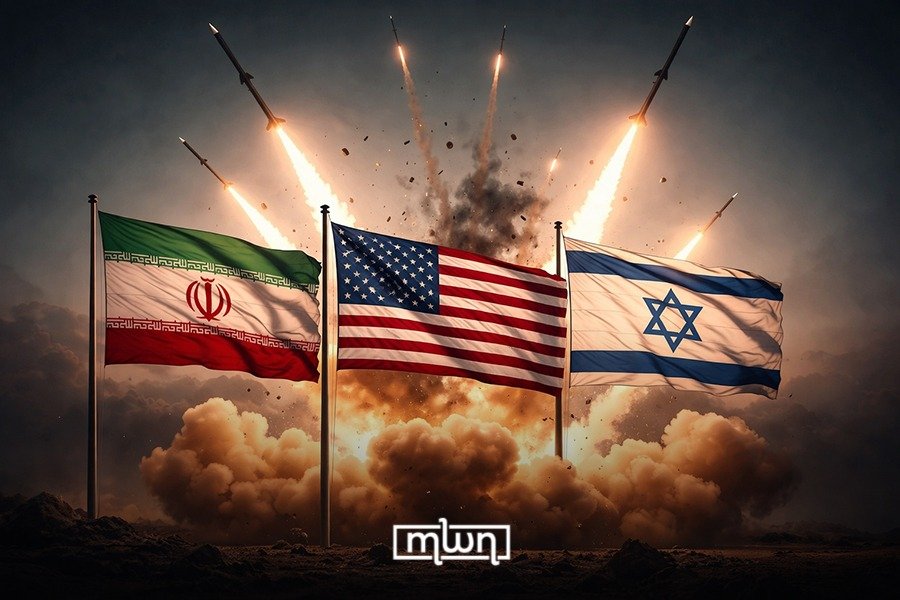
Rabat – The war involving Iran, Israel, and the United States has entered a volatile new phase after a week marked by intensified airstrikes, high-profile killings, retaliatory attacks, and mixed signals on diplomacy.
The latest developments trace back to February 28, when US and Israeli forces launched coordinated strikes on Iran, targeting military and energy infrastructure in Tehran and other major cities. The attacks killed senior figures, including Supreme Leader Ayatollah Ali Khamenei, and set off a rapidly widening conflict.
Over the past week, both slides have escalated. US and Israeli airstrikes continued to hit Iranian targets, while Iran responded with missiles and drones aimed at U.S. forces and regional allies. Shipping through the Strait of Hormuz, a critical global oil route, has remained disrupted, raising concerns in global markets.
A major development came when Israel said it had killed Alireza Tangsiri, commander of the Islamic Revolutionary Guard Corps naval forces, in an overnight strike. Iran did not immediately confirm the claim, but the IRGC said today that Tangsiri later died of wounds sustained in the attack.
Iran has framed the killings of its senior officials as a turning point, vowing a “decisive” response.
This week, Tehran held funerals for high-ranking figures, including Ali Larijani, as a symbol of national resolve. The Revolutionary Guards said they launched missile barrages at central Israel following the killings, warning that further attacks would follow.
Israeli authorities reported casualties and damage near Tel Aviv, underscoring the growing human toll on both sides.
The conflict has increasingly drawn international response and criticism.
Spain announced it would close its airspace to US military aircraft involved in the war. Defense Minister Margarita Robles said Madrid would not permit the use of its bases or airspace for operations tied to the conflict, describing the war as contrary to international law.
Prime Minister Pedro Sancehez also condemned the strikes, warning against what he called a reliance on “conflicts and bombs” to solve global problems.
The move prompted frustration from US President Donald Trump, who threatened economic retaliation against Spain.
Throughout the week, Trump has alternated between military threats and claims of diplomatic progress.
He warned that if Iran does not reopen the Strait of Hormuz, the United States could target key infrastructure, including energy and desalination facilities. At the same time, he has said talks with Iranian representatives are making “very, very good” progress and suggested a possible agreement could be within reach.
Deadlines for potential strikes have been set and delayed, reflecting what analysts describe as a pattern of brinkmanship, using pressure to force negotiations.
Iranian officials, however, have downplayed and denied the existence of substantive talks.
Despite tentative signs of diplomacy, military operations have continued. US and Israeli forces are still striking Iranian targets, while Iran maintains pressure through regional attacks and threats to the global energy supply.
Markets have reacted to the uncertainty, with oil prices fluctuating and investors watching closely for signs of escalation or de-escalation.
After a week of funerals, missile exchanges, and shifting political signals, the conflict remains deeply unstable with the risk of further escalation still looming.