


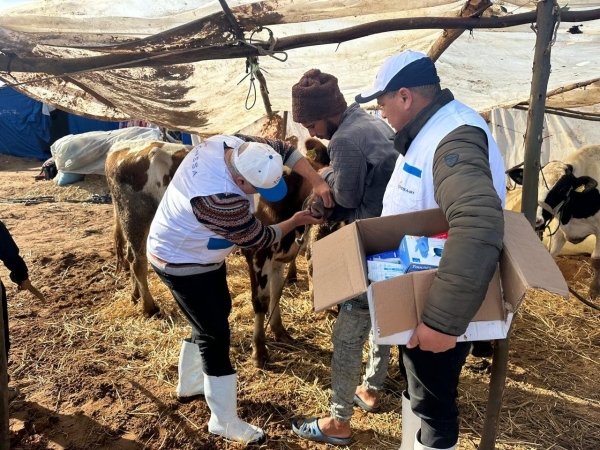
Rabat – In response to the recent floods that caused major damage in northern Morocco, the Moroccan Veterinary Association organized a free veterinary caravan to support farmers and protect livestock in the Ksar El Kebir area.
According to the association, the caravan aimed to protect livestock and ease the burden on farmers in the affected villages. It explained that the campaign was organized in coordination with local authorities to ensure it reached those who needed it most.
The initiative is in cooperation with the National Office for Food Safety (ONSSA) and in coordination with the National Authority of Veterinarians. The caravan targeted rural villages affected by heavy flooding in and around Ksar El Kebir.
The recent floods caused serious destruction in Ksar El Kebir and other nearby areas. Roads were damaged, homes were flooded, and farmland was severely affected. Many families were evacuated as water levels rose quickly after heavy rainfall and rising water levels in nearby rivers.
The Moroccan government announced support measures for families affected by the floods. These measures include direct financial aid of MAD 6,000 per affected family.
Livestock is a key source of income and food in rural areas. Many farmers were worried about the health of their animals after the floods, especially with the spread of diseases linked to wet and muddy conditions.
The veterinary caravan worked throughout the day in several villages in the Ksar El Kebir district. More than 20 veterinarians took part in the mission. They examined, treated, and vaccinated a large number of animals, including sheep, cows, goats, and small ruminants. Domestic animals, especially horses, were also vaccinated and treated.
During the campaign, the veterinary team diagnosed common diseases that often appear after floods, including internal and external parasites. These illnesses can spread quickly in humid conditions and threaten the health of entire herds if not treated.
The caravan also distributed nearly 1.5 tons of animal feed for small animals and 1.5 tons of medicines to support farmers. The team also offered advice on how to protect livestock during extreme weather conditions and how to improve animal care in rural areas that face many challenges.
