


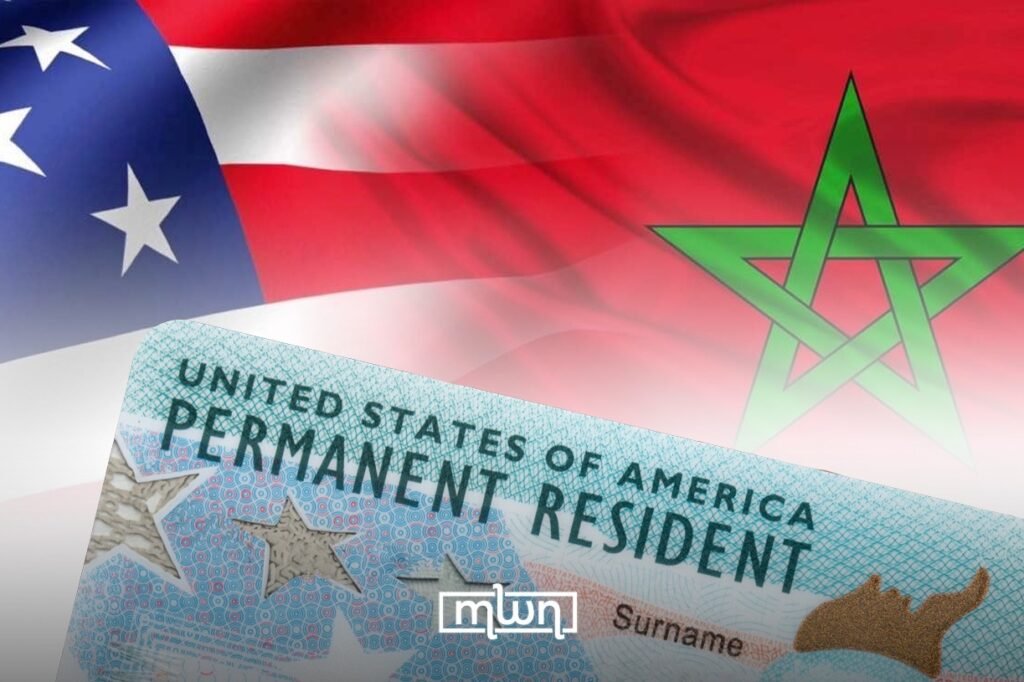
Rabat – “You have been randomly selected for further processing in the Diversity Immigrant Visa Program.”
This sentence alone could send a chill down the spine, a cry, a shock, and hope for those seeking a change, a better life, and better opportunities in the United States.
But, it could also be bring a mix of devastation when a candidate is eligible, but still faces uncertainty because of a war they have never been part of, or an immigration policy that could take their dream away.
Hundreds of Moroccans who won the 2026 Diversity Visa, also known as the DV-2026 program, are now enduring this very anxiety due to what they call “unexplained” delays in scheduling their interviews at the US Consulate in Casablanca.
This year’s program has a total of 3,670 selectees, including prospective applicants, their spouses and children registered under US responsibility, according to the State Department.
A spokesperson from the US State Department responded to MWN’s inquiries about these troubling delays.
“The Trump Administration is protecting our nation and its citizens by upholding the highest standards of national security and public safety through our visa process,” the spokesperson from the department said.
This thread of reasoning has been a common talking point under the Trump administration’s immigration crackdown, framing all immigrants as potential visa applicants as threats before being proven otherwise.
The spokesperson recalled the policy under which Secretary Marco Rubio paused the issuance of diversity visas “until we can be sure we know exactly who we are letting into our country,” stressing that the State Department will take the time necessary to conduct a “full and thorough review” of applicants.
The US State Department also pledged it will do “everything necessary” to protect US national security and public safety, stating that DV selectees who paid fees or scheduled interviews may attend their appointments “as scheduled.”
The State spokesperson backed the US mission in Morocco, saying it is scheduling DV appointments “in line with their capacity,” recalling that applicants should regularly check their status on the website for updates on the scheduling of their case for an interview.
The remarks come amid mounting criticism of the Trump Administration’s immigration policies, especially after it decided to suspend the DV program in December last year, after a mass shooting at Brown University and later the killing of MIT professor Nuno F. Gomes Loureiro.
The mass shooter was identified as a former Brown student, Claudio Neves Valente, a Portuguese national and US Green Card holder. He later went on to kill Loureiro in his own home in Brookline, Rhode Island.
The shooting triggered a decision from the Department of Homeland Security for an immediate pause on visa issuances and pending applications to conduct a thorough review of security procedures.
For many, the episode mirrored numerous other instances of disappointment, when criminal or terror attacks conducted by migrants result in sweeping detrimental consequences for all trying to enter the US through the tedious legal process.
Moroccans’ DV winners plea
Moroccan DV selectees shared with Morocco World News their personal experiences with these challenges, calling for a solution to their uncertain cases due to delayed interviews.
Wissam Benali told MWN that she followed all the required steps and regularly checked for interview scheduling.
“However, despite the passage of several months, I have not received an interview appointment,” she said, acknowledging the delay has created uncertainty compared to other countries, where “interviews are being scheduled more regularly.”
Applicants report that Morocco is seemingly behind countries like Egypt and Algeria who have already begun interviews. Meanwhile, they continue to face “limited” scheduled appointments.
Wissam said the situation is gravely affecting her mental well-being and future planning, and she respectfully requests that the “embassy and responsible authorities take action to schedule interviews in a timely and fair manner.”
Hajar El Ayadi, another applicant, also shared her concerns, stating that she has also been waiting for months without an interview date.
She also cited a lack of communication or updates by the US consolute adds a sense of fear of losing the opportunity due to administrative delays.
“This delay is causing stress and uncertainty about my future plans,” she said.
Samir Mokhtari, another applicant, said he completed and prepared all the necessary civil and educational documents.
“The information I continue to receive from the Kentucky Consular Center (KCC) is primarily technical, advising me to monitor the monthly Visa Bulletins to see when my number becomes ‘current’ for an interview.”
Although the candidates are in high case numbers, the selectees view that “time” is the biggest obstacle.
“My fear is not about my eligibility or my paperwork – both of which are fully ready – but rather that the fiscal year will end before the consulate reaches my number,” he lamented.
Youssef Ghazali also shared the same concerns as his fellows, saying that he received no interview date or updates despite being current for months.
“This lack of communication has created confusion and concern,” he said, emphasizing that the situation has also caused him a serious emotional and psychological impact.
“I have been living in uncertainty for months, unable to make important life decisions regarding my studies, work, and plans,” he added.
The consensus among the hundreds of applicants who seek attention to the matter is simply a “fair chance” to complete the process they were selected for.
An already critical situation
The US has long been under the critical radar of human rights groups and UN experts due to its migration policies.
UN top human rights officials have raised alarm on what they describe as the “growing dehumanization of migrants” in the US.
High Commissioner Volker Turk said earlier this year that many individuals who are suspected of being undocumented migrants face challenges like surveillance, arrests, and detentions “sometimes violently.” He said he was “astounded by the now routine abuse and denigration of migrants and refugees,” warning that fear generated by federal operations is rippling through communities.
Turk recalled how similar practices affect families who are torn apart, calling on the US to end practices that are tearing families apart and urging a transparent investigation into a reported rise in the number of deaths in ICE custody.
Beyond DV and migration
Criticism also extends to challenges of visa denials in Morocco and beyond.
Many, including celebrities and public figures, have shared frustration over the cumbersome process.
The concerns especially came as the US is co-hosting the 2026 World Cup in just a few months. In January this year, the Trump administration announced an indefinite suspension of immigrant visa processing for 75 countries, including Morocco.
This came just a month after Washington announced a sharp cut in visa wait times for Morocco, from 10 months to two, to facilitate fan travel. Washington also said it is deploying additional consular staff to Casablanca to manage surging tournament-related demand.
Although the immigration visa pause does not affect B1/B2 visas – which fans would receive upon applying – the added general consular barrier worry prospective travelers.
The US asserts that the pause was put in place to limit potential immigrants whom are at risk for becoming a “public charge” to the US.
“The State Department will use its long-standing authority to deem ineligible potential immigrants who would become a public charge in the United States,” said Tommy Pigott, Principal Deputy Spokesperson at the State Department on the decision.
Many observers, however, criticize the US policy, especially amid what they deem unjustified visa denials, including for businessmen and those seeking reunion or family visits, among others.
For DV visa holders, news of similar policies amid Trump’s immigration crackdown bring worry about the future. For now, their futures wait as mere case numbers in a back-logged system, while they wait anxiously to make their dreams reality.