


Rabat – An official security alert early Friday morning from the US Virtual Embassy in Iran urged American citizens to “leave Iran now,” and if they “cannot leave, find a secure location.”
“Have a supply of food, water, medications, and other essential items,” the embassy alert reads.
The notice comes before US-Iran negotiations on Friday in Oman, after months of building tension.
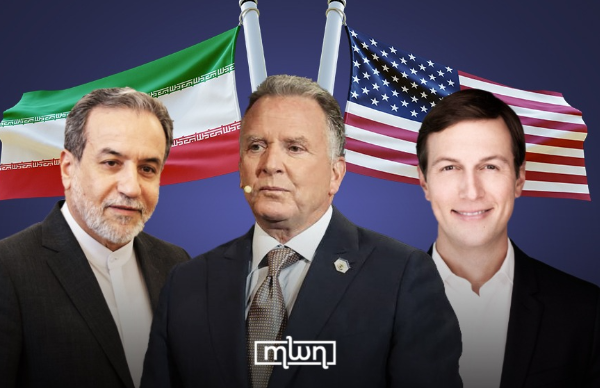
Oman’s foreign minister, Badr Albusaidi, who is mediating the talks, held separate meetings with Iran’s top diplomat Abbas Araghchi, as well as US special envoy Steve Witkoff and Jared Kushner, Trump’s son-in-law, according to a statement from the Omani foreign ministry.
The statement from Oman’s ministry reads: “The consultations focused on preparing the appropriate conditions for resuming diplomatic and technical negotiations, while emphasising their importance, in light of the parties’ determination to ensure their success in achieving sustainable security and stability.”
Iranian state media reported that Araghchi and his team began indirect talks with the US delegation shortly after.
Iran’s state media reported that the talks with the US finished “for now.”
The length of the second meeting is a promising sign for de-escalation. As are the statements released by Iran and the Omani foreign minister, Badr Albusaidi.
“If we can go along with this positive path, I can say that we can reach a positive framework regarding the nuclear talks between Iran and the US,” Iran’s foreign minister Araghchi told reporters.
“Our concerns were conveyed, as well as our interests and the rights that the Iranian people have. It was conveyed in a very good atmosphere, and the views of the other side were also heard,” Araghchi expanded.
Albusaidi said in a post on X, “It was useful to clarify both Iranian and American thinking and identify areas for possible progress. We aim to reconvene in due course, with the results to be considered carefully in Tehran and Washington.”
No exact timeline for the next round of discussions or comments from US representatives has been set yet.
The talks were originally intended to play out in Turkiye, with various foreign Arab ministers, including those from Egypt, Qatar, Saudi Arabia, and Turkey. Tehran requested, in a last-minute change on Tuesday, that the meeting be held in Oman with only Iranian and American representatives.
The US enters negotiations with a maximalist set of demands, believing Iran is at its weakest point since the 1979 Islamist Revolution, with Iran witnessing major protests against their 86-year-old Supreme Leader Ayatollah Ali Khamenei’s regime last month. Khamenei’s forces cracked down on the movement, killing thousands and arresting tens of thousands. In response, US President Donald Trump made renewed military threats and increased already crippling sanctions on Iran.
Trump told reporters last week that he wanted two things from Iran: “Number one, no nuclear. And number two, stop killing protesters.” The US has sent a multi-billion-dollar “armada” led by the USS Abraham Lincoln aircraft carrier off the coast of Iran, with Israel docking the destroyer USS Delbert D Black at the southern port of Eilat on Friday. This move resembles strategies that preceded the previous strikes on Iran, as well as the US abduction of Venezuelan leader Nicolas Maduro on January 3.
Iran is skeptical that the US is using the meetings as a false pretense for regime change.
“Tehran’s priority is currently not to negotiate with the US, but to have 200 percent readiness to defend our country,” Kazem Gharibabadi, a senior member of the Iranian negotiating team, told state media on Wednesday.
Iran and the US meet in Oman for the first time since the June meetings deteriorated with Israel’s 12-day war against Iran that saw the US attack Iranian nuclear facilities. The US-Israeli attack killed at least 1,000 Iranians and destroyed three nuclear plants.
US demands include restraining Iran’s nuclear program, limiting its ballistic missile program, and terminating support of regional “proxies.”
“In order for talks to actually lead to something meaningful, they will have to include the range of their ballistic missiles, their sponsorship of terror organisations, and the treatment of their own people,” US Secretary of State Marco Rubio told reporters on Wednesday.
The expanded agenda from the Trump Administration has reportedly threatened to derail the talks, which include Trump’s special envoy Steve Witkoff, Trump’s son-in-law Jared Kushner, and Iranian Foreign Minister Abbas Araghchi.
Tehran may be flexible on setting range limits on its ballistic missile program, but additional restrictions, including stockpile reductions, would be a red line. Increased restrictions in this realm would make Iran vulnerable to future Israeli attacks and eliminate Iranian sovereignty.
Leading up to the talks, Gulf countries repeatedly warned of the broader impact of a renewed conflict between Iran and the US, encouraging de-escalation. “The Americans should know that if they start a war, this time it will be a regional war,” Khamenei was quoted as saying by the semi-official Tasnim news agency.
The US currently has eight permanent military bases in Bahrain, Egypt, Iraq, Israel, Jordan, Kuwait, Qatar, Saudi Arabia, Syria, and the United Arab Emirates. Following the US strike on Iran in June, Iran attacked Al Udeid airbase in Qatar, a major non-NATO US ally.
Read also: Iran Says US Attack Would Drag Region Into War