


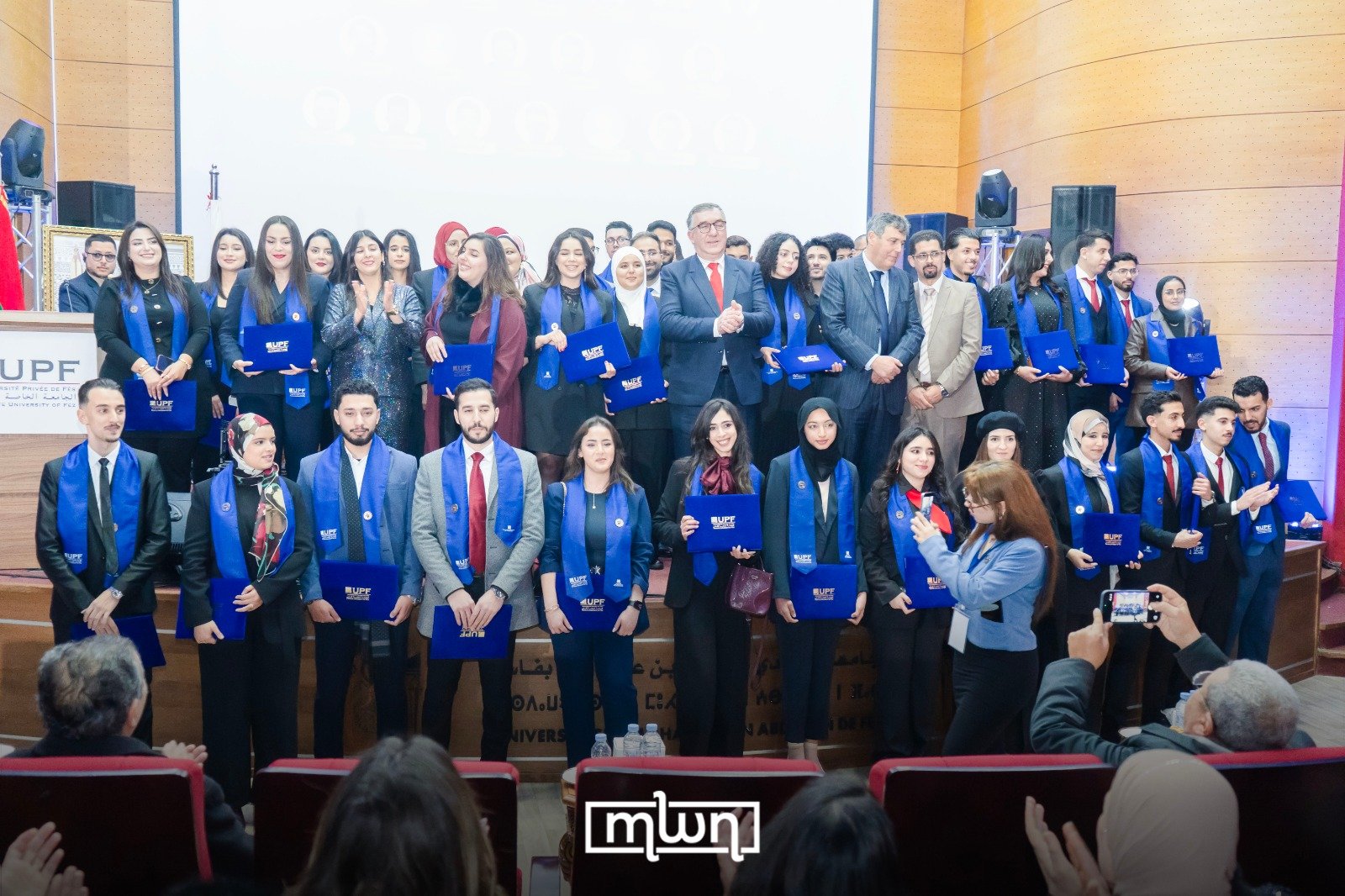
Fez — The Private University of Fez held its graduation ceremony on Friday afternoon, combining the recognition of its 17th cohort of laureates with the official opening of festivities marking two decades of academic activity.
The event gathered students, families, faculty members, administrators, and institutional partners for what university officials described as a defining moment in UPF’s history.
The ceremony highlighted academic journeys spanning three to five years and framed graduation as a transition into professional life. It also served as a symbolic milestone for the institution, which reflected on its evolution, expansion, and long-term vision since its founding.
President frames graduation within 20-year legacy
Opening the ceremony, university president Mohammed Aziz Lahlou placed the graduation in the broader context of the institution’s 20-year trajectory. Addressing graduates and their families, he said the day marked “two elements of our university history,” linking the celebration of the graduating cohort with “twenty years of commitment, boldness, and passionate construction.”

He described the university’s development as rooted in “academic excellence, openness to the world, and fidelity to the values of our country,” adding that the institution is now firmly oriented toward international engagement. Turning directly to the laureates, Lahlou told them that receiving their diplomas marked more than the end of a demanding academic journey. “You will especially mark the beginning of new achievements,” he said, crediting their perseverance, sacrifice, and intellectual curiosity.
Lahlou also emphasized the symbolic role of the graduating class during the anniversary year. “Through you, it is the whole history of our university that is being presented to the world,” he said, describing the cohort as both graduates and ambassadors of the institution.
Employability and labor market outcomes
In a later address, Vice-President Mohammed Ouazzani Jamil focused on graduate employability and alignment with labor market needs. He told Morocco World World News (MWN) that “more than 60% of the laureates we are celebrating today are already integrated into the labor market,” adding that overall employability exceeds 80% within six months of graduation.

“These indicators honor us,” he said, while stressing that they also represent a challenge the university must continue to meet and improve. According to Ouazzani Jamil, the university’s priority remains equipping students with the skills required to navigate an increasingly competitive and evolving job market.
Voices from graduates and future engineers
Among the graduates who spoke during the ceremony was Alaa Eddine Mostafa, a software engineering alumnus who reflected on the challenges behind the milestone. “These five years were not easy — there were many sleepless nights and demanding projects,” he told MWN, adding that earning his diploma played a decisive role in securing his current position as a software engineer at a multinational company.

He credited his professors and peers for their support throughout his studies, describing the graduation as the result of collective effort as much as individual perseverance.
Among the attendees were students yet to graduate, including Israe Koulali, a software engineering student expected to complete her studies next year. She described the ceremony as an emotional moment, witnessing classmates officially enter the engineering profession while the university marked its 20th anniversary.
Looking ahead
Concluding his remarks, President Lahlou addressed graduates directly, urging them to embrace responsibility alongside competence. “Never forget that you are ambassadors of your university,” he said, encouraging them to remain open, committed, and engaged in the societies they will serve.
As the UPF University enters its third decade, the ceremony underscored a dual message: recognition of past achievements and a renewed commitment to training future generations in an environment defined by excellence, innovation, and professional integration.
