


Marrakech – Michael Rubin has declared open war against Morocco’s enemies and anti-sovereignty detractors this month.
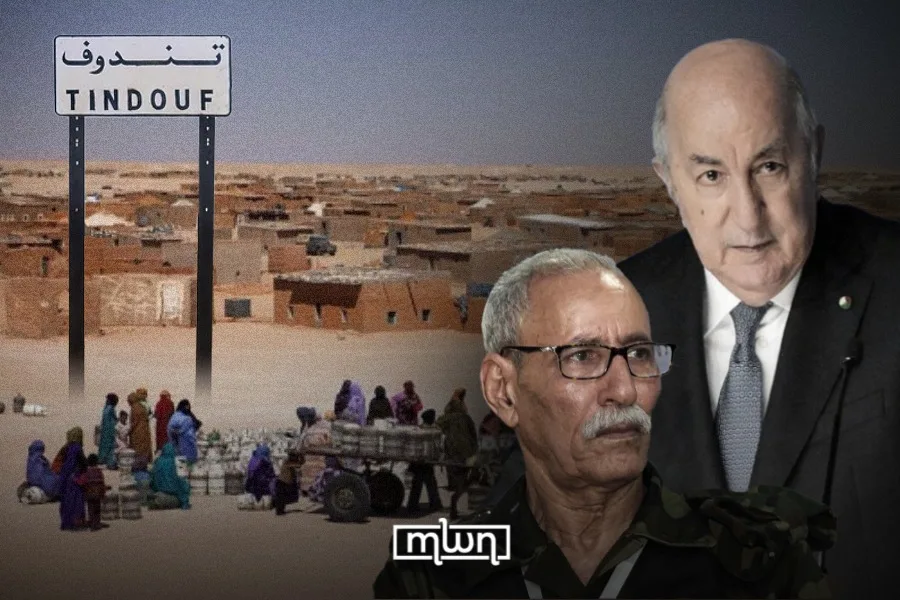
After calling on President Donald Trump and Secretary of State Marco Rubio to formally recognize Ceuta and Melilla as occupied Moroccan territory on March 12, and urging Morocco to launch a new Green March of unarmed civilians into the two Spanish-held enclaves in a second op-ed on March 16, the former Pentagon official has now turned his crosshairs on the refugee camps in Algeria’s Tindouf province. The camps in southwestern Algeria are effectively the Polisario Front separatist movement’s last lifeline.
In an op-ed published on Wednesday by the Middle East Forum, Rubin called on the United Nations and UNHCR to dismantle their operations in Tindouf and facilitate the return of Sahrawi residents to Morocco’s southern provinces.
With the United Nations now endorsing Morocco’s autonomy plan for the Sahara, he argued, there is no justification for maintaining what amounts to a captive population in the Algerian desert.
Rubin branded the Polisario a “totalitarian movement” that holds camp residents hostage. He described a system in which Sahrawis wishing to visit family in Laayoune through a UN-operated flight are forced to leave children behind as collateral.
This coercion, he wrote, drives many residents to flee into Mauritania, board iron ore trains to the port city of Nouadhibou, and cross north into the Western Sahara rather than remain under Polisario control.
A humanitarian façade built on fraud
The senior American Enterprise Institute (AEI) fellow traced the separatist movement’s origins to Cold War machinations, describing the Polisario as a creation of “Soviet proxies Algeria and Cuba” who “cared little for the Sahrawi people” and sought instead to destabilize Morocco.
The low-grade war the Polisario launched in 1976 killed thousands of soldiers on both sides and displaced tens of thousands of civilians before Morocco’s construction of a 1,500-mile berm brought the conflict to a halt.
In over thirty-five years since MINURSO’s establishment in 1991, Rubin noted, the mission has never completed – or even begun – its mandate, because Algeria’s military junta deliberately obstructed any census by flooding voter rolls with people who never lived in the Western Sahara.
Rubin reserved particular scorn for the UNHCR’s continued engagement with the camps. Although the agency does not directly administer them – delegating that role to a Polisario-run refugee council – it supplies them and maintains a suboffice in the province. That arrangement, Rubin argued, must end. For him, the United States, as the largest donor to the UN and its refugee agency, has a direct interest in cutting funds to missions impossible to fulfill.
Algeria, Rubin contended, inflates the camp population to defraud donors, claiming 173,000 residents when the real number is likely closer to 40,000. The European Union’s Anti-Fraud Office documented Algerian theft of humanitarian aid as early as 2007, and diplomats report seeing donated goods resold across the Sahel.
The op-ed further dismantled the legal basis for the camps’ existence. Rubin argued that as many as half of Tindouf’s residents are not refugees from the Western Sahara at all but individuals who relocated from elsewhere in Algeria, Mali, or Mauritania.
He accused humanitarian actors of allowing an “expansive understanding” of the 1951 Refugee Convention to become standard practice, creating what he called a “moral hazard” that perpetuates crises rather than resolving them.
Rubin drew a pointed comparison between the Polisario’s management of the Tindouf camps and Hamas’s control of UNRWA-supported camps in Gaza, suggesting both represent cases in which militant organizations exploit humanitarian infrastructure to entrench their authority over captive populations.
The op-ed concluded with a demand that the UNHCR apply the same screening standards it uses for former Assad regime soldiers in Lebanon to Polisario operatives. Those who have “kidnapped, killed, or committed acts of terrorism” should face justice in Morocco if they return, Rubin wrote, while those who wish to remain in Algeria may do so. But, he insisted, the fiction of an irresolvable refugee crisis must end.
Congress tightens the noose
Rubin’s call echoes a sentiment long put forth by the highest echelons of Moroccan leadership. In his address to the nation on October 31, 2025 – now celebrated as Unity Day – following the adoption of the historic UN Security Council Resolution 2797, King Mohammed VI made a direct appeal to camp residents.
The monarch called on “our brothers in the Tindouf camps to seize this historic opportunity in order to reunite with their families, and take advantage of the Autonomy Initiative,” affirming that “all Moroccans are equal” and that “there is no difference between those returning from the Tindouf camps and their brothers and sisters within the homeland.”
Rubin’s intervention lands at a moment of mounting pressure on the Polisario in the US Congress. On March 13, three Republican senators – Ted Cruz, Tom Cotton, and Rick Scott – introduced the Polisario Front Terrorist Designation Act of 2026. The proposed legislation calls on the State Department to evaluate whether the movement’s alleged ties to Iranian networks warrant designation as a Foreign Terrorist Organization.
Cruz accused Tehran of seeking to transform the Polisario into the “Houthis of West Africa,” a regional proxy armed with Iranian drones and embedded in transnational arms flows.
The bill requires the State Department to submit a detailed report to Congress on possible military and security cooperation between the Polisario and Iran-affiliated groups. If passed, it could trigger designation under both the FTO and Specially Designated Global Terrorist regimes – two of the most severe instruments in the US counterterrorism arsenal.
In the House of Representatives, a parallel effort has been building since June 2025, when Republican congressman Joe Wilson and Democrat Jimmy Panetta introduced H.R. 4119, also titled the Polisario Front Terrorist Designation Act.
The bipartisan bill has since gained significant momentum, with Republican Congresswoman Elise Stefanik becoming the 11th lawmaker to cosponsor the measure on Wednesday. She joins a growing coalition that includes Mario Diaz-Balart, Jefferson Shreve, Randy Fine, Lance Gooden, Pat Harrigan, Zachary Nunn, Don Bacon, and Claudia Tenney.
In the Senate, David McCormick added his name to the Cruz-Cotton-Scott bill on Monday, bringing the upper chamber’s push to four senators.
Taken together, Rubin’s academic analysis and the congressional initiatives represent a convergence of think-tank advocacy and legislative action that is shifting the American debate on the Sahara from the realm of frozen diplomacy into that of regional security and counterterrorism – terrain on which the Polisario’s patrons in Algiers have far less room to maneuver.