


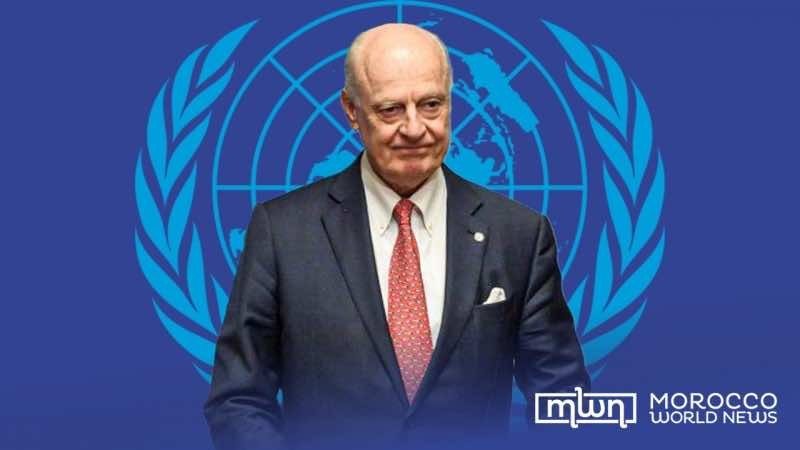
Rabat – UN Spokesperson Stephane Dujarric said UN Envoy Staffan de Mistura prefers to “remain mum” – or maintaining a neutral and silent stance – regarding the new discussion on Western Sahara held this week in Washington to help ensure the “success of the negotiations.”
The US-facilitated talks took place from February 23-24, convening the four parties to the dispute, including Algeria, Morocco, Mauritania, and Polisario.
Dujarric confirmed that US Ambassador to the UN Michael Walts is the co-chair of the talks alongside de Mistura.
The spokesperson said the “same people that attended the discussions in Madrid” took part in the Washington talks.
Dujarric stressed that the ongoing negotiations evolve around the implementation of Resolution 2797 adopted last year in October by the UN Security Council.
The resolution officially endorsed Morocco’s Autonomy Plan as the genuine political framework for negotiations to find a mutually acceptable and an agreed upon solution to end the dispute.
Recalling the growing support for the Moroccan initiative, the resolution said that the “genuine autonomy under Moroccan sovereignty could constitute a most feasible solution.”
The resolution also urged all parties, including Algeria to engage in a new round of talks without preconditions; regarding Morocco’s Autonomy Plan as the basis in all negotiations towards a solution.
“Genuine autonomy could represent a most feasible outcome and encourages the parties to submit ideas to support a final mutually acceptable solution,” the resolution said.
The resolution ended decades of ambiguity, officially calling up Algeria to assume its responsibility in the dispute and contribute to finding a solution without preconditions.
Algeria’s regime has long clung to its outdated narratives, including self-determination and referendum.
Despite its direct involvement through financing, hosting, arming, and supporting the Polisario separatist group , the Algerian regime continued for decades to view itself as an observer to the dispute rather than being a main party.
The UN further cleared the confusion following the resolution adoption, when Staffan de Mistura said: “It’s a very detailed resolution- every word was carefully chosen and negotiated. There are several key points: The parties are clearly identified as Morocco, the Polisario, Algeria, and Mauritania.”
The talks in Washington came just a few weeks after discussions held in Madrid, with delegations from the main parties all in attendance.
Reports suggested that the Madrid meetings were marked by divergences, including about the “right to self-determination,” claims promoted and advocated by Algeria’s regime in support of Polisario’s separatist agenda.
The same sources acknowledged that without Washington’s efforts to advance talks, options could be limited.
“The US sees the Moroccan proposal as a basis for work, but hopes the text can be broadened to make it acceptable to all parties,” Spanish outlet El Independiente adds, emphasizing how the White House pushes the talk forward at a “high speed.”