


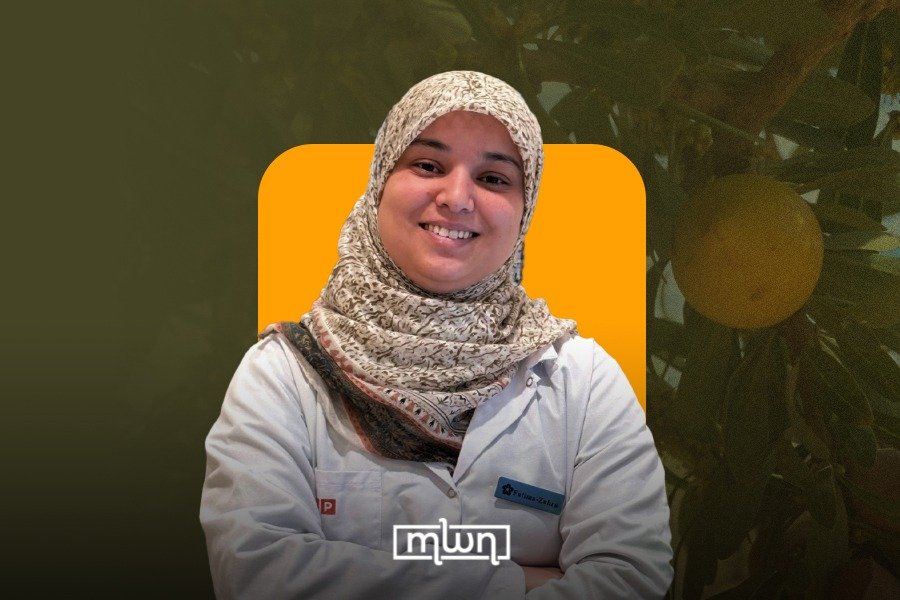
Rabat – For decades, the argan tree has been studied for its oil, its ecological value, and its economic importance to Morocco. But scientists are now turning their attention to something far less visible: the microscopic organisms living on and inside the argan fruit.
A new study led by Fatima Zahra Aliyat, researcher at UM6P’s African Genome Center, has mapped, for the first time, the microbiome of argan fruits across different regions of the country. The findings reveal how geography and soil conditions shape the bacteria and fungi associated with the fruit, and why that matters for conservation and sustainable cultivation.
The argan tree (Argania spinosa) is endemic to Morocco and plays a central role in both rural livelihoods and environmental protection. It supports thousands of families through oil production and helps prevent desertification in semi-arid regions. Yet despite its importance, little was known about the microbial communities living in its fruit.
“You see a fruit, but for us it’s a whole ecosystem … It’s full of microscopic organisms like bacteria, fungi, and sometimes yeast,” explained Aliyat in an interview with Morocco World News.
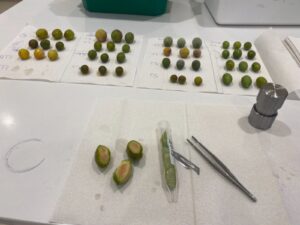
To understand this hidden ecosystem, Aliyat’s research team collected fruit samples from 36 argan trees across four geographically distinct locations. These included Agadir, Essaouira, Arganat in Ouad Grou in the central Moroccan plateau, and douar Mahjouba – Chouihia, province of Berkane.
The sites span nearly 1,000 kilometers and range in altitude from 66 to 794 meters above sea level. This broad transect allowed researchers to compare trees growing under very different environmental conditions, including coastal, inland, northern, and southern zones.
The team analyzed both bacterial and fungal communities using High-Throughput Next-Generation Sequencing. They extracted and sequenced microbial genetic material from the fruit to identify which microorganisms were present and in what proportions.
The study also measured fresh and dry fruit weight to assess whether fruit biomass varied across locations. The results showed significant differences in both fresh (p = 0.0108) and dry (p = 0.0191) fruit weight depending on geography. In simpler terms, where the tree grows influences how heavy its fruit is.
This suggests that environmental conditions, including soil properties and climate, play a role not only in microbial diversity but also in fruit development.
A core microbial signature
One of the study’s most striking findings was the dominance of two microbial genera across locations. On the bacterial side, Pantoea accounted for up to 89% of detected bacteria in some samples. On the fungal side, the yeast genus Hanseniaspora reached up to 82.4%dominance.
These two genera formed what researchers describe as “core taxa,” microorganisms consistently present across sites.
“Pantoea is widely distributed, in soil, water, and different environments,” Aliyat said. “Hanseniaspora plays a crucial role in fermentation.”
This second point may have implications for argan oil production. The fruit microbiome may influence fruit chemistry and associated biochemical processes, potentially affecting oil composition and quality. Microbial communities are known in other fruit systems to modulate metabolite profiles, including compounds that can impact aroma, stability, and overall product characteristics.
The presence of stable, dominant microbial groups suggests that argan fruits maintain a relatively consistent microbiome signature, even across wide geographic distances.
Interestingly, while specific microbial abundances shifted in the course of the study, the overall microbial community composition did not show statistically significant differences among the four regions. In other words, the fruit microbiomes were shaped by geography but did not cluster neatly by location.
Soil shapes the microbiome
Where the study revealed clearer patterns was in the relationship between microbes and soil characteristics. Researchers analyzed environmental factors including altitude, soil pH, clay content, calcium carbonate, nutrient levels, electrical conductivity, and nitrate concentration. They found several significant correlations.
For example, Pantoea abundance was positively correlated with clay content (p = 0.045). Meanwhile, the fungal genus Alternaria was positively associated with soil pH (p = 0.0092) but negatively associated with electrical conductivity (p = 0.0026) and nitrate concentration (p = 0.039).
“The pH affects microbial survival and enzymatic activity, while Calcium carbonate affects alkalinity and nitrogen availability. That’s why it was one of the major soil properties influencing the fruit microbiome,” she said.
In practical terms, soil composition influences which microbes thrive on the fruit. Clay-rich soils may favor certain bacterial populations, while alkaline soils shape fungal communities differently.
This reinforces the idea that the fruit microbiome is not random. It reflects environmental conditions and potentially serves as a biological indicator of soil health.
Why microbiomes matter for Argan’s future
Mapping fruit microbes may seem at first glance purely academic. But the researchers see broader applications. Aliyat identified three main areas where microbiome research could support argan sustainability. These include soil health monitoring, microbial indicators of plant condition, and climate resilience.
Soil health is particularly important in Morocco’s semi-arid regions, where argan forests face pressure from drought, overgrazing, and land degradation. If specific microbes correlate strongly with healthy soils, they could serve as biological markers.
Microbial indicators could also help detect stress before visible symptoms appear on trees. Certain shifts in microbial populations may signal nutrient imbalance, salinity stress, or vulnerability to disease.
Perhaps most importantly, understanding plant-associated microbes may contribute to climate adaptation strategies. Some microorganisms are known to enhance drought tolerance or improve nutrient uptake in other crops.
If we understand which microbes are associated with healthier trees, we can potentially use that knowledge to support conservation and cultivation, Aliyat explained.
While the current study does not yet identify specific beneficial strains for application, it establishes a foundational dataset. It shows which microbes consistently associate with argan fruits and how environmental variables influence them.
A broader research agenda
The fruit study is part of a larger research program examining argan-associated microbiomes across different plant compartments. Other planned studies are set to investigate microbial communities in different parts of the argan tree, such as the rhizosphere, roots and shoots. A forthcoming project will also address the pan-genome of the argan tree. Aliyat told MWN.
The next phase focuses on the rhizosphere, which is the soil immediately surrounding the roots, as well as root-associated microbial communities. Root microbiomes are often even more directly linked to plant nutrition and stress tolerance than fruit-associated microbes.
Researchers hope that mapping the entire microbial system of the tree will allow them to build a more complete picture of how argan interacts with its environment.
Importantly, all laboratory work related to the study, from DNA extraction to sequencing, was conducted locally at UM6P’s African Genome Center. “It was 100% handled here in our entity,” Aliyat noted, emphasizing the significance of conducting advanced genomic research domestically.
Read also: Argan Tree Use in Essaouira Dates Back 150,000 Years, Archaeologists Confirm
The argan tree has long been studied from ecological, agricultural, and economic perspectives. Aliyat’s research adds a new biological layer, as it focuses on the invisible communities that coexist with the fruit.
Her team’s findings show that while core microbial taxa remain stable across regions, soil chemistry and environmental gradients shape microbial abundance patterns. Fruit weight differences across locations further suggest that geography influences plant performance.
Together, these insights provide a scientific baseline for future work linking microbiomes, soil management, and sustainable argan cultivation. And with climate pressures intensifying and argan forests facing increasing environmental stress, such research would become increasingly relevant.
As the research is ongoing, Aliyat concluded, more microbiome studies are expected in the coming years as the team expands its work to other parts of the tree.
