


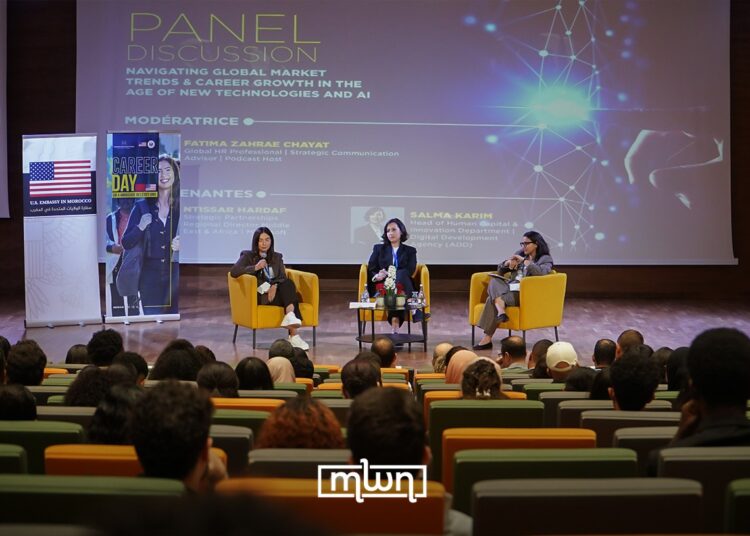
Rabat – The International University of Rabat (UIR), in partnership with the US Embassy in Morocco, hosted a Career Day today, bringing together students, professionals, and institutional partners to explore career opportunities in a rapidly changing global market.
The event marked 250 years of diplomatic relations between Morocco and the United States, while focusing on innovation, artificial intelligence, and the skills needed to succeed in today’s workforce.
The program began with a networking lunch, followed by opening remarks and a panel discussion on navigating global market trends and career growth in the age of new technologies and AI.
The day continued with classroom-based sessions, where students engaged directly with professionals through interactive discussions and mentoring.

Focus on people-to-people ties
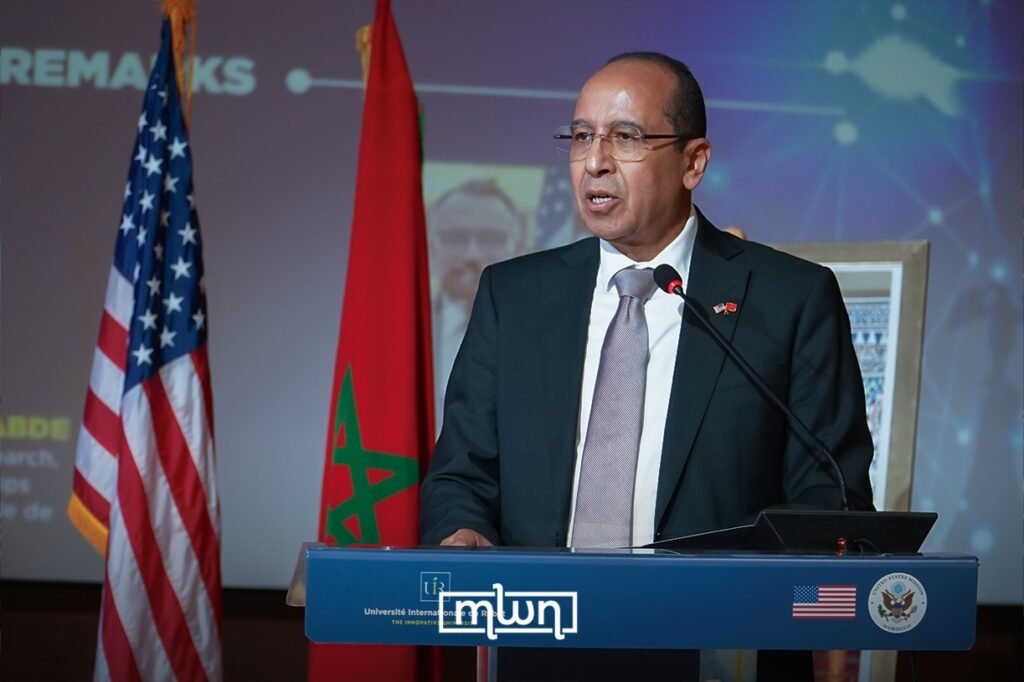
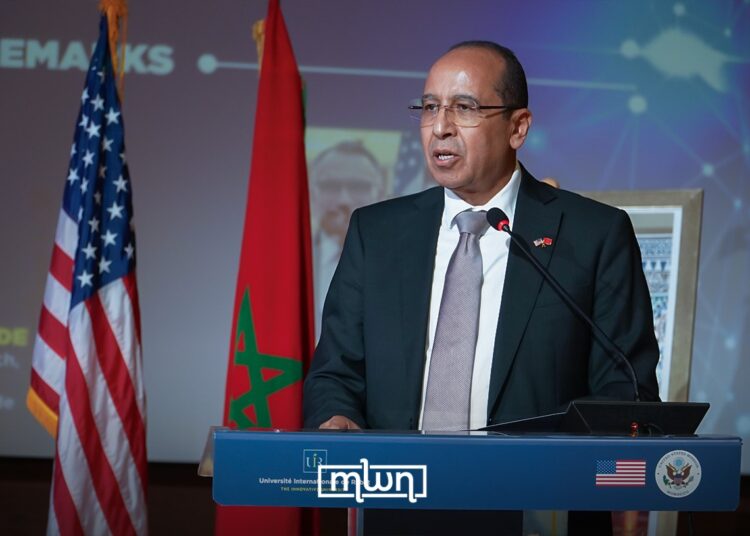
In opening remarks, Abdelaziz Benjouad, Vice President for Research, Innovation & Partnerships at UIR, pointed to the deeper meaning of the event beyond the diplomatic milestone.
He said the Career Day reflects “a strong and strategic collaboration” with the US Embassy and stressed the importance of people-to-people connections between Morocco and the United States.
“Our mission is to help students connect knowledge with real-world experience and to open doors beyond borders,” he said, noting that universities are not only places to learn but also to grow and prepare for the future.
Benjouad also stressed that students must go beyond academic knowledge to succeed in a fast-changing world shaped by technology and AI.
“You will need to be curious, adaptable, and open to new perspectives,” he told students.
Preparing students for a changing job market
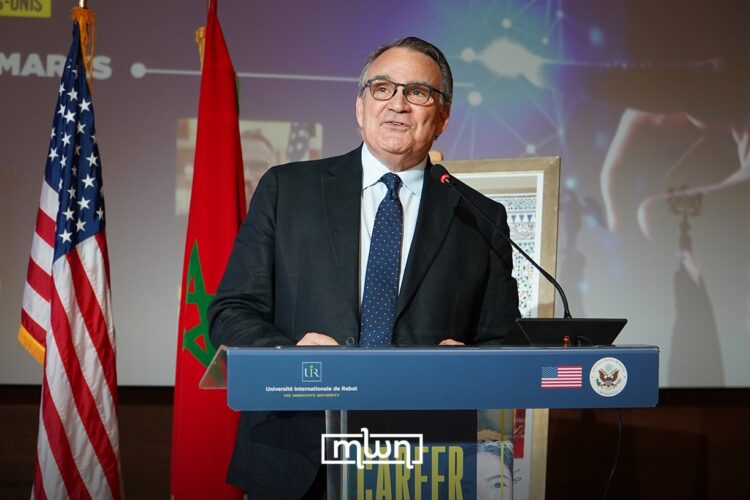
Speaking at the event, Benjamin Ziff, Deputy Chief of Mission at the U.S. Embassy in Rabat, stressed the importance of adaptability, innovation, and lifelong learning.
He noted that careers today are increasingly dynamic, with individuals expected to change roles and sectors multiple times.
“Adaptability is essential,” he said, pointing to the rapid transformation driven by new technologies and artificial intelligence.
Ziff also encouraged students to embrace AI as a tool rather than a threat.
“Knowing how to use AI will ensure not that you lose your job, but that you keep your job and can do it well,” he said.
He further underlined the importance of continuous learning, describing it as a necessity in today’s global economy.
“Lifelong learning is not optional. It’s essential,” he added.

Mentorship and international collaboration
In an exclusive interview with Morocco World News, Nidal Benali, in charge of international relations and partnerships at UIR, said the event was designed to go beyond traditional academic learning.
“The goal is not only to speak but also to mentor students,” he said, explaining that direct engagement with professionals helps better prepare students for real-world challenges.
UIR with experts from various fields, including health sciences, engineering, and social sciences, to guide students and help them understand job market expectations, he explained.
Benali also shed light on the university’s international partnerships with American institutions such as Mississippi State University, Georgia Institute of Technology, University of California Los Angeles, and University of Connecticut.
Strengthening the US-Morocco partnership
In a separate interview with Morocco World News, Ziff stressed that the United States’ focus on entrepreneurship, artificial intelligence, and STEM education.
“The United States is very much focused on entrepreneurship, on AI, and on the future of the sciences,” he said, describing UIR as “a great example of how Morocco is leading on the continent and in the world in these areas.”
He also called UIR a “flagship institution” and expressed interest in expanding cooperation between the two countries.
“We really want to continue and expand this partnership with UIR,” he said.
Throughout the afternoon, students participated in classroom-based sessions designed to bridge academic learning with real-world market needs.
Each session included a presentation by professionals followed by an interactive Q&A, allowing students to explore career paths and better understand industry expectations.
The format enabled participants to attend multiple sessions based on their interests, reinforcing the event’s goal of aligning education with evolving global market trends.