


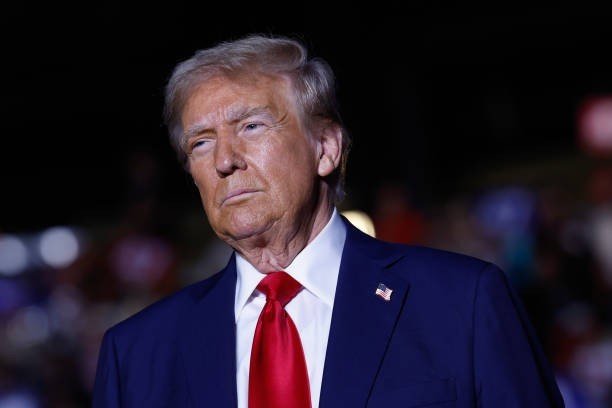
Rabat – US President Donald Trump said Monday that the ongoing war with Iran will not last long, a statement that helped calm financial markets after a day marked by sharp swings in oil prices and global stocks.
Speaking to reporters in Florida, Trump described the military campaign as limited in scope and suggested that the US expects the war to conclude soon.
“It’s going to be ended soon, and if it starts up again they’ll be hit even harder,” Trump said. He also told lawmakers that the operation amounts to a “short-term excursion.”
Oil and stocks swing as war expands
Markets reacted quickly to developments in the region. Oil prices dropped Tuesday after a dramatic rise the previous day that pushed benchmark crude above $100 per barrel for the first time since Russia’s invasion of Ukraine in 2022.
Stocks also recovered part of their losses. Wall Street moved back into positive territory, while Asian markets in Tokyo and Seoul opened higher.
The earlier shock came after Iran signaled that the Strait of Hormuz, a key maritime route for global oil shipments, would likely remain closed.
Nearly one-fifth of the world’s crude supply usually passes through that narrow waterway. Any disruption there carries immediate consequences for the global economy.
Iran says it will decide when war ends
Iranian authorities quickly rejected Trump’s suggestion that the war could soon end.
The Islamic Revolutionary Guard Corps said Tehran, not Washington, will decide when the fighting stops.
The statement came as Iranian forces launched fresh missile and drone attacks against several countries in the region, including Saudi Arabia, Bahrain, Qatar, the United Arab Emirates, and Israel.
Another missile targeted Turkey, a NATO member, for the second time in less than a week. Turkish and NATO air defenses intercepted the projectile before it reached its destination.
New Iranian leader faces immediate conflict
The attacks coincided with the first day in office for Iran’s new supreme leader, Mojtaba Khamenei, the 56-year-old son of former leader Ali Khamenei.
Iran’s Assembly of Experts appointed him after the death of his father, which triggered the first leadership transition in nearly four decades.
Iranian state television showed large crowds in central Tehran who celebrated the announcement and carried portraits of the new leader.
Regional allies quickly pledged loyalty. Yemen’s Houthi movement and Hezbollah in Lebanon both declared support, while Russian President Vladimir Putin promised what he called “unwavering support” for Tehran.
Trump said he felt disappointed by the choice but did not rule out further leadership changes inside Iran. He pointed to Venezuela’s recent political transition as a possible model.
Strait of Hormuz at center of diplomatic efforts
International diplomacy now centers on the Strait of Hormuz, where shipping traffic has almost stopped after Iran restricted passage for many oil tankers.
French President Emmanuel Macron said France and several partners are considering a defensive naval mission designed to escort commercial vessels once the most intense phase of the conflict passes.
Such an operation would carry risks, since naval ships would operate close to the Iranian coastline.
Iranian officials appear aware of the economic pressure created by the disruption. Kamal Kharazi, a senior adviser to Iran’s leadership, told CNN that Tehran expects global economic concerns to push other countries toward diplomatic intervention.
Energy facilities and shipping routes under threat
Energy infrastructure across the Gulf has also come under attack.
In Bahrain, a strike on the Al Ma’ameer oil facility caused a fire and forced the state energy company Bapco to issue a “force majeure” warning that signals possible export disruptions. Similar notices came from energy companies in Qatar and Kuwait.
Saudi Arabia’s defense ministry said it intercepted a drone that targeted an oil field in the kingdom’s eastern region near the Emirati border.
Bahrain also reported casualties after an Iranian strike hit a residential area in Manama. Authorities confirmed one death and several injuries.
Meanwhile, the global shipping company MSC announced that it will halt certain export operations from Gulf ports. Cargo already loaded onto ships will return to port for unloading.
With the war active on several fronts and energy supply routes under threat, governments, investors, and central banks continue to monitor the situation closely as uncertainty spreads through global markets.