


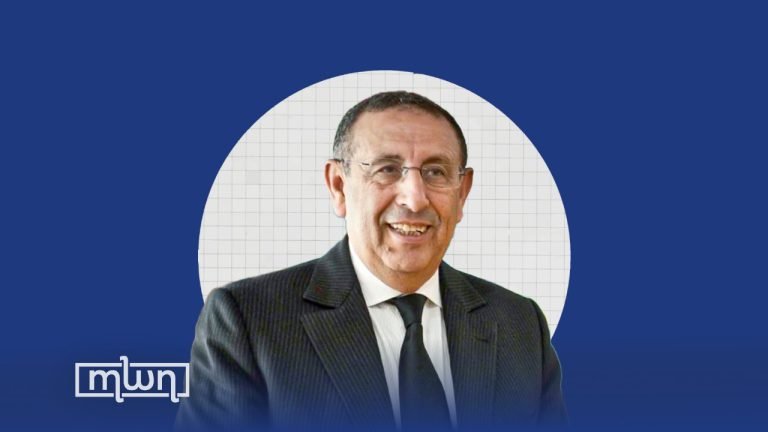
Rabat – Morocco’s ambassador to the US, Youssef Amrani, commended ties between Rabat and Washington, attributing the good bilateral ties between the two countries to Donald Trump’s efforts.
Amrani made his remarks in an interview featured by the Hudson Institute.
“We worked with you on different issues whether in the Middle East, whether in Africa, and we will continue because we have an ambition and we have a leadership, and our two leaders, King Mohammed VI now, King Hassan II before, and President Trump today is really pushing this reaction at the highest level,” Amrani told Hudson’s Michael Doran.
US President Donald Trump is notably important for Morocco for his decision to recognize the country’s sovereignty over its southern provinces in Western Sahara in December 2020.
Western Sahara, Resolution 2797, and Iran interference
Ambassador Amrani also discussed in the interview the latest momentum, marked by a historic vote on Resolution 2797 at the UN Security Council on October 31. The vote recognized Morocco’s Autonomy Plan as a genuine political solution to end the dispute over Western Sahara.
In the interview, the speakers emphasized how no country voted against the resolution, while three absences were recorded for “different reasons.”
“But today, I think what is important is that autonomy is at the center of the UN, and it’s as a legal initiative to move forward. It conforms with the UN charter, with the principles of the charter, with international legality,” Amrani said.
Amrani recalled King Mohammed VI’s leadership, which helped the process move forward.
“Now we have a resolution that is crystal clear, that is pushing for a political solution credible and pragmatic on the basis of the Moroccan Autonomy Plan that has been accepted today by the Security Council.”
Amrani also reiterated Morocco’s concerns over the situation in the region, especially Iran’s interference in Rabat’s domestic affairs.
Asked how Morocco looks at or views Iran, Amrani emphasized that Morocco always expressed its preoccupation regarding the situation.
“We have broken our relations with Iran,” Amrani said, recalling Morocco’s decision to cut ties with Tehran in 2018.
The ambassador recalled the “well-evidenced connection between the separatist group of Polisario and Hezbollah.
“We have evidence that even in America, the United States of America, they are considering the Polisario Front as a terrorist movement,” Amani said.
In July, the US Congress published the full text of a bill introduced by Republican Congressman Joe Wilson, urging the US to designate Polisario as a foreign terrorist organization.
It notably highlighted Polisario’s collusion with the Iranian proxy, its involvement in violent terrorist attacks against Morocco, as well as its role in destabilizing the Maghreb and Sahel regions.
“The Polisario Front has a documented history of ideological and operational ties with Iran, a state sponsor of terrorism, dating back at least to 1980, when Polisario fighters publicly posted with portraits of Ayatollah Ruhollah Khomeini in a bid to attract revolutionary credibility and Iranian patronage,” reads the congressional bill.
Military ties
Amrani emphasized that US-Morocco ties span all sectors, including trade and military, citing the largest military drill between the two countries, namely the African Lion.
Morocco has been hosting the African Lion for many years. The 21st edition took place earlier this year, bringing together military officials from several countries, including the US, teaming up to prepare maneuvers and campaigns against organized crime and transnational terrorism.
“We have the expertise to fight against this kind of extremism because Islam is not a religion of hate,” Amrani said, emphasizing the importance of a shared responsibility to tackle this crisis.
“European countries withdraw from the Sahel … it is a question of security, it’s a question of stability,” the ambassador elaborated.
Amrani also highlights the degree of confidence the US and Morocco have in each other, citing the use of US military equipment, including the F-16s, the C130, among others.
“We have a very important military cooperation and even our pilots were trained here in the US. So everything reunites us with the vision for the future,” Amrani said, recalling Morocco’s active membership in the Mediterranean dialogue of NATO.
Unbroken treaty
Regarding US-Morocco trade, Amrani recalled the long-standing Free Trade Agreement between the two countries.
“We have a free trade agreement… We have 10% tariffs, but we are also trying to see how we could align all these policies to our priorities. Morocco’s diplomacy is based on this direction, free trade, political dialogue, respect, peace, security, and stability,” Amrani said.
The bilateral trade agreement came into force on January 1, 2006.
In 2024, the US trade surplus with Morocco reached $3.4 billion since the agreement’s entry into force. The number is up from $35 million in 2005.
US exports in 2024 reached %5.3 billion, representing a %37.3% compared to the previous year.
Meanwhile, US imports from Morocco reached $1.9 billion, representing 12.3% of 2023.
The data makes Morocco the 46th largest export market for US goods.
“We have longstanding relations between Morocco and the S. We are the first country to recognize the independence of the US. We have the oldest unbroken treaty between Morocco and an Arab and African country. This is very important, and we experience very important tools,” Amrani added.
Morocco’s economic potential
Amrani also touted Morocco’s economic assets and potential promoted by the country’s stability and opportunities.
He recalled the industrial industry, including the automotive and aeronautics.
“First, the industrial industry and this automotive, aeronautics, batteries for cars, we are one of the major exporters in Africa all over the world. … Everybody is interested in the Moroccan market,” the ambassador said.
He cited several tools that help attract foreign investments, including human capabilities.
“We have very good human capabilities in Morocco,” he said, recalling the diversified allies Morocco has secured throughout the years.
Amrani also emphasized the importance of other projects, including the Nigeria-Morocco gas pipeline, which is set to provide many African countries with electricity.
Morocco has long stressed the importance of the project. The pipeline aims to benefit 13 countries. It is protected to provide energy supply to at least 400 million people, in addition to fostering the growth of key industrial sectors like mining.
