


I do not claim omniscience, but I write as an established artist who has experienced the art field from both its visible and hidden sides. I have seen how fame, networks, and social positioning often overshadow the work itself, how generosity is frequently exploited, and how the field rewards strategic proximity more than creative depth. I have never felt fully seen as an artist because I do not claim I belong to the dominant social circles or class networks that quietly structure opportunity. Yet, I have helped others enter rooms. I was never invited into opening contacts, creating bridges, and offering energy, and I too often discovered that reciprocity was never part of the intention.
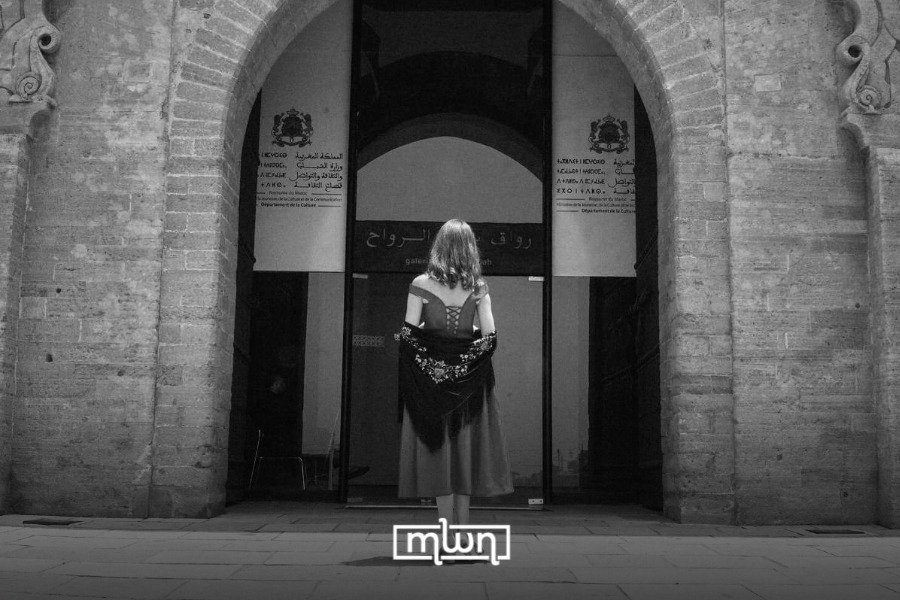
At the same time, my experience has not been only negative. My first real opportunities to exhibit came not from galleries, but from Portuguese and Moroccan institutions like the Al-Mada Foundation, the National European institute, Fine Arts Lisbon, as well as the current mandate of the Moroccan ministry who supported my work directly after I reached out as a professional artist. This happened not because of who I knew, or who I could bring, but because they believed in the work itself. I was also fortunate to encounter support through a foundation connected to the royal family, where someone at the top level, not a subordinate or intermediary, took my insistence and my practice seriously. These experiences were decisive. They proved something essential which that the field can function differently. But when it does, it depends heavily on who holds responsibility and what their mandate values.
Thank goodness the art field and artists do not entirely depend on galleries, because if they did, many serious practices would never be visible at all. The art world is not a family. It is a power game. For many galleries, the work of the artist is secondary. What truly matters is your network, your pedigree, and your social proximity. Talent, rigor, and persistence are often invisible if they do not come wrapped in the right connections. Generosity is ignored. Labor is uncredited. And the moment you are no longer useful for introductions, access, or visibility, you can disappear from attention entirely.
This structural problem extends beyond galleries themselves to the events that are supposed to celebrate art. Too often, openings, fairs, and public commemorations, even those marking decades of art in a country, highlight artists with the right connections: those represented by galleries, part of certain professional networks, or aligned with influential institutions. Artists who fall outside these circles are frequently absent, not because of the quality of their work, but because social or institutional visibility rather than artistic merit becomes the criterion for inclusion. This subtle hierarchy shapes who is seen and remembered, and who remains invisible, regardless of talent or contribution.
Navigating the carefully-choregraphy maze
Navigating the contemporary art world is like moving through a carefully-choreographed maze. Openings, fairs, and VIP events celebrate social proximity over the work itself. The artwork becomes pretext, the event becomes stage, and the people present become the currency. In such spaces, generosity is fragile. Time, energy, and effort poured into helping others are rarely acknowledged. Often, the support I offered was absorbed, used, and vanished, leaving no trace of reciprocity, a subtle but recurring pattern of extraction that corrodes trust and reduces collaboration to transactions.
It is not always malicious. Scarcity, competition, and career anxiety shape behavior more than conscious intention. But the result is the same. Strategic sociality is rewarded, while sincerity, rigor, and persistence are overlooked. Fame and visibility become the metrics of value, often decoupled from the work itself.
Yet, even within this ecosystem, I have seen moments of integrity and belief. The support I received from individuals in the current mandate of the ministry was rare and transformative. These were people in positions of true authority, not assistants or intermediaries, who recognized my persistence, my insistence on artistic value, and the merit of my work. Their aid was direct, meaningful, and focused on the art itself, not on the connections I could provide or the social capital I represented. It was a reminder that the field can work differently, that it can honor artists for their work and vision rather than their network, but that this integrity often depends on the priorities, awareness, and mandates of those currently in power. My experience in Portugal reinforced this lesson, where public and academic institutions dedicated to art were more fluid and responsive to the work itself rather than to social hierarchy or external affiliations.
Relationally, the field is treacherous. I have repeatedly experienced subtle extraction. Artists approach not out of curiosity, dialogue, or genuine connection, but for leverage, introductions, and access. The warmth is strategic, the conversation is utilitarian, and once the bridge is crossed, the relationship often evaporates. Reciprocity is rare. Interest in my work is even rarer. Extraction disguised as networking still corrodes trust.
Generosity is precarious. Unbounded openness can be interpreted as availability, which prestige-driven environments interpret as utility. The most generous contributors often become invisible infrastructure for more strategically positioned actors. Scarcity signals power, access signals value, and giving signals utility.
The need for open doors, dignity and recognition
And yet I refuse to be cynical. I believe in selective solidarity. I will continue to offer support, but with boundaries and awareness. I will continue to collaborate, but only with those who engage genuinely. Reciprocity and mutuality must guide relationships in a field obsessed with leverage and visibility.
The art world is beautiful, complex, and often frustrating. It can amplify vision, connect ideas, and celebrate creativity. It can also exploit generosity, elevate style oversubstance, and reward social agility more than artistic inquiry. Fame and networks are real forces, but they are not art. Recognition, when decoupled from structural advantage or social capital, is rare and therefore precious. It is in those rare moments when institutions, mandates, and individuals prioritize the work itself that the field fulfills its true purpose.
Artists deserve dignity. Generosity deserves recognition. Cultural ecosystems deserve honesty. Fame, connections, and networks will always exist, but they should never be mistaken for art itself. For those of us committed to practice, inquiry, and creation, awareness, careful boundaries, and selective solidarity are essential for surviving and thriving without losing sight of what truly matters.
